 ultimate-guide
Forestry Mulching for Land Clearing: The Complete Guide
Table of Contents
- What Is Forestry Mulching and How It Works
- Forestry Mulching Equipment and Machinery
- Forestry Mulching vs. Traditional Land Clearing Methods
- Forestry Mulching Cost and Pricing Considerations
- Forestry Mulching Preparation and Site Assessment
- Best Applications for Forestry Mulching
- Aftercare and Land Preparation After Mulching
- Choosing a Forestry Mulching Contractor
- Frequently Asked Questions
Last Updated: October 16, 2026
What Is Forestry Mulching and How It Works
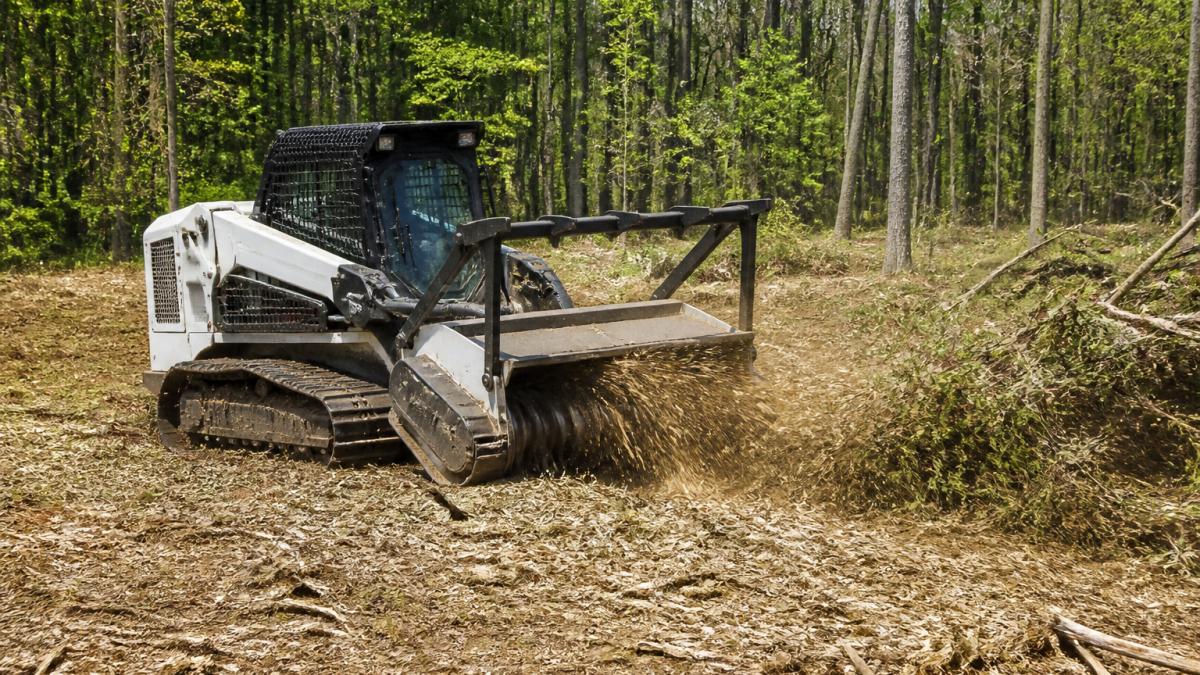
Forestry mulching for land clearing uses specialized machinery to cut, grind, and mulch vegetation in a single pass, converting brush, undergrowth, small trees, and invasive species into fine organic mulch that stays on-site.
Vegetation feeds through a rotary drum with steel chipper teeth that grind material into mulch as it's cut, handling everything from dense undergrowth and invasive weeds to small trees in a continuous workflow.
Property owners often find that forestry mulching can save time and cost compared to conventional clearing.
The mulching process: clearing, grinding, and on-site application
The process begins with a site assessment to identify vegetation density, terrain challenges, and obstacles like rocks or stumps. The mulching head then engages vegetation at ground level, feeding it into the grinding chamber where steel chipper teeth reduce it to mulch.
The process is continuous, with no stopping between cutting and grinding, which makes it more efficient than traditional methods.
Vegetation types handled: brush, undergrowth, invasive species, and small trees
Dense undergrowth, invasive weeds, and brush clear quickly because the mulching head processes them continuously. Small trees up to about 6-8 inches in diameter are ground up effectively, though larger trees may need to be felled separately first. Invasive species like honeysuckle and multiflora rose are eliminated at the root level, reducing regrowth compared to cutting alone.
Everything gets processed at once, with no sorting or hauling decisions, and converted into mulch that stabilizes soil and improves long-term land health.
Forestry Mulching Equipment and Machinery
Forestry mulching equipment is purpose-built for heavy-duty vegetation processing. The core machine is a tracked excavator or skid-steer loader fitted with a specialized mulching head: the tracked base provides stability on uneven terrain and minimizes ground disturbance, while the head does the actual cutting and grinding.
Forestry mulchers and mulching heads explained
A forestry mulcher is the complete system, but the mulching head defines its capability.
Higher-quality heads maintain consistent grinding pressure and tooth engagement as vegetation density changes, which is why equipment selection affects both work quality and project cost.
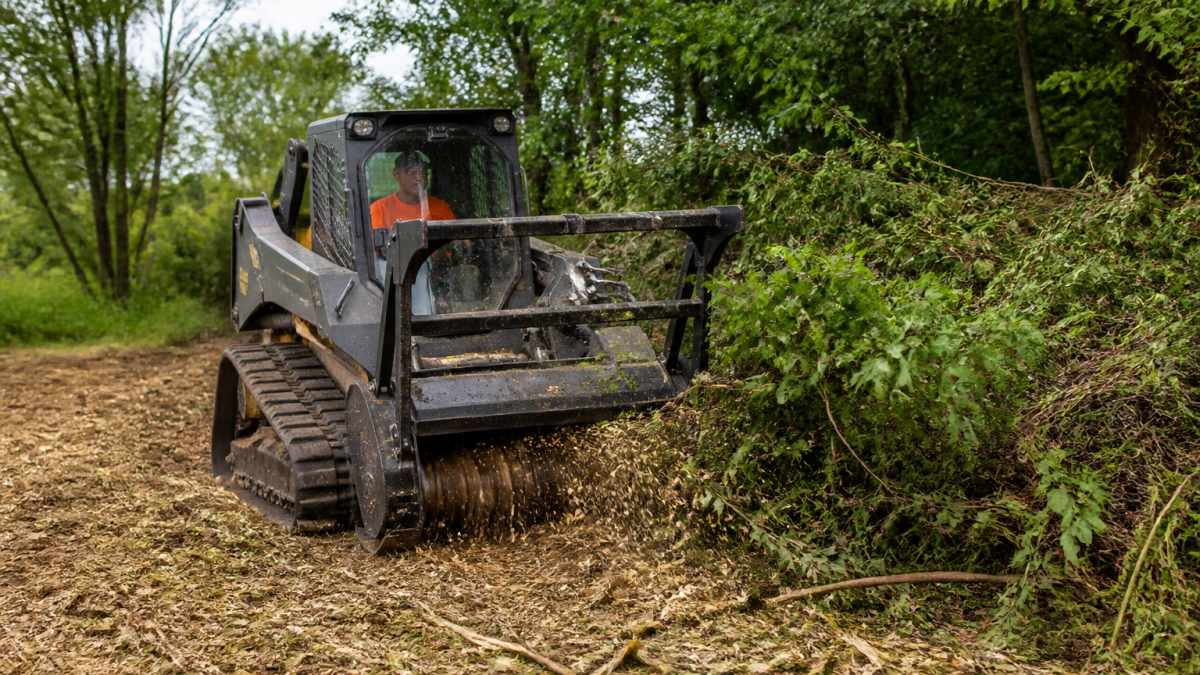
How rotary drums and steel chipper teeth work
The rotary drum is the heart of the mulching head, spinning at high speed as the cutting mechanism feeds vegetation into it. Steel chipper teeth mounted on the drum strike and shred material, reducing it to consistent mulch size.
The teeth wear over time and are replaceable. Sharp teeth produce finer, more uniform mulch, while dull teeth slow the process and leave larger chips that perform worse as ground cover.
Forestry Mulching vs. Traditional Land Clearing Methods
Forestry mulching competes directly with bulldozing and other conventional land clearing approaches. Each method has distinct cost, efficiency, and environmental profiles.
Comparison with bulldozing and debris hauling
Bulldozing pushes vegetation into piles that then require removal, so you need the dozer to clear plus separate equipment to load and haul debris to a disposal site.
Forestry mulching processes vegetation in place, so one pass does the work of multiple equipment moves and you pay nothing for hauling because the mulch stays on your property.
Bulldozing suits large-scale site prep requiring earth movement or grade changes; forestry mulching works better when you want to preserve topsoil, minimize compaction, and avoid disposal costs.
Efficiency, time savings, and environmental benefits
Forestry mulching clears overgrown land in fewer days than bulldozing because there's no piling, sorting, or hauling phase. Forestry mulching can clear overgrown land in fewer days than bulldozing because there's no piling, sorting, or hauling phase. This time advantage compounds on larger projects.
The environmental benefit is real: on-site mulch suppresses invasive weeds, reduces erosion by protecting bare soil, and improves soil structure as it breaks down. Instead of a landfill disposal problem, you get a soil amendment that stays where it's needed.
Forestry Mulching Cost and Pricing Considerations
Forestry mulching cost depends on multiple factors that vary significantly from one property to another. Understanding these drivers helps you anticipate costs and compare quotes fairly.
Cost drivers: acreage, vegetation density, terrain, and equipment access
Acreage is the most obvious cost factor, but vegetation density matters more than you'd expect: one acre of light brush clears much faster than one acre of dense undergrowth with small trees mixed in.
Equipment access is critical: if a forestry mulcher can drive directly to the work area, costs stay lower, but inaccessible land requiring trailer transport or distant staging raises mobilization costs. Large rocks, stumps, or buried debris also slow progress and affect the final bill.
When mulching costs less than bulldozing
Forestry mulching typically costs less than bulldozing when clearing acreage with dense vegetation and no need for significant grading or earth movement, saving on hauling, equipment hours, and disposal fees.
Bulldozing becomes more cost-effective when you need to move earth, create drainage changes, or prepare land for construction where grade precision matters. For a small area with light vegetation, the difference may be minimal either way.
Vegetation density, terrain, and acreage are the real cost drivers, not the clearing method.
Forestry Mulching Preparation and Site Assessment
Before any equipment arrives, a proper site assessment prevents surprises and helps contractors give accurate quotes.
Evaluating land suitability and identifying obstacles
Walk your property and note vegetation density, terrain slope, and obstacles. Dense, uniform brush clears faster than mixed vegetation with scattered trees, while steep terrain takes longer and costs more because the operator must work carefully.
Identify access points where equipment can enter and move around; areas a forestry mulcher can't reach may need manual clearing. Wet soil or standing water makes some properties unsuitable for tracked equipment in certain seasons, so timing affects both cost and quality of work.
Permits, environmental regulations, and protected areas
Check with your local municipality about land clearing permits, since most areas require them for significant vegetation removal, especially near wetlands or protected areas. Regulations vary by county and state, and some jurisdictions restrict clearing in riparian buffers, wetlands, or protected species habitats.
Before hiring, verify the work complies with local rules. A reputable contractor knows these regulations and can advise on what's allowed; clearing without permits can bring fines and restoration work costing far more than getting permission upfront.
Best Applications for Forestry Mulching
Forestry mulching excels in specific scenarios where its efficiency and on-site mulch benefits deliver real value.
Pasture reclamation, trail clearing, and fence-line maintenance
Pasture reclamation, restoring overgrown pasture to productive grazing land, is ideal for forestry mulching. The process removes invasive brush and small trees while the mulch improves soil for regrowth. Trails and access roads benefit from brush clearing that opens sightlines and removes hazards. Fence-line clearing eliminates vegetation that damages fencing or blocks access for maintenance.
These applications share a common need: remove vegetation while keeping the land intact. Forestry mulching preserves the land while removing the problem vegetation.
Selective clearing and preserving desirable trees
Not every tree needs to come down. Selective clearing removes invasive species and unwanted vegetation while preserving mature trees, with the operator working around desirable trees to protect them while clearing everything else.
This works well on mixed forest properties where you want to thin undergrowth and remove invasive species without clear-cutting. It's more skilled work than full-acreage clearing, but the result is a healthier forest with better spacing and light penetration.
Aftercare and Land Preparation After Mulching
What happens after the forestry mulcher leaves determines how well your land performs long-term.
What to do with on-site mulch and ground preparation
The mulch suppresses weeds, protects soil from erosion, and improves soil structure as it decomposes. In most cases you leave it in place; you can move some to level high spots or fill low areas, but the bulk should stay.
If you plan to plant or reseed, the mulch layer is beneficial, retaining moisture and moderating soil temperature. For construction, you may need to remove excess mulch from building footprints, but leaving it in landscaping areas is ideal.
Grading, erosion control, and next-step planning
After clearing, assess whether grading is needed. Forestry mulching leaves the ground relatively level, but specific drainage slopes or finished grades may require grading equipment. The mulch layer helps prevent erosion on slopes, so additional erosion control may not be necessary.
Plan next steps before clearing begins: whether you're preparing for construction, pasture restoration, or trail development affects how much preparation is needed afterward. We can advise on post-clearing steps that match your land goals.
Choosing a Forestry Mulching Contractor
Not all forestry mulching contractors are equally skilled or equipped. A few questions separate experienced operators from those just learning the work.
What to ask and how to verify experience
Ask how many acres the contractor has cleared and what vegetation types they've handled. Experience with dense undergrowth, invasive species, and selective clearing matters, it shows they've worked through real-world complications. Ask about equipment: newer, well-maintained machines produce better results and work faster.
Request references from similar projects; a contractor who's cleared pasture land or done trail work on properties like yours can speak directly to results. Ask about timeline and cost structure, since experienced contractors give realistic estimates based on site conditions.
Insurance, licensing, and safety standards
Verify the contractor carries liability insurance and workers' compensation, which protects you if equipment damages property or someone is injured.
A professional contractor will have clear answers and documentation. If one is vague about insurance or experience, move on.
Forestry mulching for land clearing offers a practical, cost-effective alternative to traditional methods when your goal is to restore land health while clearing vegetation efficiently.
Frequently Asked Questions
How much does forestry mulching cost?
Forestry mulching pricing depends on acreage, vegetation density, terrain, equipment access, and the extent of brush and small trees to be cleared. Dense, overgrown land with difficult terrain costs more than open pasture. Rather than guess, contact Kauffeld Tree Care for a site assessment and detailed quote tailored to your property's specific conditions.
What does forestry mulching do to the land?
Forestry mulching removes brush, undergrowth, invasive species, and small trees in a single pass, grinding them into mulch that stays on-site. The mulch suppresses weed regrowth, stabilizes soil, and reduces erosion. Desirable trees can be preserved, and the land is left ready for pasture reclamation, development, or access path creation without the need for debris hauling.
How does forestry mulching compare with bulldozing?
Forestry mulching grinds vegetation into mulch on-site, eliminating hauling costs and debris removal. Bulldozing pushes material into piles that must be hauled away, adding time and expense. Mulching is faster on densely vegetated land, gentler on terrain, and produces a usable mulch layer. Bulldozing works better for large-scale earthmoving, but for brush and vegetation clearing, mulching is typically more efficient and cost-effective.
What types of land are best suited for forestry mulching?
Forestry mulching works well on overgrown pastures, properties with invasive species, areas needing trail or fence-line clearing, and land slated for development or reclamation. It is effective on moderate to steep terrain where bulldozing would cause erosion or damage. Flat, open land with minimal vegetation may not justify the cost. A contractor can assess your property to determine suitability.
Do I need permits for forestry mulching?
Permit requirements vary by local jurisdiction and whether your property borders protected areas, wetlands, or streams. Some municipalities require land-clearing permits; others do not. Environmental regulations may restrict clearing near water or protected habitats. Contact your local zoning or planning department and consult with a qualified contractor like Kauffeld Tree Care to confirm requirements for your specific property.
What happens to the mulch after forestry mulching?
The mulch created during forestry mulching stays on-site and can be spread across the cleared area to suppress weeds, retain moisture, and prevent erosion. You can also pile it for later use in landscaping, animal bedding, or erosion control. Some property owners haul excess mulch away. Discuss your preferences with your contractor during the planning phase.