 how-to
Hiring Insured Tree Care Companies: 2026 Guide
Table of Contents
- Why Hiring Insured Tree Care Companies Matters
- How to Verify Tree Service Insurance
- Questions to Ask a Tree Removal Company
- Tree Removal Estimate Checklist
- Tree Service Contract Checklist
- Red Flags When Hiring Insured Tree Care Companies
- What to Do If an Incident Occurs
- Conclusion: Hiring with Confidence
- Frequently Asked Questions
Last Updated: October 14, 2026
Why Hiring Insured Tree Care Companies Matters
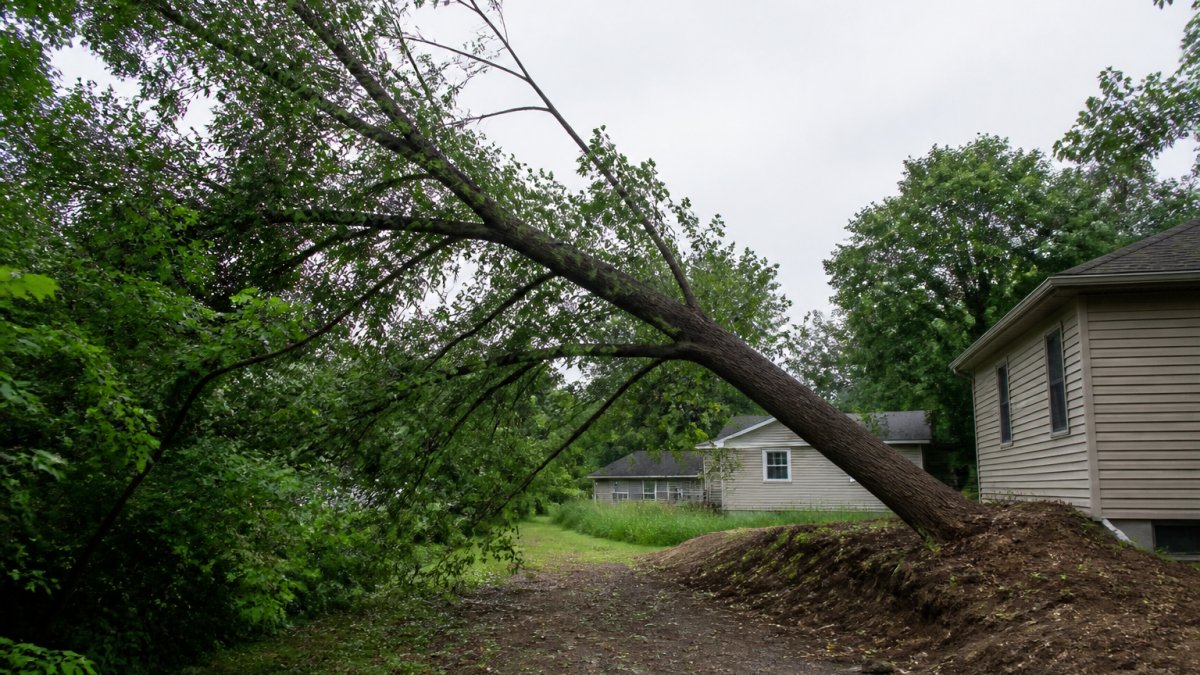
Hiring insured tree care companies is the most important decision you will make when a dead oak leans over your roof or a storm drops a maple across your driveway. At Kauffeld Tree Care, we have watched homeowners in Watertown and surrounding counties learn this the hard way: when an uninsured crew drops a limb on your garage, the claim lands on your homeowner's policy, not theirs.
The stakes are higher than most people realize. The Insurance Information Institute's homeowner guidance notes that liability for injuries and property damage on your land can fall back on you when a contractor carries no coverage.
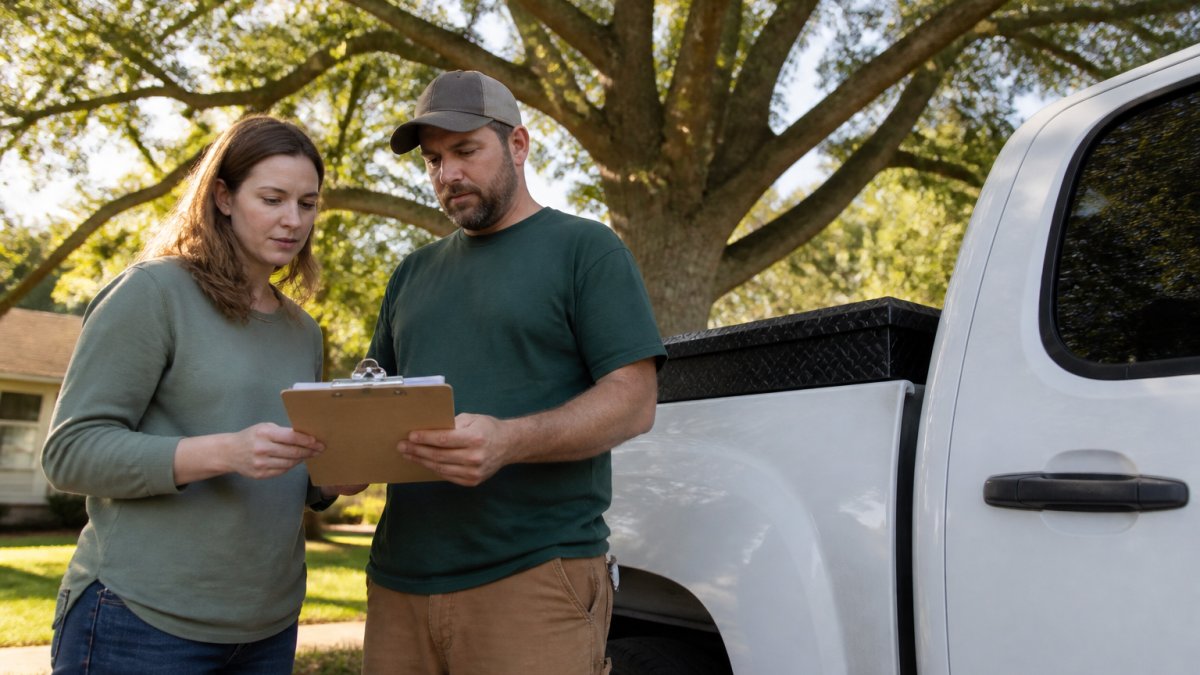
The Real Risks of Uninsured Tree Work
The biggest mistake homeowners make is assuming the crew's insurance is their problem, not yours. It is very much yours.
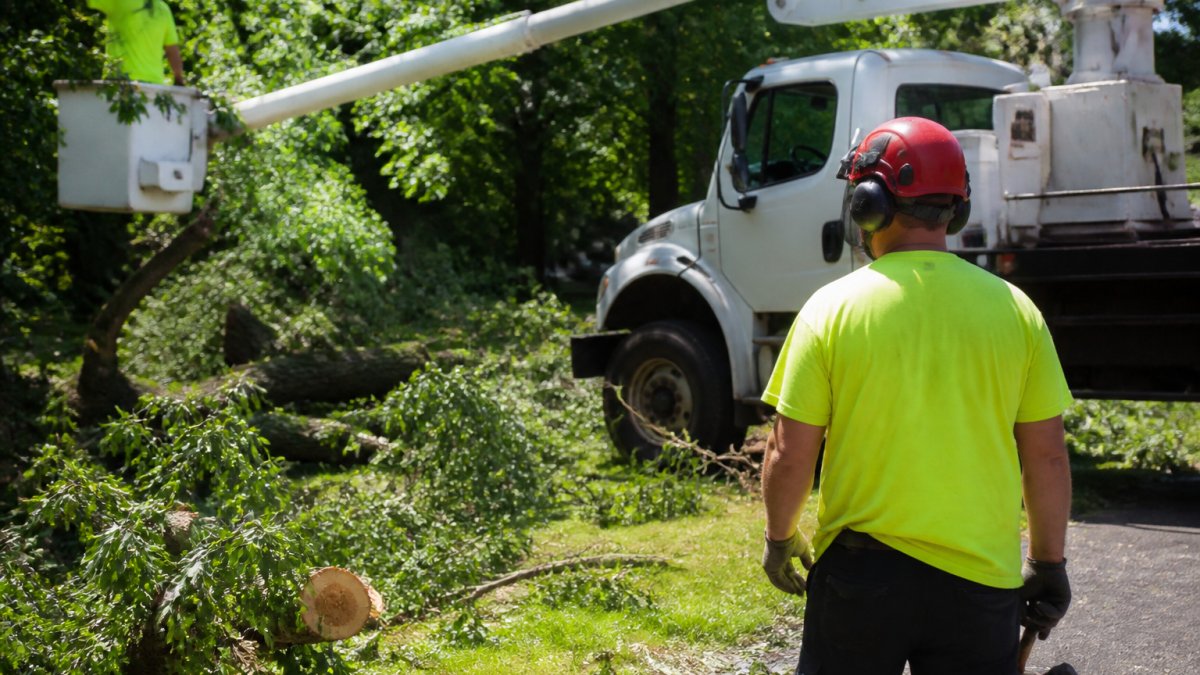
Tree work is one of the most dangerous trades in residential services. Chainsaws, bucket trucks, cranes, and heights of 60 feet or more create constant risk of personal injury and property damage. A single incident can cost far more than the job itself.
How Insurance Protects You and Your Property
Insurance does two jobs: it pays for accidents and proves the company is legitimate. Three types of coverage matter most when hiring insured tree care companies:
- General liability covers property damage and third-party injuries, such as a limb crushing your neighbor's car.
- Workers' compensation covers crew injuries on your property, which is the coverage that most often protects homeowners.
- Commercial auto insurance covers company vehicles and equipment in transit.
How to Verify Tree Service Insurance
You verify tree service insurance by requesting a certificate of insurance, reading it line by line, then calling the carrier directly to confirm the policy is active. A certificate alone is not proof, certificates are easy to fake, and a policy can lapse the day after it is issued. The process takes about ten minutes and is your best protection.
The Four Coverage Types That Matter
A legitimate tree-care operation typically carries four policies:
- General liability pays for third-party bodily injury and property damage, a limb crushing your neighbor's car or a dropped section taking out your power line. Ask for at least $1 million per occurrence for residential work; larger removals near structures warrant $2 million.
- Workers' compensation pays for crew injuries on your property regardless of fault. This coverage most often protects homeowners, because without it an injured climber may file a claim against your homeowner's policy. Confirm it covers tree work specifically, some general policies exclude it.
- Commercial auto covers company trucks and trailers in transit, including the chipper and towed equipment. A personal auto policy on a work truck often excludes commercial use, leaving you exposed if it damages your driveway.
How to Read a Certificate of Insurance
A certificate of insurance is a one-page document from the insurer listing the policyholder, coverage types, limits, and effective dates. How to read one:
- Confirm the company name on the certificate matches your estimate and contract. A mismatch, even a DBA versus a legal name, is a red flag worth a phone call.
- Check the effective dates. The policy must be active on the day work begins, not just the day you signed the estimate.
- Verify each coverage type is listed: general liability, workers' compensation, and commercial auto.
- Note the policy numbers and the insurer's name and phone number to verify.
- Look at the limits, not just the presence of coverage. A $100,000 general liability limit will not cover a serious injury or a crushed vehicle.
- Ask to be listed as a certificate holder so you receive notice if the policy lapses. A certificate holder is not the same as an additional insured, only the additional-insured endorsement gives you direct rights under the policy. For large or high-risk jobs, ask to be added as an additional insured.
Calling the Insurer to Confirm Active Coverage
Call the phone number on the certificate, not one the contractor gives you. Ask three questions:
- Is this policy active today, and what are the effective dates?
- What are the per-occurrence and aggregate limits on the general liability policy?
- Does the workers' compensation policy cover tree work, including climbing and crane operations?
This takes five minutes and closes the loophole fake certificates rely on. If the insurer cannot confirm the policy, do not let the crew start work, no matter the price.
Matching Coverage Limits to Your Project
Coverage limits should scale with the risk of the job. A small ornamental pruning near a driveway needs less coverage than a 90-foot oak removal next to a house with a crane on site. Most practitioners suggest general liability limits of at least $1 million for routine residential work and $2 million or more when cranes, rigging over structures, or tight-access removals are involved.
Questions to Ask a Tree Removal Company
The right questions to ask a tree removal company cover insurance, credentials, scope, and cleanup. Ask before you sign anything, and do not accept vague answers.
- Are you fully insured, and can I see your certificate of insurance?
- Do you carry workers' compensation and general liability coverage?
- Who is the certified arborist on this job, and what are their credentials?
A certified arborist has passed a credentialing exam and maintains ongoing education in tree biology, pruning, and safety. Ask for the name and credential number.
Tree Removal Estimate Checklist
A fair tree removal estimate is written, itemized, and specific about scope and cleanup. Verbal quotes cause most billing disputes in this trade.
What a Fair Estimate Should Include
- The full scope: which trees, which limbs, and what is being removed
- Stump removal or grinding, stated separately
- Debris removal and cleanup responsibilities
How to Compare Multiple Bids
Compare bids on scope, not just the bottom line. A lower number often means the crew is skipping stump grinding, debris hauling, or insurance:
| What to Compare | Why It Matters | What "Good" Looks Like |
|---|---|---|
| Insurance verification | Protects you from liability | Certificate confirmed with insurer |
| Scope of work | Prevents surprise charges | Itemized in writing |
| Stump and debris | Common hidden add-ons | Listed as line items |
| Credentials | Signals real expertise | Named certified arborist |
| Cleanup terms | Affects final cost | Stated in contract |
Tree Service Contract Checklist
A tree service contract checklist should confirm every promise from the estimate is in writing before work begins. The contract is your only proof if a dispute arises.
- Company legal name, address, and contact information
- Detailed scope of work matching the estimate
- Total price and payment schedule
Red Flags When Hiring Insured Tree Care Companies
The clearest red flags when hiring insured tree care companies are pressure to pay cash, refusal to provide a certificate of insurance, and no written estimate. Any one should end the conversation. But the more dangerous red flags are quieter, contract terms and crew behaviors that shift liability for injuries and damage onto you.
Scam Mechanics: How Uninsured Crews Shift Risk to You
An uninsured crew is not just cutting corners, it is transferring risk to your homeowner's policy. Three patterns recur:
- The storm-chaser. A crew arrives after a storm, offers a steep discount for same-day work, collects a deposit, and is gone before the job is finished. If a worker is injured or your roof is damaged, the company has no insurance and no forwarding address. Your insurer pays, and your rates go up.
- The independent-contractor dodge. The company claims every climber is an independent contractor, so it carries no workers' compensation. In many states that classification does not hold up, and the injured worker can still pursue a claim against your homeowner's policy. Ask directly: "Are your crew members employees covered by your workers' comp policy, or subcontractors?" Get it in writing.
- The permit-and-liability shuffle. The company asks you to pull the permit or sign a waiver making you responsible for damage. In most jurisdictions the contractor must pull the permit, and a legitimate company will not ask you to assume liability for its work.
Contract and Payment Red Flags
Watch for these terms and behaviors before you sign or pay:
- A demand for full payment or a large deposit upfront. A reasonable deposit covers materials; it does not cover the whole job.
- Cash-only payment with no receipt, or a request to make the check out to an individual rather than the company.
- A contract that names a different entity than the one on the certificate of insurance.
Verifying Credentials and Business Legitimacy
Insurance is only part of the picture. Before you hire, confirm:
- A physical business address and a phone number that reaches a person, not just a voicemail.
- A state or local license if your jurisdiction requires one for tree work.
- Membership in a professional association such as the Tree Care Industry Association (TCIA) or a credentialed arborist on staff through the International Society of Arboriculture (ISA).
If any of these cannot be produced, treat it as a red flag, even if the price is the lowest you received.
What to Do If an Incident Occurs
If damage or injury occurs during tree work, stop the job, document everything, and contact your insurer immediately. Do not sign anything the contractor hands you at the scene.
- Photograph the damage and the worksite before anything is moved.
- Get the names of the crew, the company, and any witnesses.
- File a claim with your homeowner's insurer within the timeframe your policy requires.
- Notify the contractor's insurer if you have verified coverage.
- Keep every document: the estimate, contract, certificate, and any correspondence.
Conclusion: Hiring with Confidence
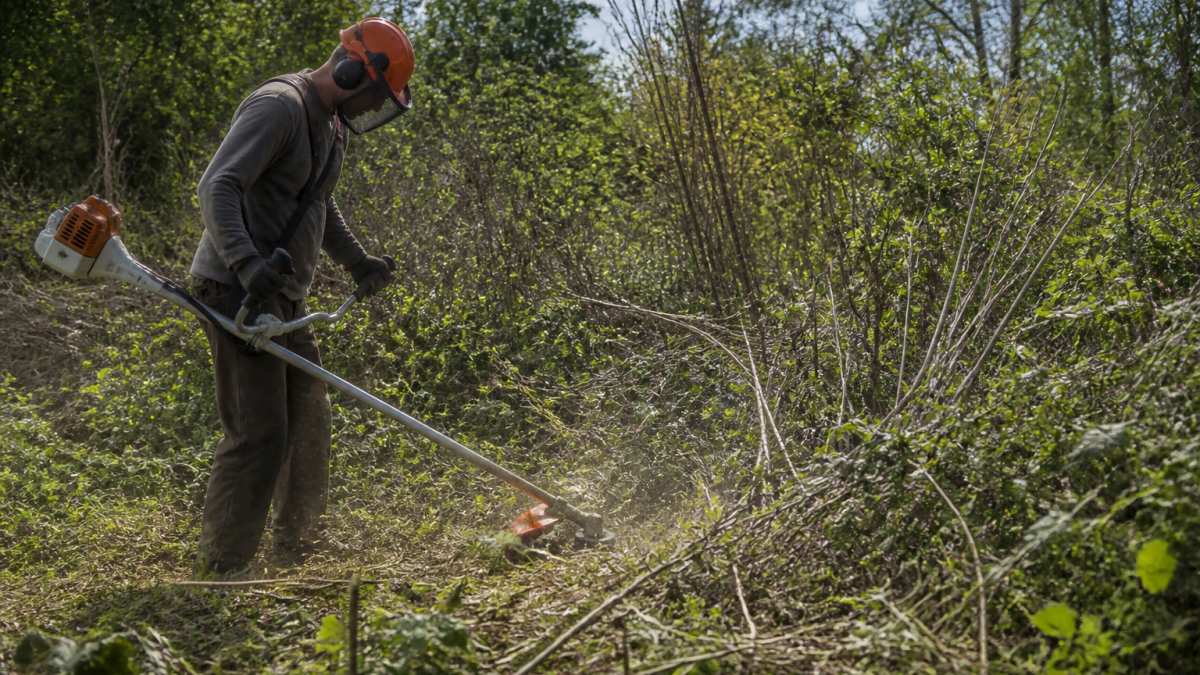
Tree work is not a job to hand off to the lowest bidder with a business card. The risk is real, and the coverage that protects you is easy to verify if you know what to ask. Kauffeld Tree Care is a Certified Arborist-led, fully insured operation serving Watertown and surrounding communities, with 24-hour emergency service for storm damage, crane-assisted removal for hazardous or hard-to-reach trees, and complete land and brush management for residential and commercial properties.
Frequently Asked Questions
How can I verify that a tree care company is insured?
Ask for a certificate of insurance and call the insurance company directly to confirm the policy is active and covers tree work. Check that general liability, workers' compensation, and commercial auto insurance are all in place. This simple step protects you from financial liability if a worker is injured or your property is damaged during the job.
What questions should I ask before hiring a tree removal company?
Ask about their insurance coverage, whether they use certified arborists, how they handle cleanup and debris removal, and if they provide a written estimate. Inquire about permits and damage responsibility.
What should a tree service contract include?
A solid tree service contract should list the exact scope of work, total cost, payment schedule, start and completion dates, and who is responsible for cleanup and debris removal. It should also state that the company carries insurance and outline how damage to your property will be handled. Get everything in writing before work begins.
Does homeowners insurance cover damage caused by a tree service?
Your homeowners policy typically covers damage to your home or structures, but it may not cover injuries to the tree company's workers. If the company lacks workers' compensation, you could be held liable for medical costs. Always verify the tree service's insurance before work starts to avoid claims on your own policy.
Hiring with confidence starts with one phone call and one certificate of insurance. Kauffeld Tree Care brings a Certified Arborist, full insurance coverage, and 24-hour emergency response to every job, from a single hazardous tree to large-scale land clearing. Get started with Kauffeld Tree Care and put a verified, insured crew on your property.