 how-to
Signs a Tree Is Diseased: 7 Warning Signs to Know
Table of Contents
- How to Tell If a Tree Is Diseased: What to Look For
- Common Tree Disease Symptoms You Should Not Ignore
- Dead Branches, Holes, and Other Structural Red Flags
- Seasonal Timeline: When Symptoms Show Up
- When to Remove a Sick Tree vs. Treat It
- What a Professional Tree Health Assessment Covers
- Preventative Maintenance for Long-Term Tree Health
- Frequently Asked Questions
Last Updated: October 3, 2026
How to Tell If a Tree Is Diseased: What to Look For
A tree is diseased when its normal growth, structure, or appearance breaks down over time. Spotting the signs a tree is diseased early can save you thousands in removal costs and protect your home from falling limbs.
Below: the seven warning signs that matter most, a seasonal timeline, and when to treat versus remove.
Why Early Detection Matters for Property Safety
A sick tree doesn't fail all at once. Decay eats the inside for years while the outside looks fine.
That hidden damage weakens the tree's structure. According to the U.S. Forest Service urban tree guidance, dead and decaying trees near structures are a leading cause of storm-related property damage.
Catching problems early gives you options. A tree treated at the first sign of disease can often be saved. A tree ignored for two seasons usually can't.
Common Tree Disease Symptoms You Should Not Ignore
Tree disease symptoms fall into three groups: what you see on the leaves, what grows on the bark, and what happens to the trunk.
Some are cosmetic; others mean the tree is already dying.
Wilting, Discolored Leaves, and Defoliation
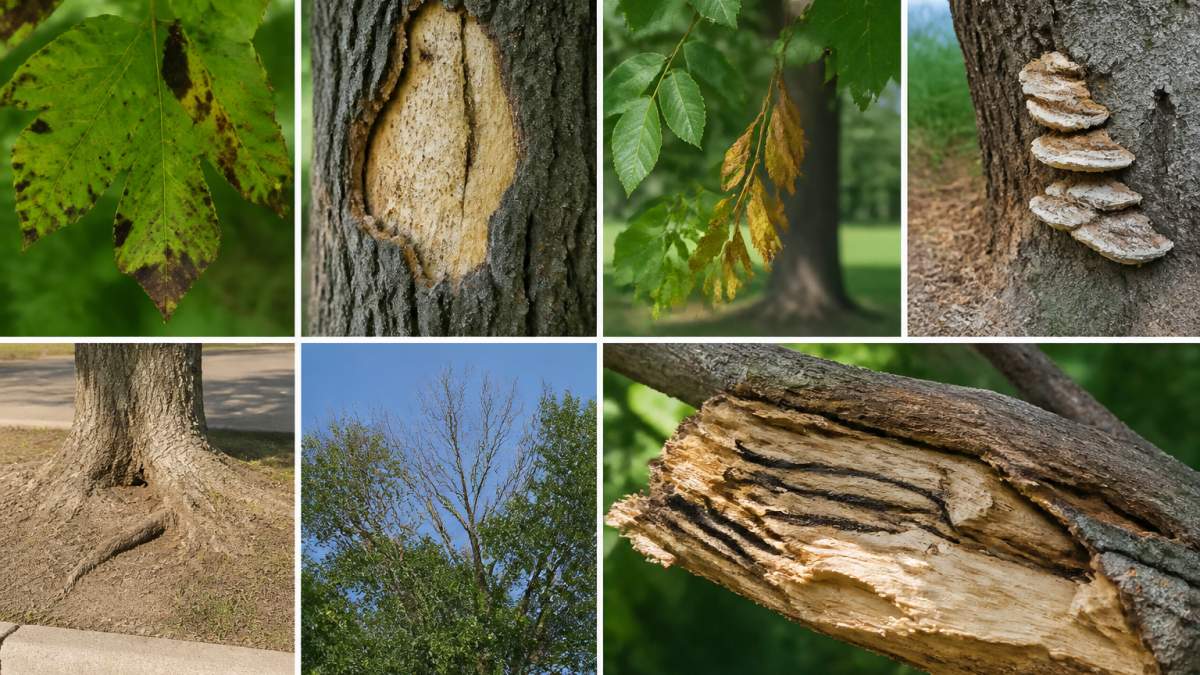
Wilting and yellowing leaves are often the first visible clue. Leaves may curl, drop early, or turn brown at the edges while the veins stay green.
This pattern is called chlorosis, and it usually points to a root or nutrient problem rather than a leaf disease.
Defoliation, losing most leaves out of season, is more serious: a tree that drops its canopy in midsummer can't move water and nutrients.
Watch for these leaf signs:
- Yellow or pale green leaves with green veins (chlorosis, often iron or manganese deficiency in alkaline soil)
- Brown, crispy edges on leaves in mild weather (leaf scorch)
- Dark spots or blotches that spread across the leaf (often fungal leaf spot)
Species-specific patterns worth knowing:
- Maples with black, tar-like spots on leaves are showing tar spot, a fungal disease that is mostly cosmetic but signals a wet spring.
- Oaks with scattered brown, wilted leaves on one branch in midsummer may have oak wilt, a vascular disease that moves fast and is often fatal.
- Pines with needles that yellow from the tip inward and drop prematurely may have pine wilt or needle blight, depending on the pattern.
Fungal Growth, Mushrooms, and Mycelium on Bark
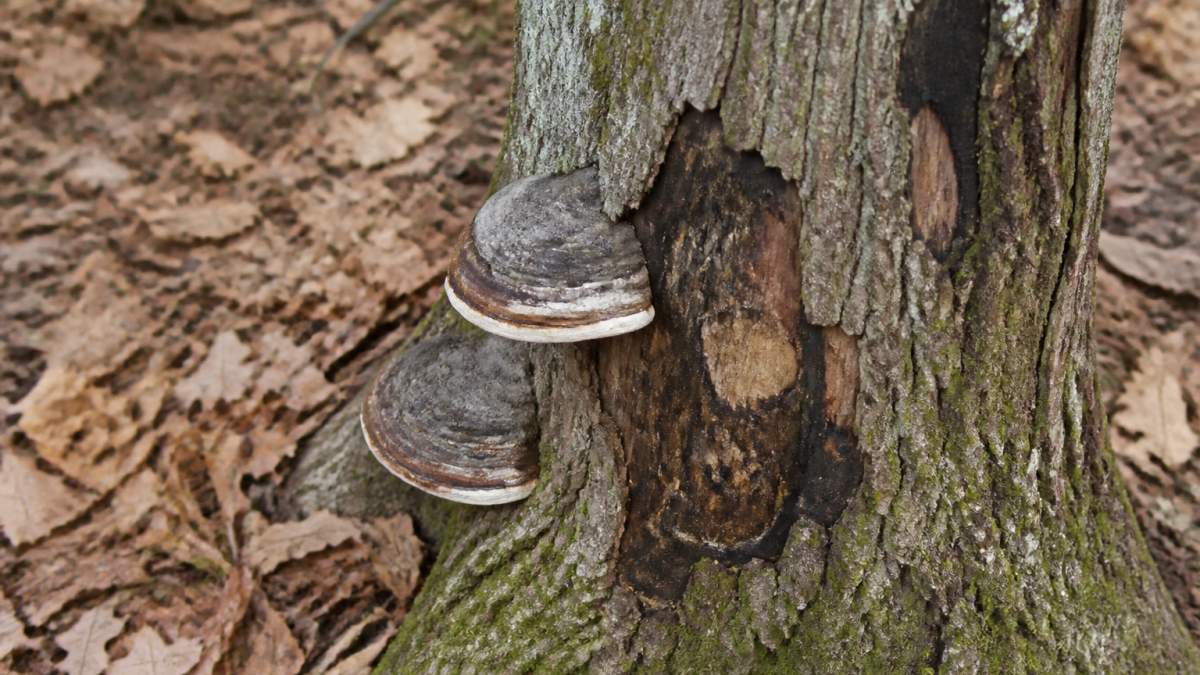
Mushrooms or shelf-like growths on a trunk or root flare are a serious red flag: fruiting bodies of fungi feeding on dead wood inside the tree.
The real damage is the mycelium spreading through the wood. By the time you see mushrooms, decay is usually years advanced.
Look for:
- Shelf fungi or conks at the base of the trunk (often Ganoderma species, which cause root and butt rot)
- Clusters of mushrooms near roots after rain
- White or gray fungal mats under loose bark (sometimes called mycelial fans)
Peeling Bark, Cankers, and Exposed Cambium Layer
The cambium layer sits just under the bark and carries water and nutrients.
Cankers are sunken, dead patches on branches or trunks that ooze sap and grow each year, girdling the branch and killing everything above it.
Bark fissures and shedding are common in older trees, but sudden peeling on a young or healthy tree usually means disease or injury.
What the Symptom Pattern Tells You
Where a symptom appears matters as much as how it looks.
- One-sided symptoms (dieback on a single branch or one side of the canopy) usually point to a localized problem: a broken root, a canker, or a pest infestation on that side.
- Whole-tree symptoms (uniform yellowing, overall thinning) usually point to a systemic issue: root rot, soil compaction, or a vascular disease.
- Symptoms that appear suddenly after a storm, drought, or construction project are often environmental, not infectious.
Pattern recognition narrows the suspects before you call a professional.
Dead Branches, Holes, and Other Structural Red Flags
Structural warning signs mean the tree is becoming a hazard, not just an eyesore, dead wood and weak connections fail without warning.
Insect Damage and Pest Infestation Signs
Holes in bark and sawdust-like debris point to a pest infestation. Borers, beetles, and other insects target trees already weakened by disease or stress.
Look for:
- Small round or D-shaped holes in the trunk
- Fine sawdust (frass) at the base or in bark cracks
- Sticky sap oozing from holes (sap flow)
- Sparse, dying branches on one side of the tree
Insects rarely kill a healthy tree on their own. They finish off one that's already struggling.
Weak Branch Unions and Girdling Roots
Weak branch unions form where two branches grow at a narrow angle and trap bark between them, so the branch can split off in a storm.
Girdling roots wrap around the trunk underground and choke water and nutrient flow. Look for a flat-sided trunk or no visible root flare at the soil line.
Both worsen with time; an arborist can spot them before they cause a failure.
Seasonal Timeline: When Symptoms Show Up
Timing matters: the same disease looks different in spring and fall, and some pathogens only show in a narrow window.
Here's a month-by-month inspection calendar, plus species-specific timing.
| Season | What to Watch For | Why It Shows Up Now |
|---|---|---|
| Early Spring (March-April) | Poor leaf-out, bud death, sap oozing from bark | New growth reveals stress that winter hid; sap flow exposes cankers and borer holes |
| Late Spring (May-June) | Wilting, leaf spots, early defoliation | Pathogens spread in wet, warm weather; vascular diseases like oak wilt peak |
| Summer (July-August) | Chlorosis, leaf scorch, canopy thinning | Heat and drought expose weak roots; stress symptoms peak |
| Early Fall (September-October) | Early color change, premature leaf drop | Sick trees shut down ahead of schedule; fungal fruiting begins |
| Late Fall (November) | Conks, cankers, dead branches | Cool, wet weather triggers mushroom and conk formation |
| Winter (December-February) | Structural defects, weak unions, dead wood | Bare canopy makes structure visible; best time for pruning |
Month-by-Month Inspection Routine
March-April: As buds break, branches that stay bare while the rest leafs out are dead wood.
May-June: The highest-risk window for foliar disease. After a wet week, check leaves for spots, blotches, or fuzzy growth.
July-August: Drought stress peaks. Look for leaf scorch (browning between veins) and premature leaf drop.
November: After leaf drop, inspect the trunk and root flare for new conks, mushrooms, or fungal mats.
Species-Specific Timing
- Oaks: Avoid pruning from April through July in areas where oak wilt is present. Fresh wounds attract the beetles that spread the disease. Prune in winter instead.
- Maples: Watch for tar spot in wet springs and Verticillium wilt in midsummer. Maples are also prone to girdling roots, which show up as a flat-sided trunk any time of year.
- Pines: Needle blight shows up in spring on lower branches; pine wilt often appears in late summer as rapid browning of the whole canopy.
- Elms: Dutch elm disease symptoms typically appear in early summer, wilting and yellowing on one branch, then rapid spread.
How to Tell Temporary Stress from Chronic Disease
A tree that looks bad in August may just be drought-stressed; one that looks bad in May has something deeper going on.
The key is the pattern across seasons:
- Temporary stress improves when conditions change, rain returns, heat breaks, or you water deeply.
- Chronic disease gets worse over time, even when conditions are good.
- A single bad season is a yellow flag. Two bad seasons in a row is a red flag.
If you're unsure, take photos each month from the same angle, a year of photos tells you more than any single inspection.
When to Remove a Sick Tree vs. Treat It
The decision comes down to three things: how much of the tree is affected, whether the problem is treatable, and whether it threatens people or property.
A tree with a few diseased leaves and good structure is usually worth treating; one with decay in the main trunk, mushrooms at the base, or dead branches over your roof is a removal candidate.
DIY vs. Professional Intervention
Some tasks are safe to handle yourself; others aren't, and guessing wrong costs far more than a service call.
- DIY: Watering, mulching, removing small dead twigs, monitoring symptoms
- DIY: Planting the right species for your soil and light
- Professional: Pruning large limbs or anything near power lines
- Professional: Treating cankers, root rot, or widespread disease
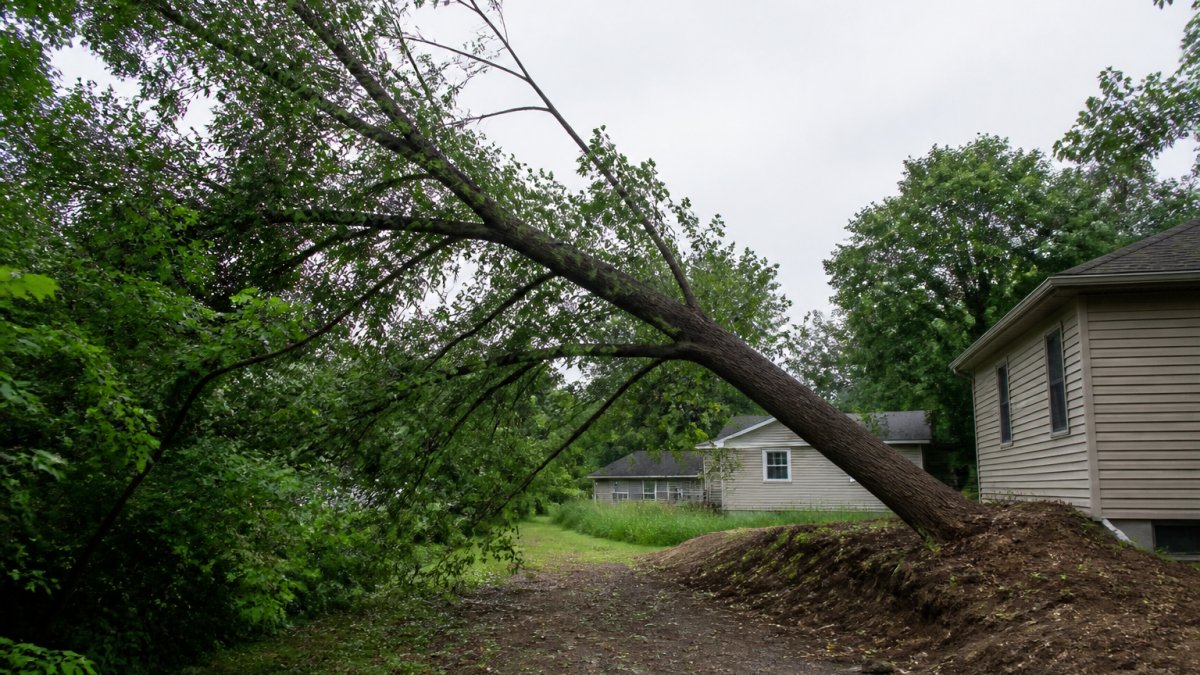
A leaning tree near your house is not a DIY job. It's a crane and rigging job.
What a Professional Tree Health Assessment Covers
A professional tree health assessment is a hands-on inspection of the tree's structure, soil, and symptoms to diagnose problems and rate risk, well beyond what you can see from the ground.
During an assessment, an arborist checks:
- Root flare and soil condition for girdling roots or root rot
- Trunk for cankers, decay, and fungal growth
- Branch unions for weak connections
- Canopy for dieback, thinning, and discoloration
That's why a trained eye catches what a walk-by misses, before the tree becomes a danger.
If you've spotted several of the warning signs above, find a certified arborist through the International Society of Arboriculture to get an expert opinion on your tree.
Preventative Maintenance for Long-Term Tree Health
Healthy trees fight off disease far better than stressed ones, and most problems start with stress factors you can control.
Here's how to keep your trees strong:
- Water deeply during dry spells, not a light daily sprinkle
- Mulch around the base, but keep it off the trunk
- Avoid wounding the trunk with mowers and trimmers
- Prune dead or crossing branches in dormancy
Good care prevents disease and keeps your lot safe. For property managers juggling multiple sites, an annual walk-through pays for itself.
A diseased tree rarely gives a clear warning before it becomes a hazard.
Kauffeld Tree Care brings a certified arborist, full insurance, and 24-hour emergency service to every job, from a single assessment to full removal with a crane.
Frequently Asked Questions
Can a diseased tree be saved?
Many diseased trees can be saved if the problem is caught early. Fungal leaf spots, anthracnose, and minor cankers often respond to pruning, improved drainage, and fungicide treatment. Trees with severe root rot or extensive vascular damage from wilt diseases usually cannot recover. A professional tree health assessment will identify the pathogen and tell you whether treatment is realistic or removal is the safer choice.
What does a tree with a disease look like?
A diseased tree often shows thinning canopy, leaf discoloration, and premature leaf drop. You may see cankers on the trunk, mushrooms or mycelium at the base, peeling bark, and dead branches scattered through the crown. Some diseases cause witch's broom, where dense clusters of twigs grow from one spot. Others cause leaf scorch, with brown edges curling inward. Any combination of these signs warrants a closer look from a certified arborist.
What are the early warning signs of a dying tree?
Early signs include canopy thinning at the top, small leaves, early fall color in midsummer, and slow growth. You may notice bark fissures, dead twigs that snap easily, and sawdust or holes from pest infestation. Root rot shows as mushrooms around the base or soil that stays wet. Catching these signs during the growing season gives you the best chance of saving the tree.
When should a diseased tree be removed?
Remove a tree when more than 50 percent of the canopy is dead, when the trunk has large cankers or hollow cavities, or when root rot has compromised structural integrity. A leaning tree near a structure with fungal growth at the base is a hazard that should come down quickly. An arborist can assess whether the tree poses a risk to people or property and recommend removal timing.