 how-to
How to Safely Remove Leaning Trees: A 2026 Guide
Table of Contents
- Assessing the Lean: Is the Tree a Candidate for Removal?
- Dangerous Leaning Tree Signs You Should Never Ignore
- Storm-Damaged Tree Removal: Emergency Response Steps
- Planning the Felling Direction and Escape Route
- Tree Removal Safety Equipment and Cutting Technique
- When to Stop and Call a Certified Arborist
- Frequently Asked Questions
Last Updated: October 12, 2026
Assessing the Lean: Is the Tree a Candidate for Removal?
Leaning trees have shifted from vertical growth, and whether one can stay depends on why it leaned and how long ago it happened. Knowing how to safely remove leaning trees starts with one honest question: is this tree stable, or is it already failing?
Some lean is normal. A tree that grew toward a gap in the canopy over 20 years is doing what trees do. A tree that leaned last week is telling you something is wrong underground.
Natural Lean vs. New Lean: Why It Matters
Natural lean develops slowly as a tree reaches for sunlight. The trunk thickens on the tension side, and the root plate adjusts over decades. These trees are usually stable.
New lean is different. If the ground shifted, the soil softened, or a storm pushed the crown, the root plate may be torn or compressed. That tree can fail without warning.
Check for these clues:
- Fresh cracks in the soil around the trunk
- Mushrooms or soft spots at the base
- A lean that appeared after rain, wind, or construction nearby
- Exposed roots lifting on one side
A Pre-Removal Risk Assessment You Can Run in Ten Minutes
Before you decide to cut anything, work through this checklist in order.
1. Lean angle and direction. Estimate the angle from vertical.
2. Species and wood strength. Some species (oaks, hickories, black locust) hold hinge wood well.
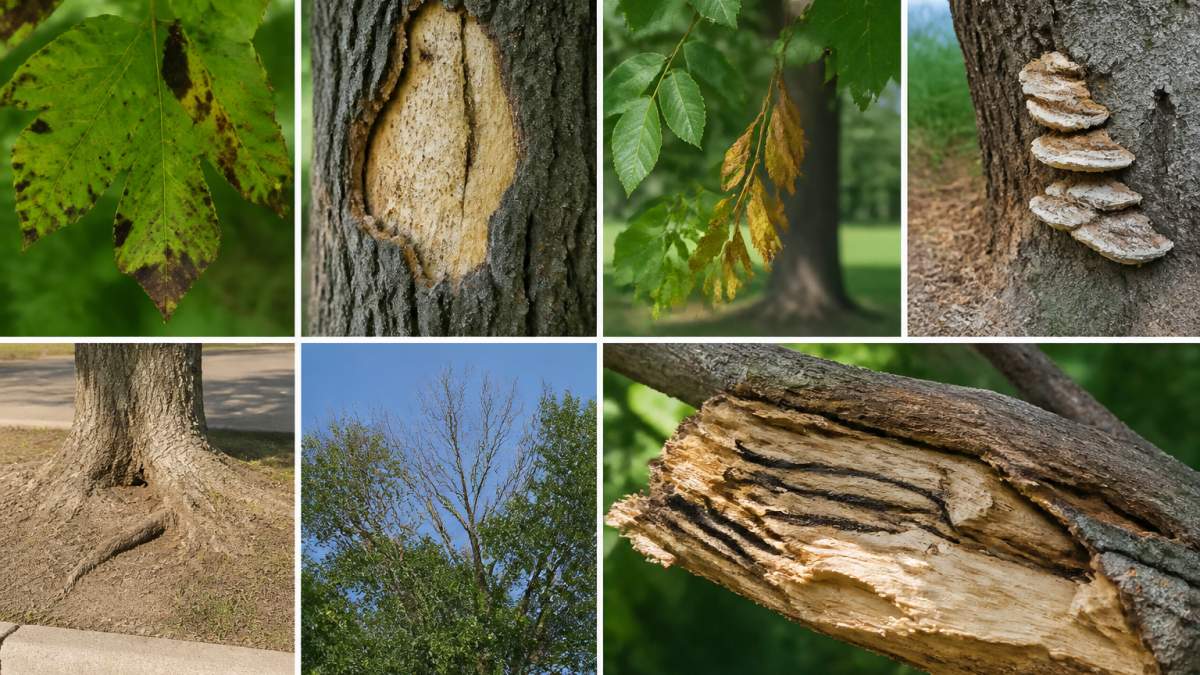
3. Trunk condition. Look for cracks, seams, conks, hollow sounds when tapped, or oozing sap.
**4.
**5.
6. Weather and ground conditions. Saturated soil, high wind, ice, or a forecast of either should postpone the job.
**7.
Reading the Root Plate and Soil Heave
The root plate is the shallow mat of roots that anchors most trees. When it starts to fail, the soil on the opposite side of the lean lifts and cracks.
Heaving soil is one of the clearest danger signs. If you can see a raised mound or split turf at the base, treat the tree as unstable and keep your distance.
Safer Alternatives to Felling
Removal is not always the answer. Depending on the species, age, and cause of the lean, a certified arborist may recommend:
- Cabling and bracing, steel cables or rods that support a split or weakly attached trunk, often used on valuable shade trees
- Structural pruning, removing weight from the lean side to reduce stress on the root plate
- Monitoring, for a stable natural lean with no targets, periodic inspection may be all that is needed
These options require professional assessment. Cabling and bracing in particular are not do-it-yourself projects, and a poorly installed system can fail and cause the very damage it was meant to prevent.
Dangerous Leaning Tree Signs You Should Never Ignore
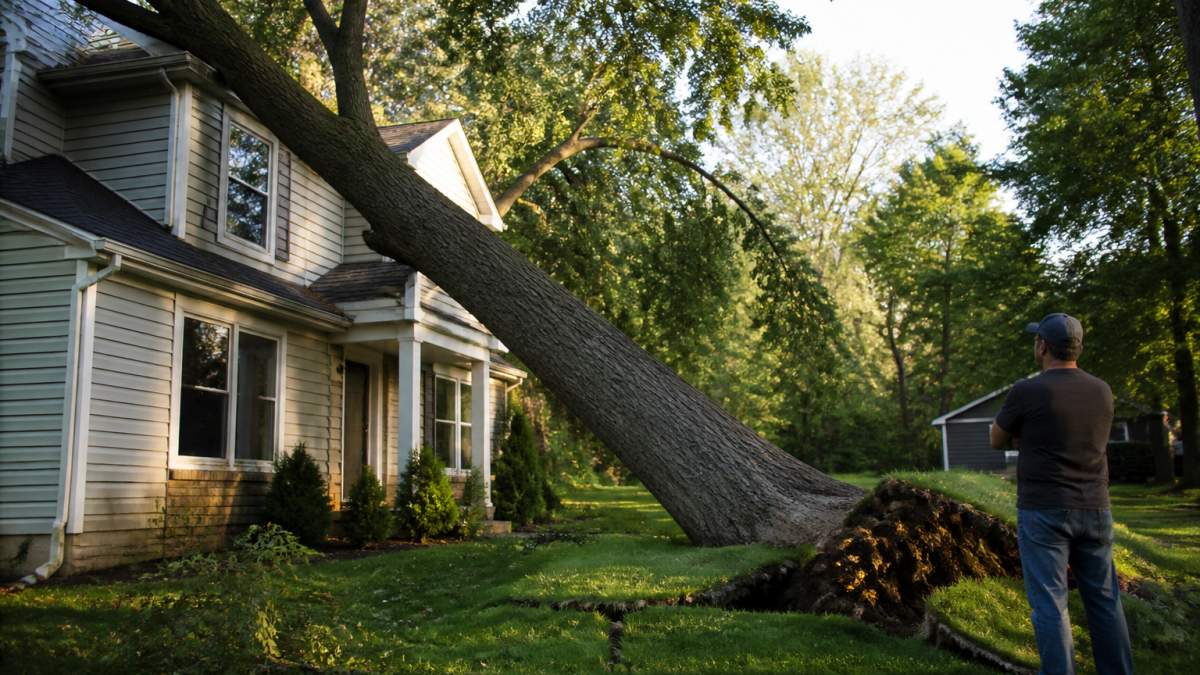
The most dangerous leaning tree signs are soil heave, hanging limbs, and a lean aimed at something you can't replace. Any one of these means you stop and call a professional.
Watch for these red flags:
- Soil cracking or lifting at the base
- A sudden change in lean angle
- Dead or hanging branches overhead
- A hollow or split trunk
- Roots severed by digging or grading
When the Tree Is Leaning Toward Your House
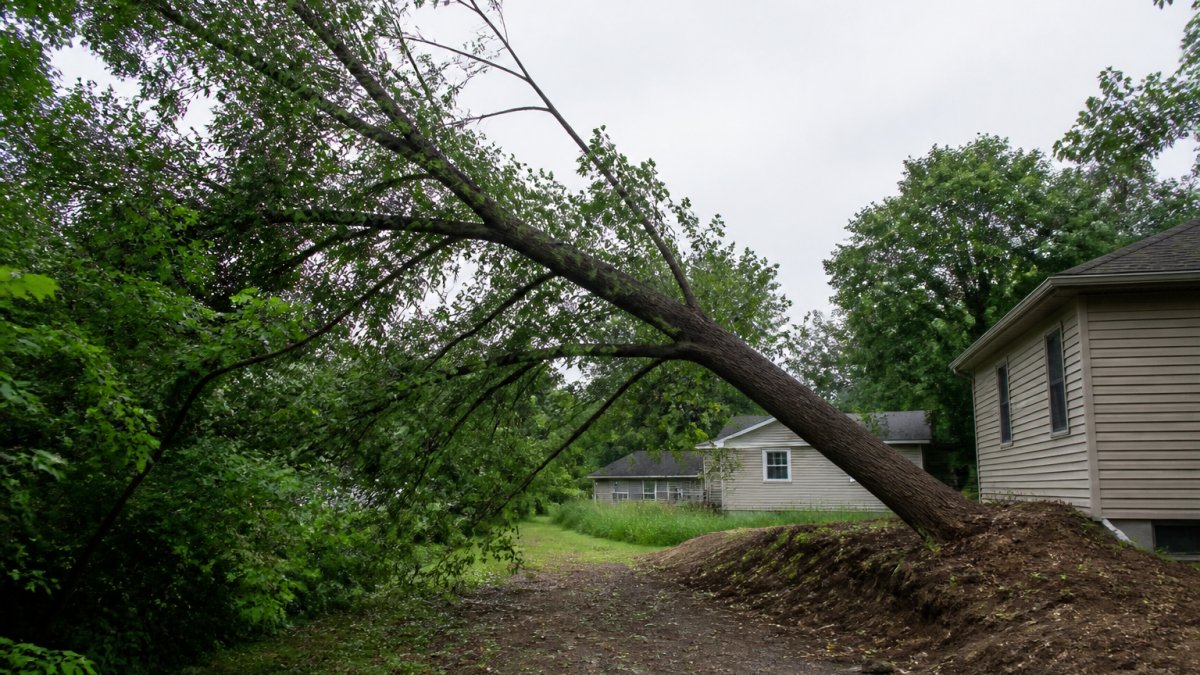
A tree leaning toward your house is a target problem, not just a tree problem. The lean direction tells you where the tree wants to fall, and a house sits directly in that path.
Ask yourself three questions:
- How far is the trunk from the house?
- How tall is the tree compared to that distance?
- Is anyone sleeping or working under the lean?
If the tree is taller than its distance from the house, the risk is serious. Do not try to pull it down yourself.
Storm-Damaged Tree Removal: Emergency Response Steps
Storm-damaged tree removal begins with safety, not saw work. A storm-damaged tree may have split trunks, cracked limbs, or a root plate that's barely holding.
Follow these steps:
- Move people and pets away from the tree's full height plus 50 percent
- Do not touch anything near a downed or sagging power line
- Photograph the damage for your insurance claim
- Call a professional tree service for anything touching a structure
Power Line Contact: What to Do First
If a tree is touching a power line, stop. Do not approach the tree, the line, or anything metal nearby. Call 911 and your utility's emergency line from a safe distance.
Never try to cut a limb off a power line. Electricity can travel through the tree, the ground, and your equipment. Only utility crews should clear lines.
Planning the Felling Direction and Escape Route
The felling direction is the path you want the tree to fall, and it should never be a guess. For a leaning tree, the natural lean often decides the fall direction for you.
Here's how to plan it:
- Identify the natural lean and any side lean
- Pick a fall direction with clear space and no targets
- Clear two escape routes at 45-degree angles from the fall line
- Walk the escape path before you start cutting
For uphill or downhill felling, gravity changes the plan. A tree leaning downhill wants to slide or roll, so the escape route matters even more.
Tree Removal Safety Equipment and Cutting Technique
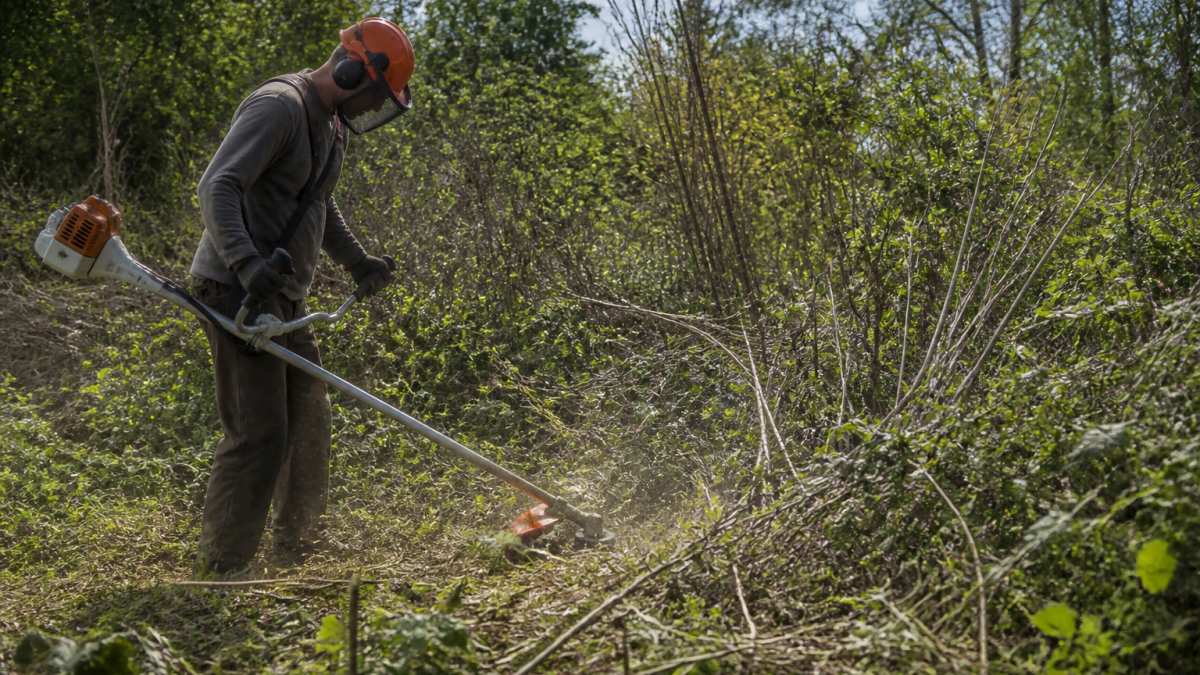
Tree removal safety equipment is not optional, and it starts with personal protective equipment. At minimum, you need a helmet, eye and ear protection, cut-resistant chaps, and steel-toe boots.
The cutting technique for a leaning tree follows a set order:
- Make the notch on the side you want the tree to fall
- Cut the back cut on the opposite side, leaving hinge wood
- Use wedges or a pull line to control the fall
- Step into your escape route as soon as the tree moves
Notching, Back Cut, and Hinge Wood
The notch, back cut, and hinge wood work together to steer the tree. The hinge is the strip of wood left between the notch and the back cut, and it controls how the tree tips over.
A conventional notch works for most leaners. A key notch helps when you need extra control on a heavy or side-leaning tree. Ropes, pull lines, and winches add control when the tree is near a target.
When to Stop and Call a Certified Arborist
Knowing when to stop is the most important skill in this entire article. A certified arborist or licensed tree service should handle any removal where the margin for error is smaller than your reaction time. The line is clearer than most homeowners expect.
Professional-Only Scenarios: Do Not Attempt These Yourself
Stop work and call a professional immediately if any of the following apply:
- The tree is within one and a half times its height of a house, garage, shed, fence line, driveway, or parked vehicle
- Any part of the tree, its root zone, or its fall path touches or comes near a power line, service drop, or utility easement
- The trunk is split, hollow, cracked, or shows conks (hard fungal shelves) or soft rot
- The root plate has lifted, cracked the soil, or shifted since you first noticed the lean
- The tree is hung up on another tree or leaning against a structure
- The lean angle exceeds roughly 15 degrees from vertical, or the lean appeared suddenly
- The tree is dead, dying, or has large dead limbs overhead (a "widow-maker" risk)
- You cannot identify a clear, unobstructed escape route at 45 degrees from the fall line
- The tree is on a slope steeper than about 20 percent, or the ground is saturated
- You would need to climb, rig, or use a crane to remove it safely
If any one of these is true, the job is no longer a homeowner task. It is a rigging, climbing, or crane job, and those require training, insurance, and equipment most property owners do not have.
What a Certified Arborist Actually Does
A certified arborist will assess tree stability, identify decay or root failure, and plan the removal around the targets. For hazardous leaners, that plan often involves:
- Rigging the tree down in sections rather than felling it whole
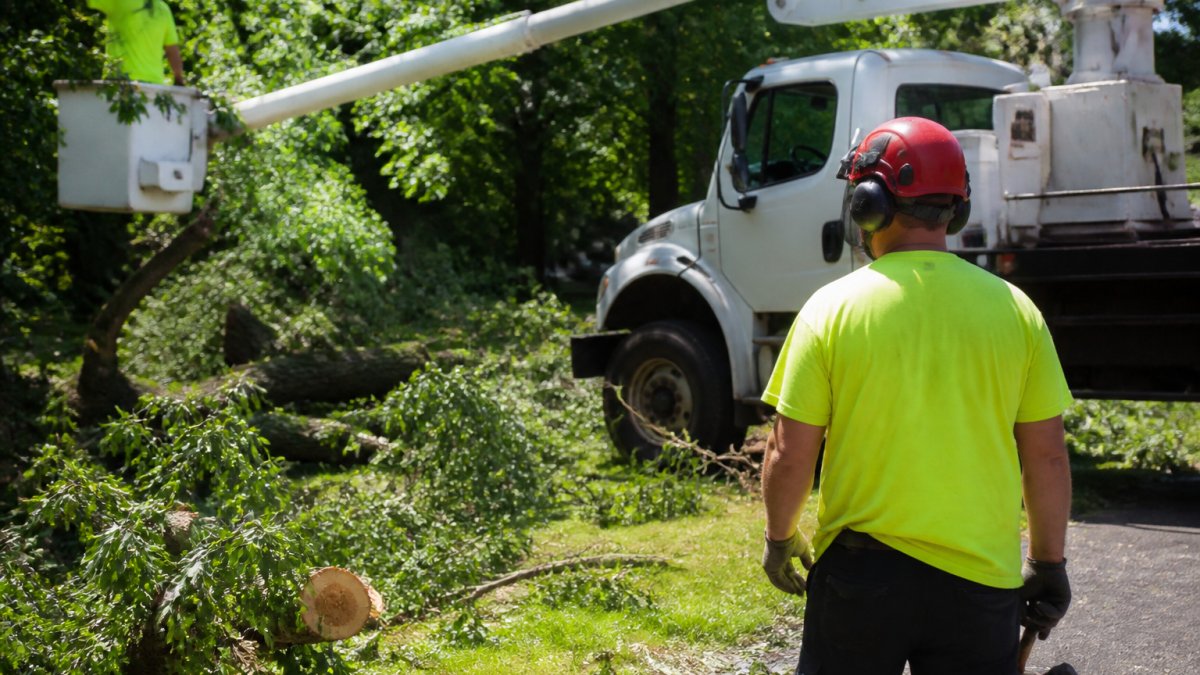
- Using a bucket truck or crane to remove weight from the lean side first
- Installing a pull line or winch to control the fall direction
- Coordinating with the utility company if lines are involved
Permits, Utility Clearance, and Local Rules
Before any removal, check whether your municipality or homeowners association requires a tree removal permit. Many jurisdictions protect heritage, native, or street trees, and removing one without approval can trigger fines or replacement requirements. Call 811 before any digging near the root zone to have underground utilities marked, it is free and required in most states. If a tree is near overhead lines, contact your utility provider first; they often clear limbs at no cost to the homeowner, and they must be involved before any work near energized lines.
Questions to Ask Before You Hire
- Are you ISA certified, and do you carry liability and workers' compensation insurance?
- Will you provide a written estimate that lists rigging, disposal, and stump grinding separately?
- Who is responsible if the tree or equipment damages my property?
- Can you show me proof of insurance before work begins?
A legitimate professional will answer all four without hesitation. If they will not, keep calling.
Frequently Asked Questions
Is it safe to cut down a leaning tree yourself?
Only if the tree is small, the lean is minor, and there is no structure, vehicle, or power line within its fall path. Most leaning trees, especially those with root plate movement or a lean toward a house, are not safe for DIY removal. A certified arborist can assess the tree's stability and determine whether rigging, a crane, or sectional felling is required. If you have any doubt, call a professional tree service.
How do you remove a tree leaning toward a house?
Removing a tree that leans toward a house requires careful planning. Professionals assess the lean percentage, hinge wood integrity, and target area. They may use a pull line anchored to a secure point, a winch, or a crane to control the fall direction. In some cases, the tree is removed in sections from the top down. Never attempt this yourself if the tree could hit your home.
When should a leaning tree be removed?
Remove a leaning tree when it shows dangerous signs: new lean, exposed root plate, soil cracks, dead branches, or a lean toward a house or utility line. Trees that have leaned gradually over years may be stable, but sudden lean after a storm usually means root failure. A certified arborist can evaluate tree stability and recommend removal, cabling, or bracing.
What should you do if a tree is leaning after a storm?
After a storm, stay away from any leaning tree. It may be hung up on another tree or have a damaged root plate. Do not try to cut it yourself. Call a professional tree service for storm-damaged tree removal. If the tree is touching a power line, contact your utility company immediately. Keep people and pets out of the fall zone until a professional arrives.
A leaning tree rarely fixes itself, and waiting usually makes the risk worse. If you're unsure whether a tree is stable, don't guess. Kauffeld Tree Care offers certified arborist assessments, crane-assisted removal for hazardous trees, and 24-hour emergency storm cleanup. Get started with Kauffeld Tree Care and put safety back in your yard.