 How-to
Commercial Land Clearing Services in Wisconsin: What to Expect
Last Updated: October 26, 2026
Quick Summary
Commercial land clearing services in Wisconsin clear a site to a usable state: trees felled, brush mulched, stumps ground, and debris hauled off. A written scope beats a verbal estimate, so confirm the method, acreage basis, and debris handling before work begins.
- Forestry mulching grinds brush, saplings, and stems up to roughly 8 inches in place, leaving mulch instead of debris to haul.
- Published 2026 figures list brush clearing hourly rates of $185 to $400 or more and per-acre rates of $175 to $500 or more.
- The cheapest per-acre bid often assumes the lightest possible vegetation, so ask what density the number is based on.
- Clearing near wetlands or shoreland can require local, county, or state approval before equipment arrives.
- File an 811 utility locate request and wait for marks before scheduling any ground disturbance.
Table of Contents
- What Commercial Land Clearing Services Cover
- Forestry Mulching: The Method Most Wisconsin Sites Choose
- Land Clearing Cost per Acre: What Drives the Number
- Land Clearing Equipment and the Job It Handles
- Overgrown Brush Clearing and Invasive Species Removal
- Permits, Wetlands, and Environmental Rules Before You Clear
- Planning a Clearing Project Step by Step
- Request a Free Estimate for Your Wisconsin Property
- Frequently Asked Questions
What Commercial Land Clearing Services Cover
Commercial land clearing services in Wisconsin clear a site to a usable state: trees felled, brush mulched, stumps ground, and debris hauled off. A written scope beats a verbal estimate.
We quote commercial clearing jobs across Watertown and surrounding communities, and the first question is always: what has to be gone, and what has to survive? That answer sets the equipment, timeline, and price.
Clearing a commercial site is a sequence of connected tasks, each with its own cost driver:
- Brush and undergrowth removal to open sight lines and access
- Tree removal, including hazard trees near structures and power lines
- Logging or timber harvest where marketable hardwood has value
From Overgrown Lot to Build-Ready Site
A build-ready site has no vegetation above grade, no root mass where footings go, and drainage that still works after the top layer is disturbed. Miss one and the builder inherits the problem.
Clearing a lot is the process of removing vegetation, stumps, and surface debris so a site can be surveyed, graded, and permitted for construction. On wooded acreage, decide early which trees stay as buffer or specimen and which come out.
Order matters: access first, then removal, stump work, and grading. Skip it and equipment gets stuck or a finished pad gets torn up.
Forestry Mulching: The Method Most Wisconsin Sites Choose
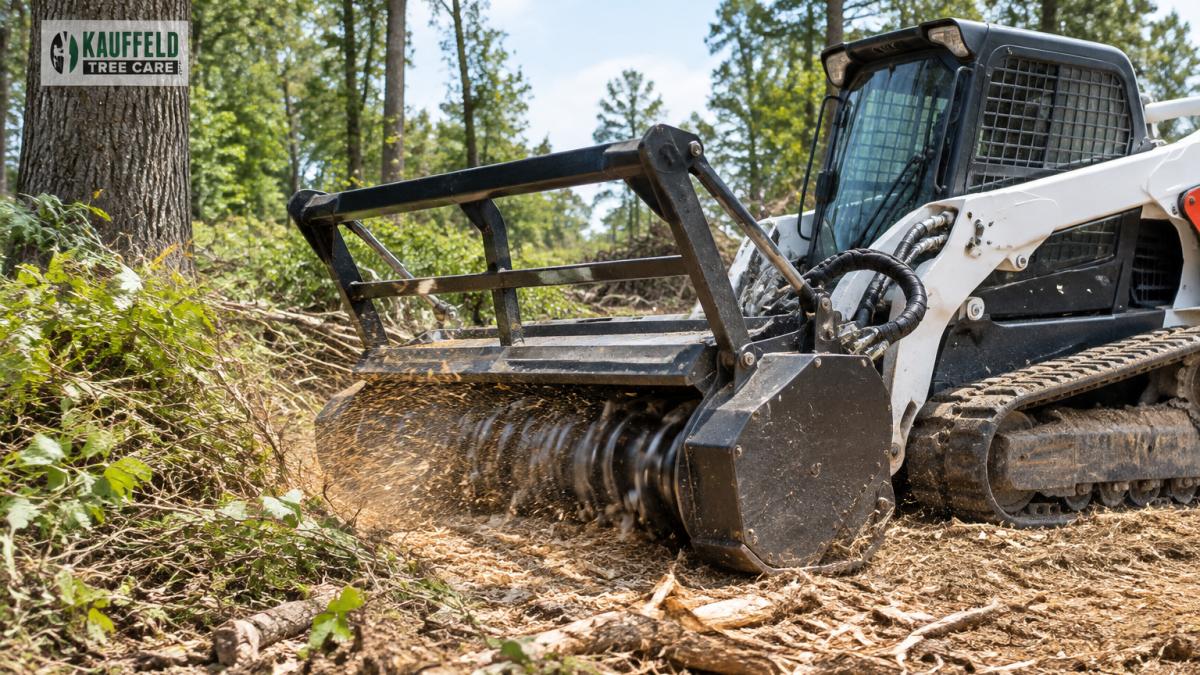
Forestry mulching is the fastest way to clear brush, saplings, and small trees on a wooded Wisconsin lot.
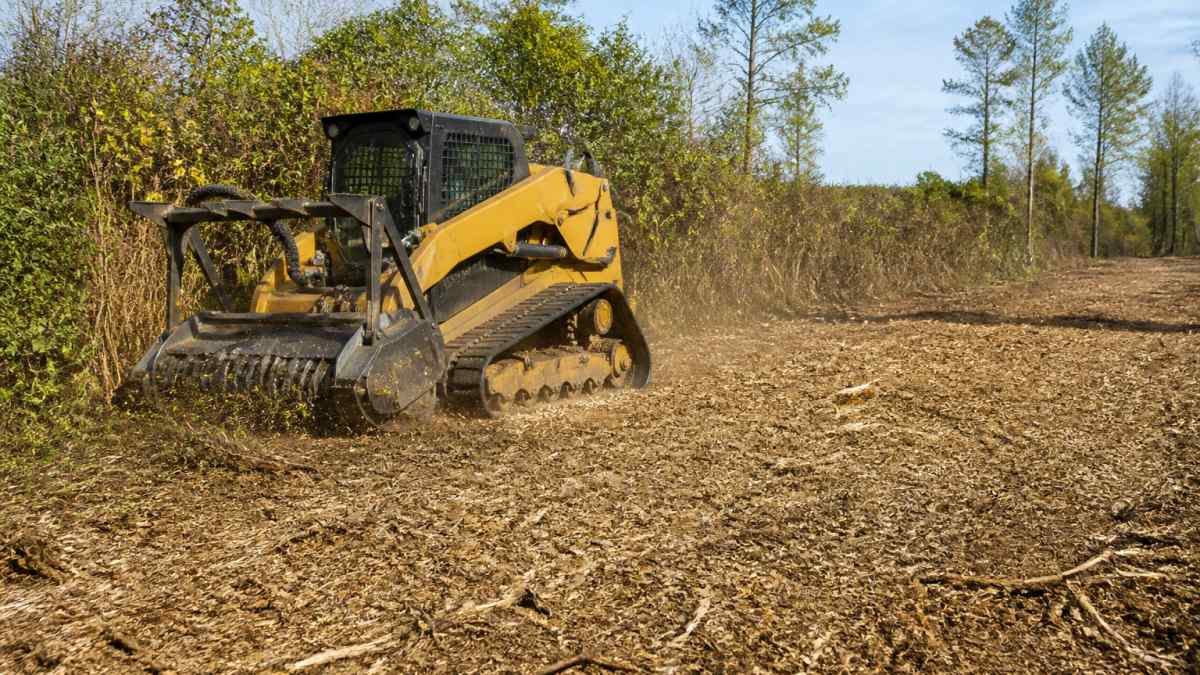
The economics are documented. A USDA Forest Service case study on roller chopping for site preparation reported productivity of 1.55 acres per hour at $43 per acre for that method.
What most guides miss is the mulch itself.
For a full walkthrough of how the machine works and where it fits, see our guide to forestry mulching for land clearing.
Land Clearing Cost per Acre: What Drives the Number
Land clearing cost per acre in Wisconsin typically runs from a few hundred to several thousand dollars, and the spread is almost entirely about what is growing on the site: density, tree size, terrain, and access.
Published figures show the range. A 2026 brush clearing cost guide from Aspen Land Management lists hourly rates of $185 to $400 or more, with a national average project cost of $815 to $2,819 and per-acre rates of $175 to $500 or more.
The Six Factors That Move a Commercial Quote
Most per-acre quotes use the same inputs. Ask which ones the bidder used to tell whether two quotes are comparable.
- Vegetation density and stem size. Open pasture with scattered saplings clears far faster than 20-year-old buckthorn and honeysuckle. Mulching heads handle up to roughly 8 inches, so anything larger pulls in a different machine and rate.
- Terrain and slope. Flat ground lets equipment move freely; slopes, ravines, and wet soils slow the machine, force different equipment, and sometimes require matting or a new access route. Steep or soft ground is a common reason a low per-acre bid gets renegotiated.
- Access and staging. A wide, stable entrance with room to stage equipment clears cheaper than a narrow gate or a walk across a neighbor's driveway. Access also determines how debris leaves the site.
- Debris handling. Mulching leaves material on site as ground cover, avoiding hauling cost; cut-and-haul adds trucking and disposal, often the largest line item. Ask whether the quote assumes on-site mulching or off-site hauling.
- Stump work. Grinding to grade is one price; full root extraction where footings go is another. A quote listing 'stump removal' without depth or whether roots come out is not a complete number.
- Distance to disposal or market. Merchantable timber can offset clearing cost, and if debris must be hauled, distance to the receiving site drives trucking cost.
Hourly Rates, Project Averages, and Per-Acre Quotes
Three quoting models exist, and they answer different questions.
| Quote Type | Best For | What It Tells You | What It Hides |
|---|---|---|---|
| Hourly rate | Small or uncertain jobs | Cost per machine hour | Total project cost |
| Project average | Budgeting a typical lot | Realistic ballpark | Site-specific risk |
| Per-acre rate | Large wooded acreage | Comparable unit cost | Density and terrain variance |
Per-acre pricing is most useful for commercial budgeting, but only when acreage is described honestly. Open pasture and 20-year-old buckthorn are not the same job, and a quote treating them as equal is built to be renegotiated.
How to Compare Two Clearing Estimates
Put the bids side by side and check four things before you look at the bottom line:
- Acreage basis. Is the per-acre rate applied to gross acreage or to the actual cleared area? Buffers and preserved trees should be excluded.
- Method and debris. Mulch-in-place and cut-and-haul produce very different totals. Confirm which one the number reflects.
- Stump scope. Grind-to-grade versus full extraction, and to what depth.
A quote built this way is not just a price, it is a scope you can hold the contractor to.
Land Clearing Equipment and the Job It Handles
Land clearing equipment is matched to the vegetation, not the other way around. The right machine for mulching is wrong for a 30-inch oak, and using it anyway costs more.
The main categories:
- Forestry mulchers for brush, saplings, and stems up to roughly 8 inches
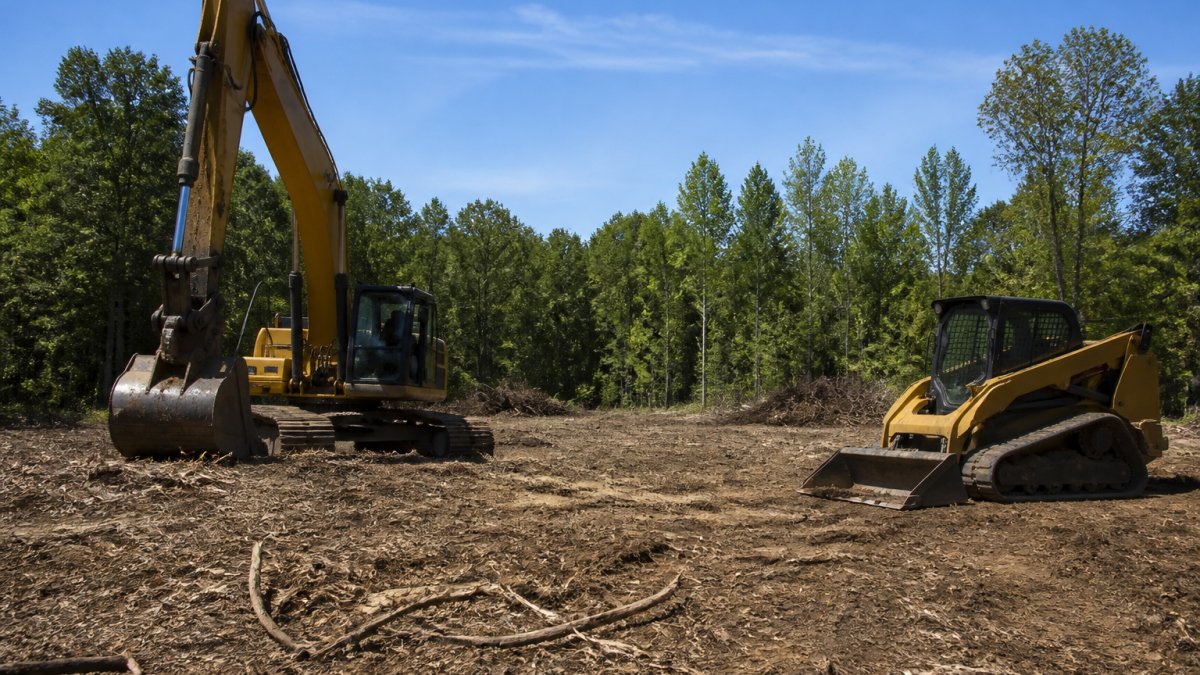
- Excavators with thumb and shear for larger trees and stump extraction
- Dozers for pushing, grubbing, and rough grading
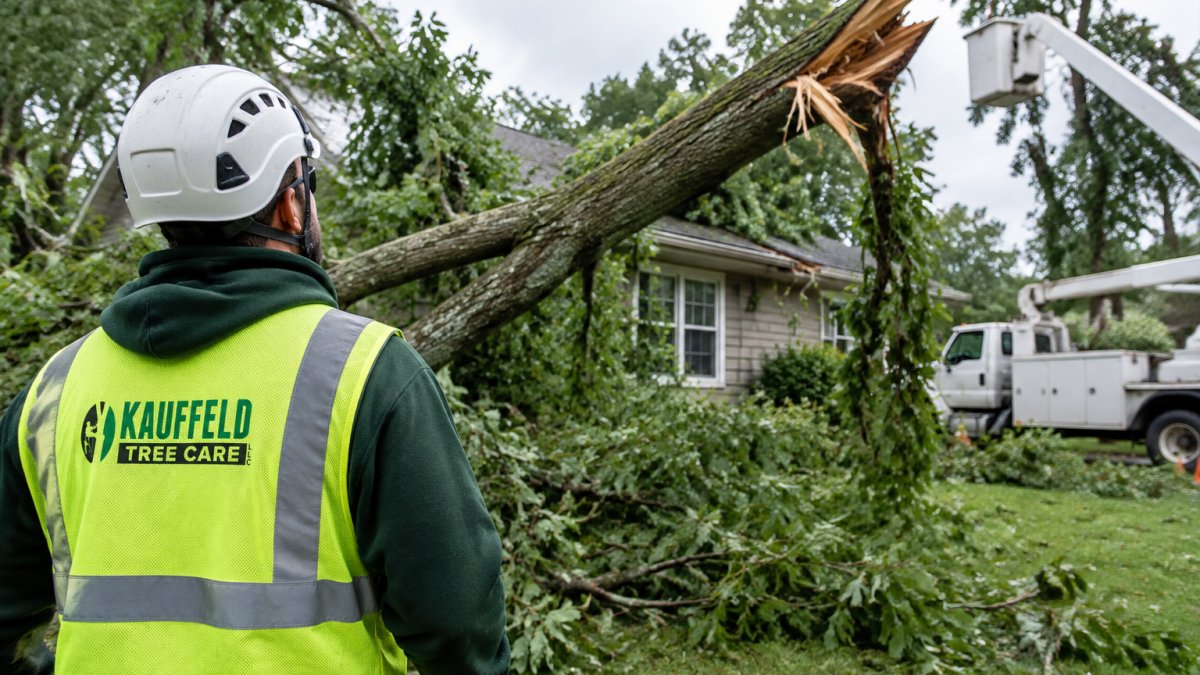
A common mistake is assuming one contractor covers all of it: excavation outfits often leave stumps, and tree services may not grade. We handle the tree and brush side, including crane removal for hazardous or hard-to-reach trees.
Overgrown Brush Clearing and Invasive Species Removal
Cutting alone does not solve invasives. Most resprout from the root crown within a season, so cut-and-treat or full root removal is standard.
For a step-by-step walkthrough of clearing dense brush before you hire or start, our guide to clearing overgrown brush covers the sequence and the safety calls.
On commercial properties, brush removal is usually about liability as much as appearance.
Permits, Wetlands, and Environmental Rules Before You Clear
Permits and environmental review come before equipment arrives. Clearing near water, wetlands, or shoreland can require local, county, or state approval, and working first can mean restoration orders and penalties. Rules are layered, federal, state, county, municipal, and which applies depends on where the parcel sits and what is on it.
The Layers of Review a Commercial Site Can Trigger
- Federal wetland and waterway rules. Placing fill in wetlands or waters of the United States can require a permit from the U.S. Army Corps of Engineers (the EPA). The trigger is the discharge of dredged or fill material, not the act of cutting vegetation, so the first question is whether the project involves fill or only clearing.
- State wetland and waterway rules. Wisconsin regulates work in and near wetlands and waterways through its own permitting program, and maintains wetland mapping that can flag a parcel before anyone walks it. A wetland delineation, a field survey that establishes the actual boundary, often determines whether a permit is needed at all.
- Shoreland zoning. Counties administer shoreland zoning for work near lakes, rivers, and streams. Setbacks and vegetation-cutting limits can restrict clearing even where no wetland permit is involved.
What to Confirm Before Mobilization
A practical pre-clearing checklist for a commercial owner:
- Pull the wetland map for the parcel and compare it to what is actually on the ground. Mapping is a screening tool, not a boundary.
- Ask the county whether a delineation or permit is required for the specific work, clearing only, or clearing plus fill.
- Confirm shoreland status if any part of the parcel is near a lake, river, or stream.
- Get the local erosion control requirements in writing and confirm who is responsible for inspection.
- Check for tree preservation or replacement rules in the municipal code.
- File the 811 locate request and wait for marks before scheduling equipment.
We are not the permitting authority, and requirements vary by township and county. We flag conditions we see on site, wet soils, a drainageway, a shoreland edge, so the owner can confirm with the county before we mobilize. That early flag often separates a smooth project from a stop-work order.
Planning a Clearing Project Step by Step
A clearing project runs on a fixed sequence. Skipping a step adds cost later, usually at the worst moment in the build schedule.
- Define the end state. Building pad, trail, pasture, or view corridor? Each needs different work.
- Walk the site and mark what stays. Flag specimen trees, buffers, and property lines.
- Request utility locates. No ground disturbance before marks are in.
- Confirm permits and setbacks. County and local review before mobilization.
- Get itemized quotes. Ask for method, acreage basis, and debris handling.
- Clear in sequence. Access, removal, stump work, grading.
- Stabilize the site. Seed, erosion mat, or mulch management per the plan.
Two steps get rushed most often: the walk-through and the stabilization. The first determines whether the quote is accurate. The second determines whether the site holds up through the next rain.
Request a Free Estimate for Your Wisconsin Property
A free estimate should tell you the method, the acreage basis, and what happens to the debris. Skip those three and it is not a quote, it is a guess.
Commercial clearing is a scheduled, sequenced job, and projects go smoothly when scope is settled before the first machine arrives.
Kauffeld Tree Care is a Certified Arborist-led, fully insured operation serving commercial property managers and developers across the region, with crane tree removal for hazardous or hard-to-reach trees, forestry mulching, stump grinding, and 24-hour emergency storm cleanup.
Frequently Asked Questions
How much does land clearing cost per acre in Wisconsin?
Your number depends on vegetation density, terrain, access, and how much debris must be hauled. Kauffeld Tree Care quotes each commercial site individually, so request a free estimate rather than budgeting from a generic per-acre figure.
Is forestry mulching better than traditional land clearing?
Forestry mulching grinds brush, saplings, and small trees into mulch on site, which limits debris hauling and leaves a protective layer over the soil. Traditional clearing with excavators and dozers removes material and is often needed when stumps, root balls, or grading are part of the scope. A USDA Forest Service case study on roller chopping in Wisconsin measured 1.55 acres per hour at $43 per acre, showing how fast mechanical treatment can move. The right choice depends on whether you need a rough-cleared lot or a graded, build-ready pad.
What equipment is used for commercial land clearing?
Typical land clearing equipment includes forestry mulchers on tracked skid steers, excavators for stump and root removal, dozers for pushing and grading, and chippers for tops and limbs. Bucket trucks and cranes come into play when large or hazardous trees stand near structures, roads, or utility lines. Debris hauling requires dump trucks or roll-off containers. The mix matters because a mulcher alone will not remove stumps or grade a site, and an excavator alone leaves piles that must be handled.
Can I clear my land without a permit in Wisconsin?
Not always. Clearing that touches wetlands, shorelands, or waterways usually requires approval from the Wisconsin Department of Natural Resources or your county, and local ordinances may add erosion-control and stormwater requirements. Commercial projects often need a site plan review before any vegetation comes down. Check with your county zoning office and the DNR before work starts. A contractor who has cleared commercial sites in the area can flag the permits your project is likely to trigger.