 How-to
How to Pick the Best Organic Treatments for Sick Trees
Last Updated: November 14, 2026
Quick Summary
The best organic treatments for sick trees are compost and mulch for soil health, neem oil for fungal disease and soft-bodied insects, copper or sulfur spray for dormant-season prevention, and compost tea with rock minerals for nutrition and root recovery. Match the product to a confirmed cause first, because no single organic product fixes every sick tree.
- Spray neem oil in early morning or evening when temperatures are below about 85°F and no rain is forecast for 24 hours.
- Apply copper or sulfur sprays only in the dormant season, when buds are closed and bees are not foraging.
- Apply 2-4 inches of mulch in spring or fall, keeping it off the trunk flare to avoid decay.
- Clean up fallen leaves and diseased fruit, since most fungal spores overwinter in that debris.
- Confirm the disease with close-up photos before choosing a fungicide, and never spray while bees are active on blossoms.
Table of Contents
- How to Read Sick Tree Symptoms Before You Treat
- Best Organic Treatments for Sick Trees: A Comparison
- Fruit Tree Fungus Treatment: Matching the Method to the Disease
- How to Treat Apple Tree Diseases Naturally
- The Best Organic Fungicide for Fruit Trees and How to Apply It
- Using Fruit Tree Diseases Pictures to Confirm a Diagnosis
- Frequently Asked Questions
How to Read Sick Tree Symptoms Before You Treat
The best organic treatments for sick trees only work when you match them to the right cause. At Kauffeld Tree Care, we tell homeowners the same thing on nearly every diagnostic visit: a yellow leaf is a clue, not a diagnosis.
Start with location. Damage on one branch points to a canker or a pest. Damage spread evenly across the crown usually points to a root zone or soil health problem.
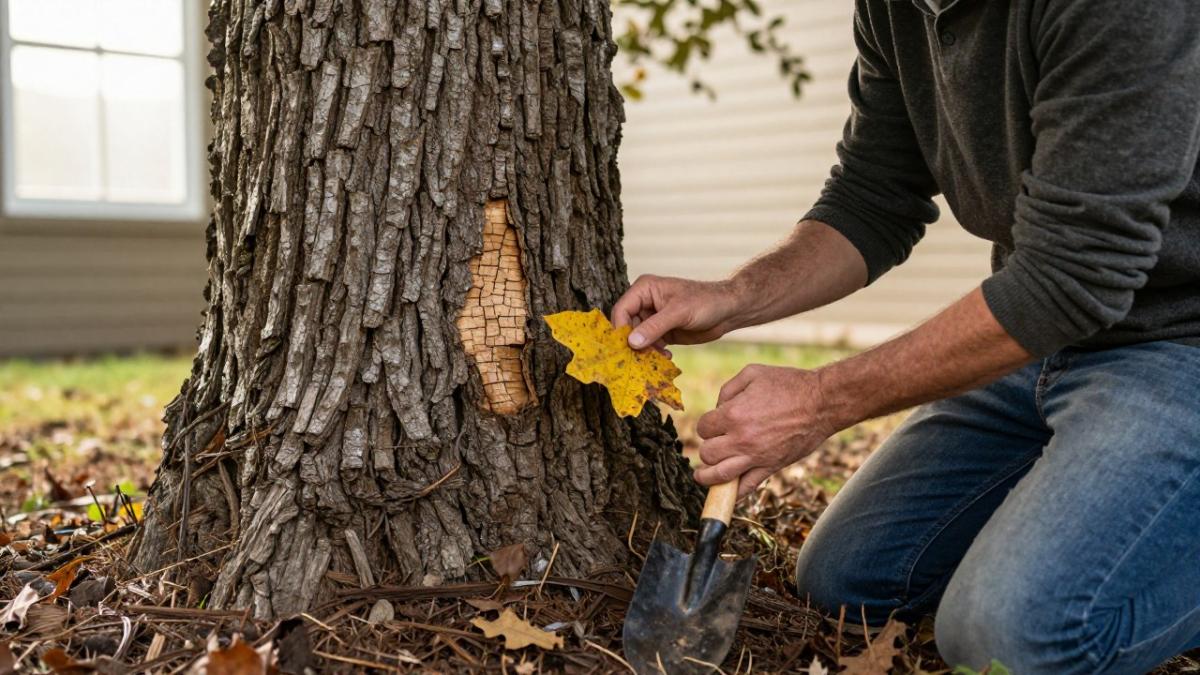
A Symptom-to-Cause Decision Tree
Work through these questions in order. Stop at the first one that fits, because the answer changes what you buy.
- Is the damage on one side or one branch? Localized dieback usually means a canker, a borer, or physical injury to that limb. Prune and inspect the cut surface before spraying anything.
- Did the symptoms appear suddenly or over months? Sudden wilting in summer points to root failure, construction damage, or a vascular disease. Slow decline over seasons points to soil compaction, planting depth, or chronic drought stress.
- Are leaves spotted, blotchy, or coated in powder? That pattern is consistent with fungal disease, especially after a wet spring. Confirm with close-up photos before choosing a fungicide.
- Is yellowing between the veins while veins stay green? That is classic interveinal chlorosis, often a soil pH or nutrient issue rather than an infection. A soil test settles it.
- Are there mushrooms at the base or conks on the trunk? That signals internal decay, which is a safety concern before it is a treatment concern. Have the tree assessed for risk.
- Is there fine sawdust, pitch tubes, or exit holes? Those are borer signs, not fungus. Fungicide will not help; the response is cultural care and, in some cases, removal.
Foliage, Trunk, and Root Clues That Point to a Cause
- Spotted or blotchy leaves: often fungal disease, especially after a wet spring
- Yellowing between veins: frequently a nutrient or soil pH issue
- Sudden wilting on one side: suspect root damage or a trunk canker
- Mushrooms at the base: decay inside the trunk, which is a safety concern
- Fine sawdust or pitch tubes: borers, not fungus
- Scorched leaf edges on the sunny side: drought stress or root loss, not disease
- Thin canopy from the top down: often compaction, grade changes, or planting too deep
A common mistake is spraying a fungicide on a tree that is actually drought stressed. You will spend money and change nothing. Watch out: if you cannot name the cause in one sentence, do not spray, the label rate and timing depend on the target, and a wrong guess wastes a season.
For a deeper walkthrough of the warning signs, see our guide to the signs a tree is diseased.
Best Organic Treatments for Sick Trees: A Comparison
No single organic product fixes every sick tree. The best organic treatments for sick trees fall into four groups, and each suits a different problem. Use this table as your starting point before you spend anything.
| Treatment | Best For | How It Works | Application Conditions | Watch Out For |
|---|---|---|---|---|
| Compost and mulch | Soil health, moisture retention | Feeds soil microbes in the root zone | Apply in spring or fall; 2-4 inches of mulch, kept off the trunk flare | Excess mulch against bark holds moisture and invites decay |
| Neem oil spray | Fungal disease, soft-bodied insects | Coats and disrupts pests and spores | Spray in early morning or evening when temps are below about 85°F and no rain is forecast for 24 hours | Can burn leaves in hot sun; hazardous to bees if sprayed on open blossoms |
| Copper or sulfur spray | Fungal disease prevention | Protective barrier on bark and buds | Dormant season only, when buds are closed and bees are not foraging | Can stain surfaces and is not a cure for active infection |
| Compost tea and rock minerals | Tree nutrition, root recovery | Adds organic matter and trace minerals | Apply to the root zone in spring; water in after application | Slow results, no quick cure; not a substitute for a soil test |
Pros and Cons of Each Organic Method
Compost and mulch builds soil structure and holds moisture through drought stress. It is cheap and safe around people and pets. It will not cure an active infection on its own.
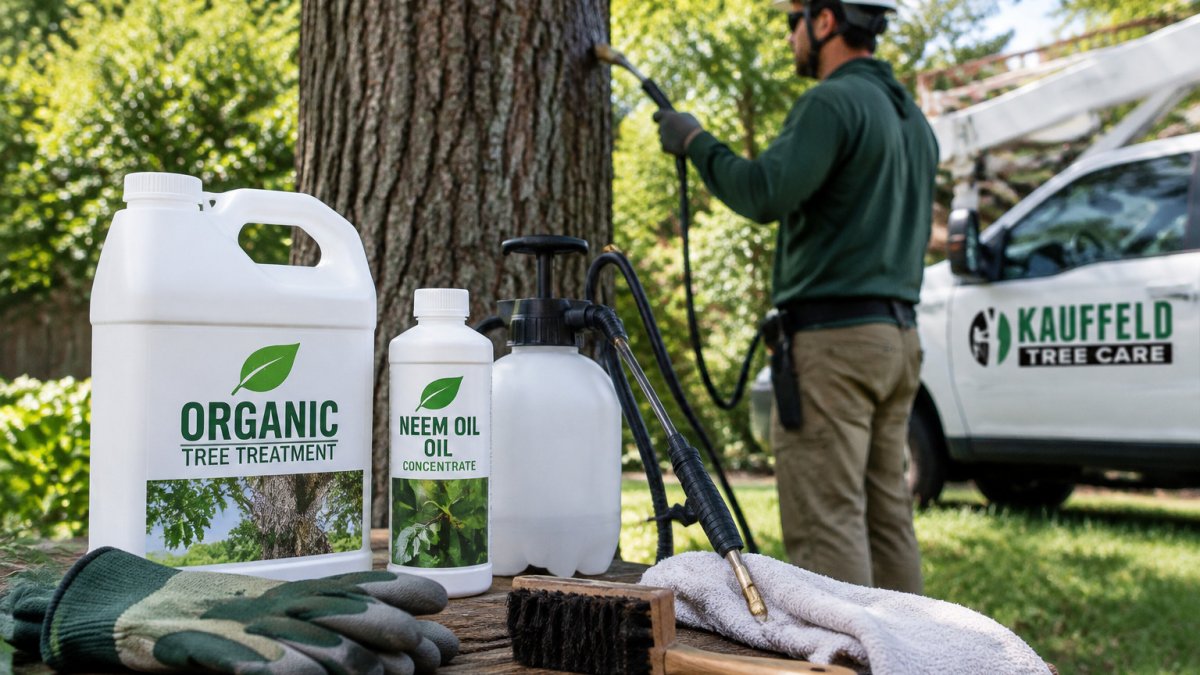
Neem oil handles several fungal diseases and insect pests in one application. Mix it correctly and spray in cool weather, because the wrong dose damages foliage.
Copper and sulfur-based sprays protect healthy tissue when applied during the dormant season. Timing matters more than the product. Watch out: these are preventive, not curative, spraying after symptoms appear rarely reverses damage.
Compost tea and rock minerals support tree nutrition and root recovery over months, not days. Expect a slow response.
What Home Remedies Can and Cannot Do
Compost tea, neem oil, sulfur, copper, and soil amendments are useful tools, but each has limits. Neem and sulfur can suppress light fungal pressure; copper protects dormant tissue; compost improves soil over time. None of them fixes root damage, compaction, planting depth, or trunk injury, the causes behind many declining trees.
If you are unsure whether a tree is treatable or too far gone, our article on when a tree is dangerous and needs removal explains the warning signs. For ongoing care between treatments, these residential tree maintenance and safety tips cover the basics.
Fruit Tree Fungus Treatment: Matching the Method to the Disease
Fruit tree fungus treatment depends on which fungus you have and when it attacks. Apple scab, cedar apple rust, and powdery mildew all respond to different timing, so confirm the disease before you spray.
Clean up fallen leaves and diseased fruit. Most fungal spores overwinter in that debris, so removal does more than any spray.
How to Treat Apple Tree Diseases Naturally
Treating apple tree diseases naturally starts with sanitation, not spraying. Prune out cankers and diseased branches during dry weather, then disinfect your tools between cuts. Remove diseased fruit from the tree and the ground.
Follow with a dormant-season copper or sulfur spray to protect new growth. Space your applications according to the label, and never spray while bees are active on blossoms.
The Best Organic Fungicide for Fruit Trees and How to Apply It
The best organic fungicide for fruit trees is neem oil for light to moderate disease pressure, and copper or sulfur spray for dormant-season prevention. Match the product to the confirmed disease and the season.
- Confirm the disease first, using close photos and a second opinion if needed.
- Prune out infected wood and dispose of it away from the tree.
- Mix neem oil to the label rate and test one branch before full coverage.
- Spray in early morning or evening, never in direct heat.
- Reapply per the label interval, and stop before harvest.
- Keep people and pets off treated areas until dry.
If the job involves height, a hazardous lean, or a tree near the house, hire it out. Our guide to hiring insured tree care companies covers what to ask before you sign.
Using Fruit Tree Diseases Pictures to Confirm a Diagnosis
Fruit tree diseases pictures help you confirm a diagnosis before you treat. Compare your tree's spots, lesions, and leaf curling against clear close-ups of the same species. Take your own photos in daylight, from both sides of the leaf, and note where on the tree the damage appears.
Photos have limits. A picture cannot tell you about the root zone, soil health, or what is happening inside the trunk. When the diagnosis is unclear, a site visit can help settle it.
A sick tree rarely recovers on guesswork, and the wrong product wastes both money and a growing season.
Frequently Asked Questions
How to treat a sick tree naturally?
Start with diagnosis, then fix the root zone. Spread a 2-to-4-inch layer of organic mulch around the base, keeping it off the trunk, and work compost into the soil to improve structure and moisture retention. Prune diseased branches and remove cankers with clean cuts. For fungal disease, neem oil, sulfur-based spray, or copper spray can help when applied at the right timing, often during the dormant season. Organic treatments support tree health, but they work best when matched to the confirmed problem.
What is the best spray for diseased trees?
There is no single best spray, because the right product depends on the disease and the tree species. Neem oil covers many fungal diseases and insect pests. Copper spray is used for certain fungal and bacterial problems on fruit trees. Sulfur-based spray and dormant oil are applied during the dormant season to smother overwintering pests and spores. Always read the label for dosage and application conditions, and confirm the disease first so you do not spray the wrong product.
Do organic fungicides work on fruit trees?
They can, when the product matches the disease and the spray timing is right. The best organic fungicide for fruit trees depends on what you are fighting: copper for many fungal and bacterial issues, sulfur for powdery mildew and similar problems, neem oil for a range of fungal diseases and pests. Organic fungicides are not a cure-all, and they work best alongside pruning, removing diseased fruit, and improving soil health. Confirm the diagnosis before spraying.
How can you tell whether a tree has a disease or a pest problem?
Look at the pattern of damage. Chewed leaves, sticky residue, webbing, or visible insects point to pests. Spots on leaves, cankers on branches, wilting despite moist soil, or dieback spreading from the top often signal disease. Environmental stress such as drought shows up as scorched edges and early leaf drop. A symptom-to-cause check matters because organic treatments differ: neem oil and beneficial insects target pests, while copper and sulfur target fungal disease.