 How-to
Forestry Mulching for Land Development: What to Know
Last Updated: November 8, 2026
Quick Summary
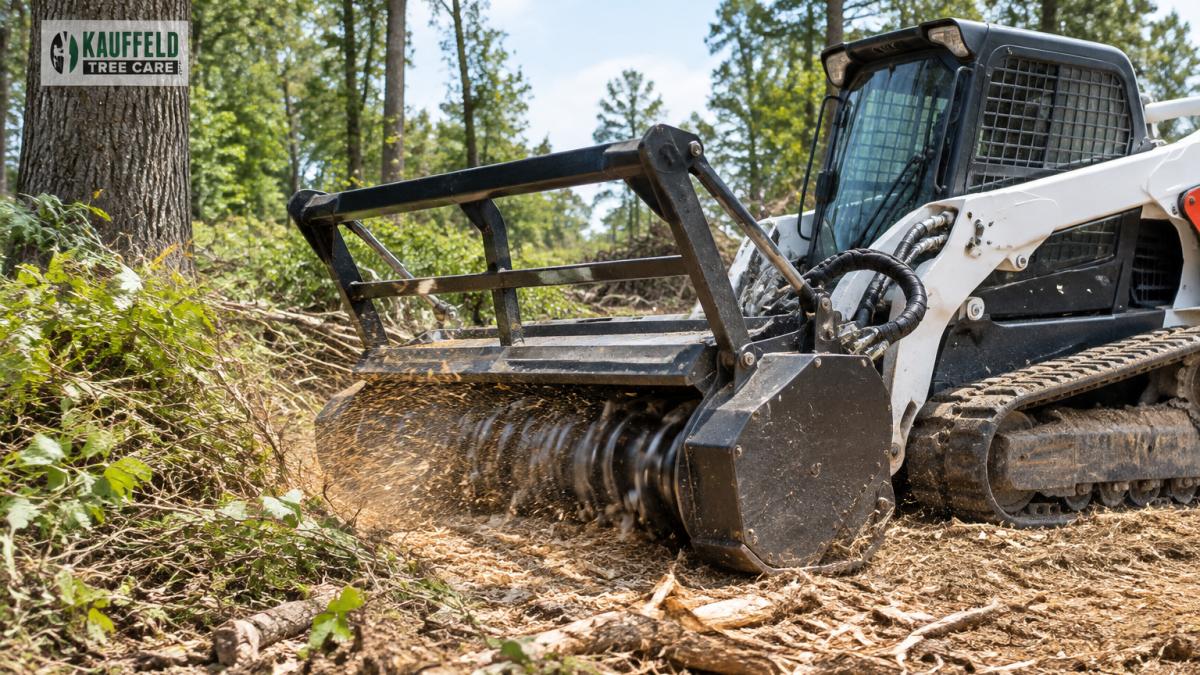
Forestry mulching for land development uses a tracked machine to cut, grind, and shred brush, saplings, and small trees in place, leaving shredded wood as protective mulch. One machine does the cutting and processing on site, so there are no burn piles, dumpsters, or landfill trucks. Mulching manages vegetation only, so plan for grading and drainage after the brush is down.
- Forestry mulching costs are reported at $500 to $8,000 or more per acre, depending on vegetation density and terrain.
- Light growth takes a few hours, while dense brush can take a full day or more.
- Call 811 for utility locating and check local permits for clearing and earthwork before any machine starts.
- Mulching should be followed by an appropriate herbicide where site prep is the goal.
- Ask for insurance, equipment details, and a written scope naming acreage, vegetation type, and mulch handling.
Table of Contents
- How Forestry Mulching Prepares Land for Development
- Forestry Mulching vs. Traditional Land Clearing
- Forestry Mulching Cost per Acre and How Long It Takes
- Grading, Drainage, and When Mulching Is Not Enough
- Permits, Utility Locating, and Site Constraints
- Maintaining the Site After Mulching
- Why Developers Choose Forestry Mulching
- Hiring a Forestry Mulching Service
- Get Your Lot Ready to Build
- Frequently Asked Questions
How Forestry Mulching Prepares Land for Development
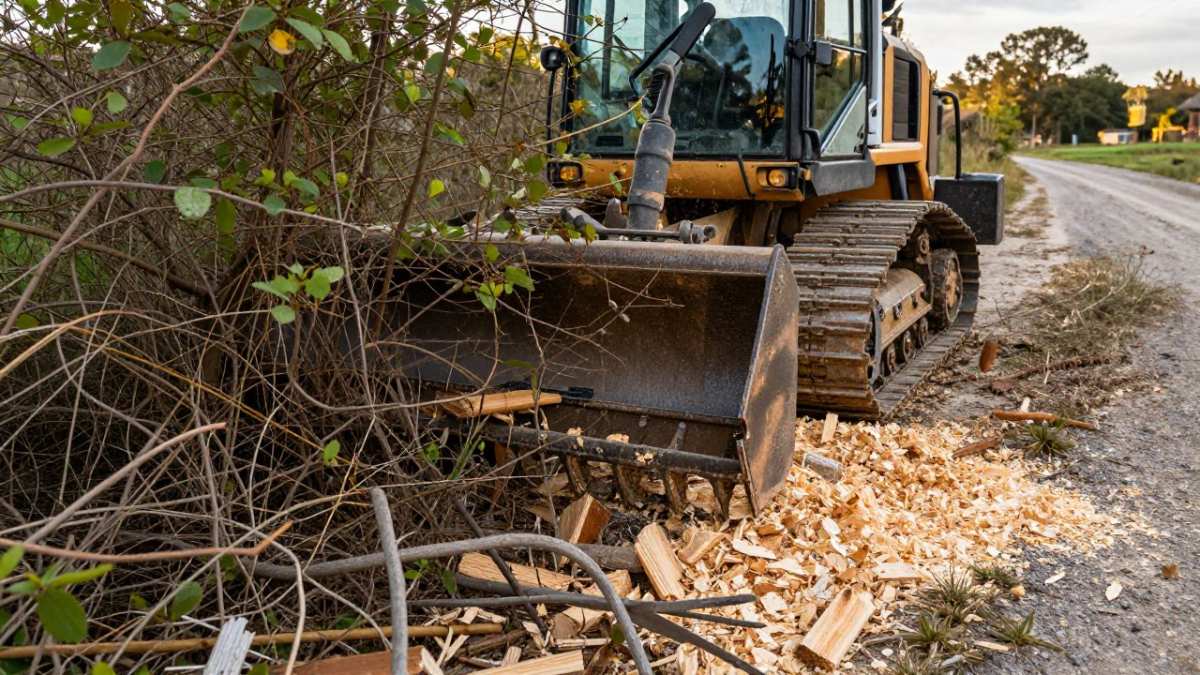
Forestry mulching for land development uses a tracked machine to cut, grind, and shred brush, saplings, and small trees in place, leaving shredded wood as protective mulch. The U.S. Forest Service description of mulching confirms the core idea: heavy equipment grinds, shreds, chips, or chops large woody material into smaller pieces.
Forestry Mulching vs. Traditional Land Clearing
Forestry mulching clears vegetation in place, while traditional clearing pushes, digs, and hauls material off site with dozers, excavators, and trucks. Our guide on forestry mulching for land clearing covers the full process.
Forestry Mulching Cost per Acre and How Long It Takes
Forestry mulching costs are reported at $500 to $8,000 or more per acre, depending on vegetation density and terrain, according to OwnRops' 2026 pricing guide. Expect a few hours for light growth and a full day or more for dense brush; ask for the assumptions in writing.
Here are the cost and timing figures to expect before you book a crew.
| Item | Value | Note |
|---|---|---|
| Cost per acre | $500 to $8,000 or more | Depends on vegetation density and terrain |
| Light growth | A few hours | Typical time on site |
| Dense brush | A full day or more | Typical time on site |
| Quote assumptions | Ask in writing | Confirm what the price covers |
Grading, Drainage, and When Mulching Is Not Enough
Mulching manages vegetation; it does not shape land or move water. A land-clearing methods guide from Hurst Landworks draws a clear line between mulching for vegetation management and grading to shape land and manage drainage. If your site plan calls for building pads, a driveway cut, or stormwater control, mulching is step one, plan for grading and drainage after the brush is down.
Permits, Utility Locating, and Site Constraints
Before any machine starts, call 811 for utility locating and check local permits for clearing and earthwork, since wetlands, steep slopes, and protected trees can limit what can be cleared.
Maintaining the Site After Mulching
Mulch left on site is not the end of the job, regrowth happens, and the Texas A&M Forest Service guidance on mulching for site preparation notes that mulching should be followed by an appropriate herbicide where site prep is the goal. If you are handling the brush yourself first, our step-by-step guide to clearing overgrown brush covers the work involved.
Why Developers Choose Forestry Mulching
Developers choose mulching because it is fast, leaves a cleaner site, and keeps organic material on the ground; the mulch layer feeds soil health, reduces erosion, and holds moisture, with no debris hauling and no burn permit to chase. The Texas A&M Forest Service also notes that removing woody vegetation reduces hazardous fuels, which limits wildfire intensity and spread.
Hiring a Forestry Mulching Service
Ask three things before you hire: insurance, equipment, and what the quote covers. At Kauffeld Tree Care, our certified arborist-led, fully insured team handles land clearing, brush management, and forestry mulching for residential and commercial sites, with crane and bucket truck support for hazardous or hard-to-reach trees. Get a written scope naming acreage, vegetation type, and mulch handling, then compare quotes on the same scope.
Get Your Lot Ready to Build
Overgrown ground stalls a project before it starts. The brush comes down, the mulch stays, and the site is ready for the next phase.
If your lot is choked with brush and you need it cleared for development, Kauffeld Tree Care can help. Our certified arborist team offers fully insured forestry mulching, land clearing, and brush management, plus 24-hour emergency service when storm damage changes your timeline.
Frequently Asked Questions
Can forestry mulching prepare land for development?
It can clear brush, small trees, and woody vegetation in one pass, leaving mulch on the surface. That makes it a strong first step for lot preparation, trail establishment, and vegetation management. It does not grade the site, reshape drainage, or install utilities. Most development sites need mulching followed by grading and site preparation before construction begins.
What affects the cost of forestry mulching per acre?
Vegetation density, tree size, terrain, site access, and how much stump removal you need all move the number. Final pricing depends on those conditions, so request a quote for your site. A flat, lightly brushed lot sits at the low end; steep, densely wooded ground with large trees sits at the high end. Ask for a site walk before you accept a quote.
When is forestry mulching not suitable for a development site?
Skip it when the project needs grading to shape the land, manage drainage, or meet engineering plans, since mulching only handles vegetation. It is also a poor fit where soil disturbance rules or environmental constraints limit what can be cleared, or where large stumps and debris must be hauled off site. In those cases, pair mulching with grading and site prep or choose mechanical clearing instead.