 How-to
Cost of Removing Dead Trees: What Homeowners Pay
Last Updated: November 2, 2026
Quick Summary
Removing dead trees typically costs $150 to $500 for small trees under 30 feet, $300 to $1,200 for medium trees, $700 to $1,800 for large trees, and $1,200 to $3,000 or more for very large trees. Condition, proximity to structures and access often shift the final price.
- Small trees under 30 feet cost $150 to $500 to remove.
- Very large trees over 80 feet cost $1,200 to $3,000 or more.
- Dead trees often cost more than living ones of the same size because the work is slower and more cautious.
- Stump grinding is usually quoted separately, so confirm whether a bid includes it.
- Ask for an itemized quote covering labor, disposal, equipment and any permit fees.
Table of Contents
- What Dead Tree Removal Costs by Tree Size
- Why Dead Trees Often Cost More Than Living Ones
- Factors That Change Your Tree Removal Estimate
- Emergency Tree Removal Cost After Storm Damage
- Getting an Itemized Dead Tree Quote Before Work Starts
- Frequently Asked Questions
What Dead Tree Removal Costs by Tree Size
Dead tree removal costs vary with the size of the tree, but the condition of the wood and the amount of rigging required often matter more than raw size. Height and trunk diameter set the base price, and prices depend on the specific job, so request a written quote for your property.
A pricing guide from Tree Cost Removal Calculator's 2026 dead tree removal estimates lists the following ranges.
Small, Medium, Large and Very Large Trees
- Small trees (under 30 feet): $150 to $500
- Medium trees (30 to 60 feet): $300 to $1,200
- Large trees (60 to 80 feet): $700 to $1,800
National averages for all tree removal sit higher. Angi's 2026 tree removal cost data puts the national average at $750, with most homeowners paying between $200 and $2,000. Those numbers blend living and dead trees, so treat them as a broad benchmark rather than a dead-tree price.
What Drives the Price Within Each Tier
Size alone does not determine the price of a job. The variables that move a quote up or down are:
- Trunk diameter and lean. A thicker trunk means more wood to cut, chip, and haul. A pronounced lean toward a structure forces controlled sectional removal instead of a straight fell.
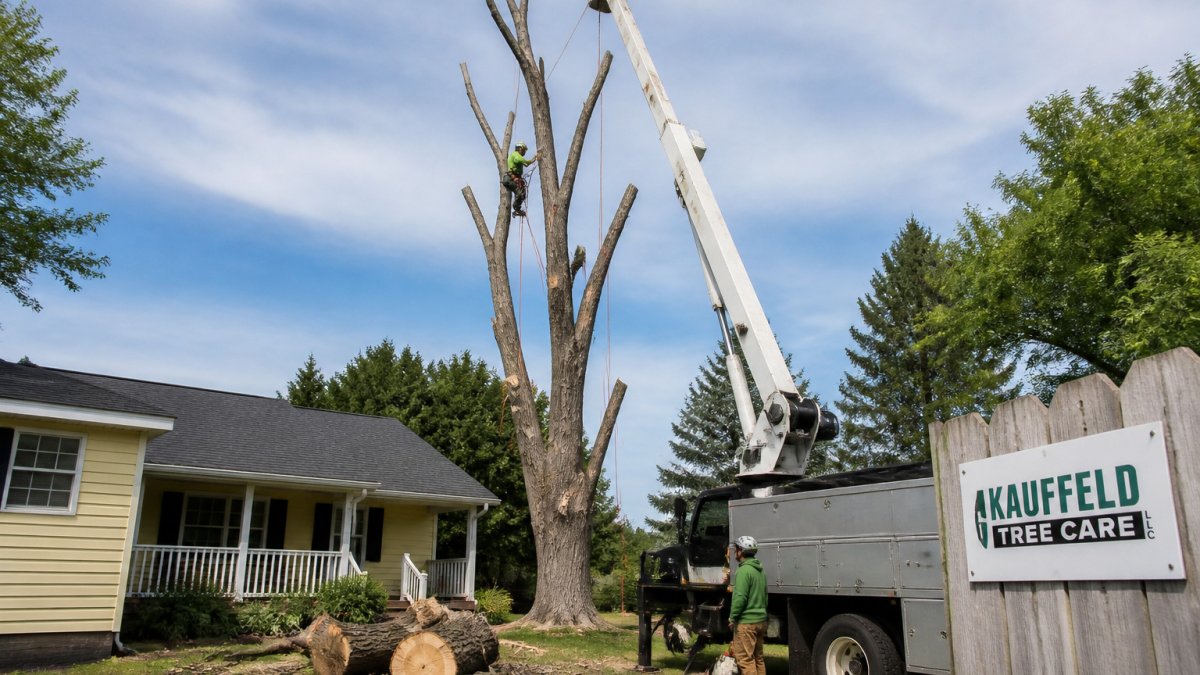
- Rigging and lowering. Dead limbs that may snap without warning usually have to be roped down in small pieces rather than dropped, which adds labor hours.
- Access for equipment. A crane or bucket truck that can park next to the tree shortens the job. A tree behind a fence or on a slope may require hand-carrying debris, which adds time.
Dead Trees Versus Living Trees at the Same Size
A dead tree of a given height often costs more to remove than a healthy tree of the same height, because the work is slower and more cautious. Dry, decayed wood can shatter mid-cut, so crews plan smaller pieces, use more rigging, and sometimes bring in a climber rather than rely on ground felling.
Prices depend on the specific job. Kauffeld Tree Care provides quotes based on your tree's size, condition, and site, so contact us for a current estimate on your property.
The table below summarises the typical price range for each tree size, as stated in the article.
| Tree size | Price range | Note |
|---|---|---|
| Small (under 30 feet) | $150 to $500 | Base price tier |
| Medium (30 to 60 feet) | $300 to $1,200 | Base price tier |
| Large (60 to 80 feet) | $700 to $1,800 | Base price tier |
| Very large (over 80 feet) | $1,200 to $3,000 or more | Base price tier |
| National average, all trees | $750 | Most pay $200 to $2,000 |
Why Dead Trees Often Cost More Than Living Ones
Dead trees can be more involved to remove than healthy ones of the same size, because dry wood breaks unpredictably and each cut must be planned more carefully.
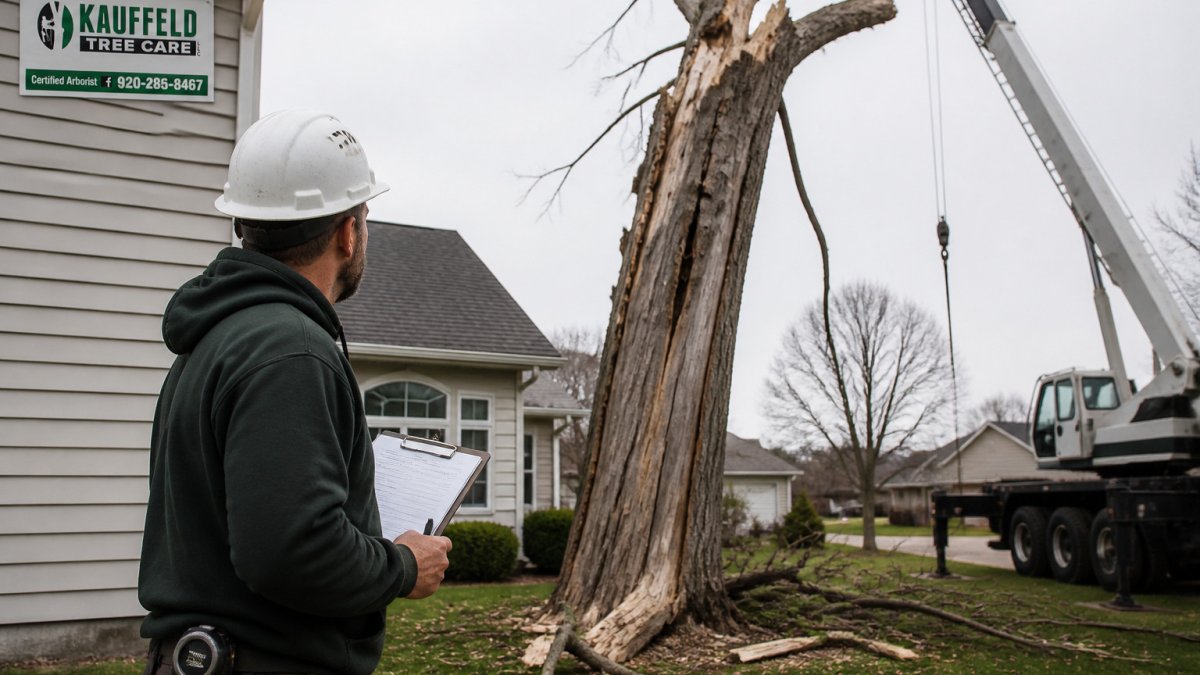
A dead tree can also be harder to take apart. Limbs may snap during the cut, and the trunk may be weaker than it looks from the ground.
Compare that with a fallen tree. Lawn Love's 2026 tree removal cost guide estimates a fallen tree at $90 to $300 to remove, compared with $400 to $1,000 for a tree in good condition.
Watch out: A leaning dead tree near a house is the costliest kind of job to handle late. Waiting can turn a planned removal into an emergency one.
Factors That Change Your Tree Removal Estimate
Several factors move the price up or down. Knowing them helps you read a quote with confidence and compare bids on equal terms.
- Tree height and trunk diameter
- Tree condition, including rot, cracks, and structural damage
- How close the tree sits to a house, fence, driveway, or power line
- Access for trucks, cranes, and crew
Each factor can add to the base cost. A tree that is both tall and close to a structure will cost more than one with open space around it. On a dead tree, condition and proximity compound: a decayed trunk near a house is the most labor-intensive combination because every cut has to be controlled.
Location, Access and Proximity to Structures
Site access matters as much as size. A tree in an open backyard with a clear drive costs less than one behind a garage with no room for equipment. When a tree sits near a building, crews often must lower sections by rope instead of felling the trunk. That careful work takes more time and labor, which raises the total.
Stump Grinding Cost and Cleanup
Removing the trunk does not always remove the stump. Purdue University's Department of Forestry and Natural Resources Extension notes that tree work can be expensive, and stump work adds to that total. Stump grinding is usually quoted separately from removal, and the price depends on stump diameter, root flare, and how deep the grind goes. Compare grinding and full root removal options to decide which fits your situation.
How to Read an Itemized Dead Tree Quote
A transparent quote breaks the job into line items so you can see where the money goes. A common pattern is to separate labor, equipment, disposal, stump work, and any permit fees. Ask for each of the following as its own line:
- Labor and rigging. Crew size and estimated hours, including any climbing or roping work.
- Equipment. Crane, bucket truck, or chipper charges, listed separately from labor.
- Disposal. Hauling and tipping fees for logs, chips, and debris.
- Stump grinding. Quoted by stump diameter and grind depth, with root cleanup noted.
Permits and Local Rules
Many municipalities require a permit before removing a tree above a certain trunk diameter, and some protect certain species or trees in designated areas. Requirements vary widely by jurisdiction, so check with your local permitting office before work begins. A reputable contractor will know the local rules and can tell you whether a permit is needed for your tree.
Insurance and Liability
Before you sign, confirm that the company carries liability insurance and workers' compensation. Ask for proof in writing. If a dead tree falls and damages property, whether insurance covers the loss depends on the policy, the cause of damage, and whether the tree had been identified as a hazard. For more on what to check, see our guide to hiring insured tree care companies.
Ready for a clear number on your dead trees? Contact Kauffeld Tree Care for an itemized quote tailored to your property.
Emergency Tree Removal Cost After Storm Damage
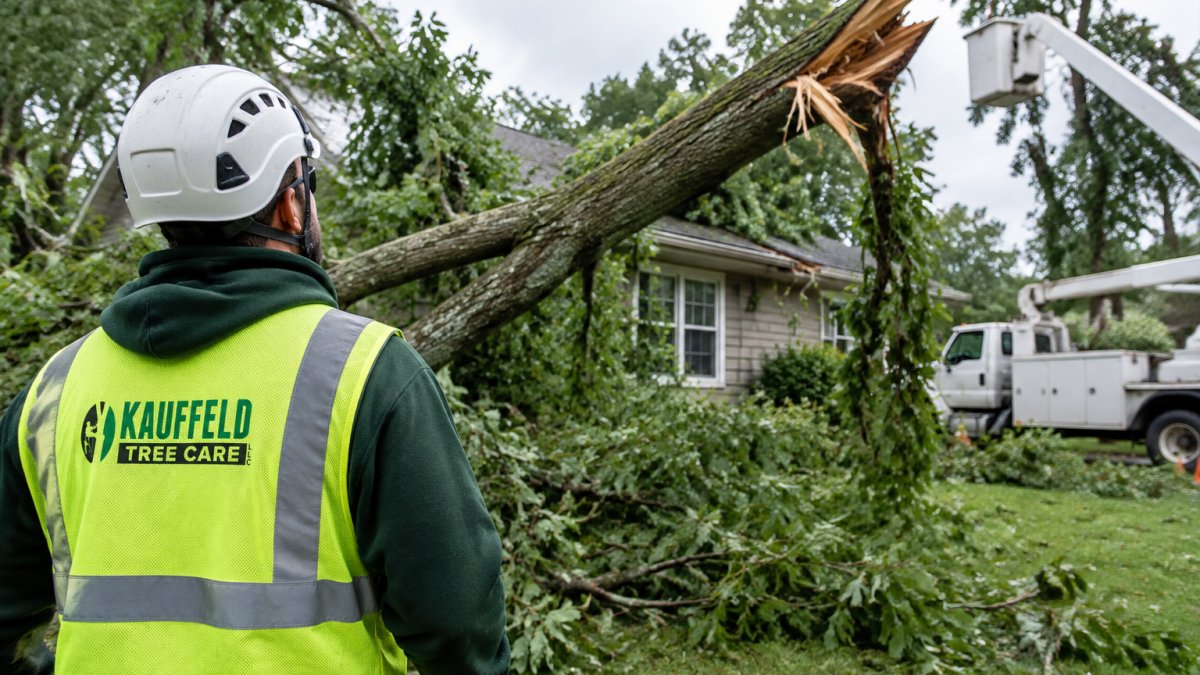
Storm-damaged trees often need urgent work, and emergency jobs usually cost more than scheduled ones. See what emergency storm tree removal pricing looks like in more detail.
The safest first step is to keep people and pets away from the tree and call a professional. For the practical steps to take right after the damage, read this homeowner's storm cleanup guide.
Getting an Itemized Dead Tree Quote Before Work Starts
A clear quote protects you from surprise bills. Ask for an itemized estimate that lists each part of the job.
- Removal of the trunk and limbs
- Crane or equipment charges, if any
- Debris hauling and site cleanup
- Stump grinding, listed as a separate line
Before you sign, confirm that the company carries liability insurance and workers' compensation. Ask for proof in writing.
Ready for a clear number on your dead trees? Contact Kauffeld Tree Care for an itemized quote tailored to your property.
Frequently Asked Questions
How much does it cost to remove a large dead tree?
Large dead trees, typically 60 feet or taller, often take more planning and labor than smaller trees. Dead trees can cost more than the published range suggests because brittle wood, rot and unstable limbs slow the crew and raise the safety risk. Crane or bucket truck access can add to the total. Ask for a written estimate that lists removal, sectioning, hauling and any stump work separately so you can compare line items.
How much does it cost to cut down a 40 ft tree?
A 40-foot tree is generally considered a medium tree, and medium trees in the 30 to 60 foot range are priced by site-specific factors. The final price depends on trunk diameter, how close the tree stands to structures or power lines, and whether the crew can drop it in one piece or must section it down. Stump grinding, debris haul-away and any crane use are usually quoted separately. A site visit gives the most reliable number.
Does tree removal include stump grinding and debris cleanup?
Not always. Many quotes cover felling and chipping or hauling the trunk and major limbs, while stump grinding and full debris cleanup are sometimes billed as add-ons. Stump grinding is commonly quoted separately, so confirm whether the estimate includes grinding depth, root removal and raking of wood chips. Ask whether the price covers hauling away all debris or only leaves it on site.
How can I get an accurate dead tree removal estimate?
Request an on-site inspection from a certified arborist who will look at the tree's condition, lean, distance to your home and access routes. Ask for an itemized quote that separates removal, sectioning, crane or bucket truck use, debris haul-away and stump grinding. Confirm the company is fully insured and carries workers' compensation coverage, and compare written quotes from at least two providers. Be cautious of verbal-only quotes without a detailed scope.