 how-to
Emergency Storm Tree Cleanup: A Homeowner's Guide
Table of Contents
- What to Do Immediately After Storm Damage
- Assessing Hazards and Property Safety
- Fallen Tree Cleanup: Step-by-Step Process
- Understanding Emergency Tree Service Cost
- Tree Removal Insurance Coverage and Claims
- Storm Debris Removal and Hauling
- How to Request Emergency Service
- Frequently Asked Questions
Last Updated: October 18, 2026
What to Do Immediately After Storm Damage
When a storm hits, your first priority is safety, not emergency storm tree cleanup. Before you even think about removing debris or assessing damage, make sure the immediate area is secure.
If a tree has fallen across power lines, stay away from it entirely. Downed lines can be live and deadly. Call your utility company's emergency line immediately. If a tree is blocking a roadway or has damaged your home, document everything with photos and video before touching anything. This matters for insurance claims later.
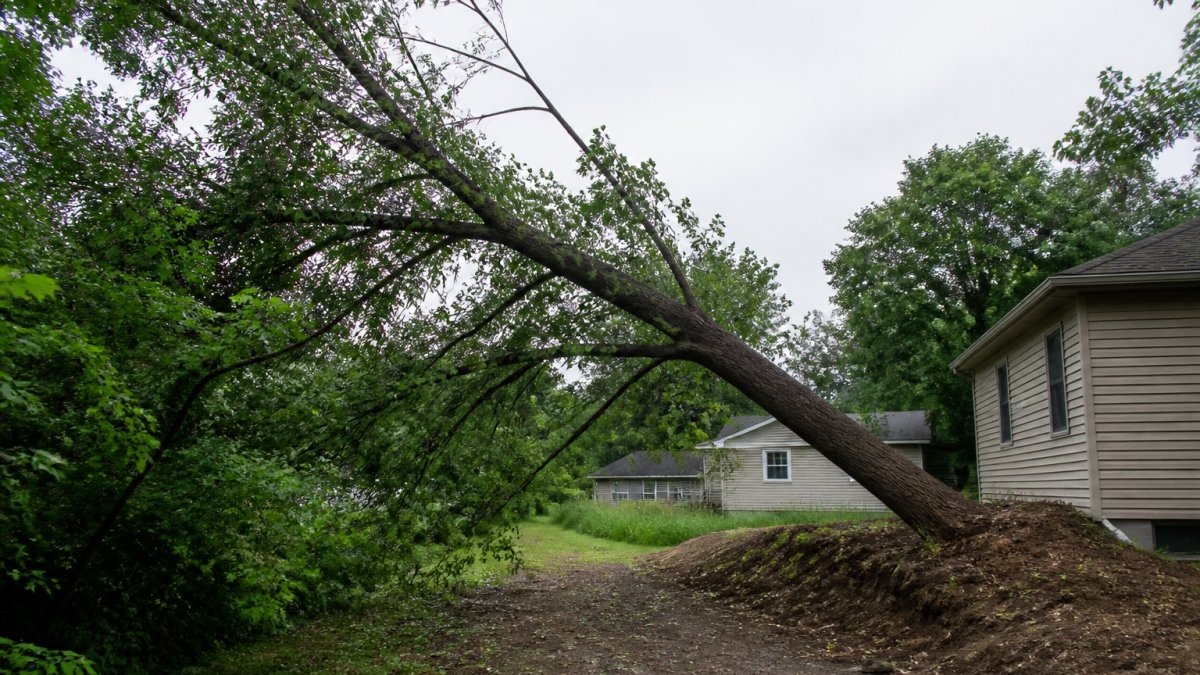
Check your property for hazards. Walk around carefully, watching for hanging branches, cracked limbs, or trees leaning at odd angles. These are all emergency tree hazards that can fail without warning. If anyone in your household is injured or trapped, call 911 first.
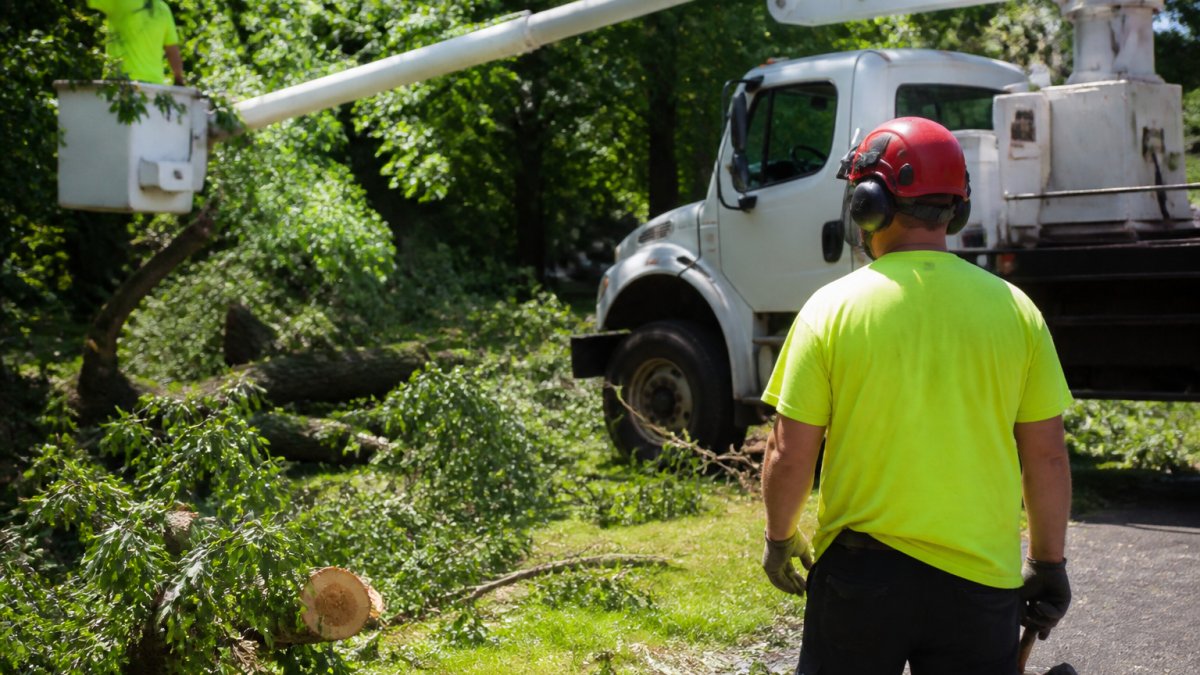
Once immediate dangers are addressed, contact a professional emergency tree service to handle removal safely. This is not the time for DIY cleanup. Storm-damaged trees are unpredictable, they can shift, drop limbs, or fall completely. Professionals have the training, equipment, and insurance to manage these risks without putting your property or safety at greater risk.
Seth Kauffeld and his team respond to emergency calls 24/7 because storms don't wait for business hours. The sooner you get trained crews on-site, the sooner your property is secure and cleanup can begin properly.
Assessing Hazards and Property Safety
The second step is a thorough hazard assessment of your property. This is different from cleanup, it's about identifying what poses immediate danger and what can wait.
A trained arborist evaluates several factors: Are limbs hanging over your roof or power lines? Is a tree leaning toward your home or a neighbor's? Are there cracks or splits in the trunk? Is the root system partially exposed?
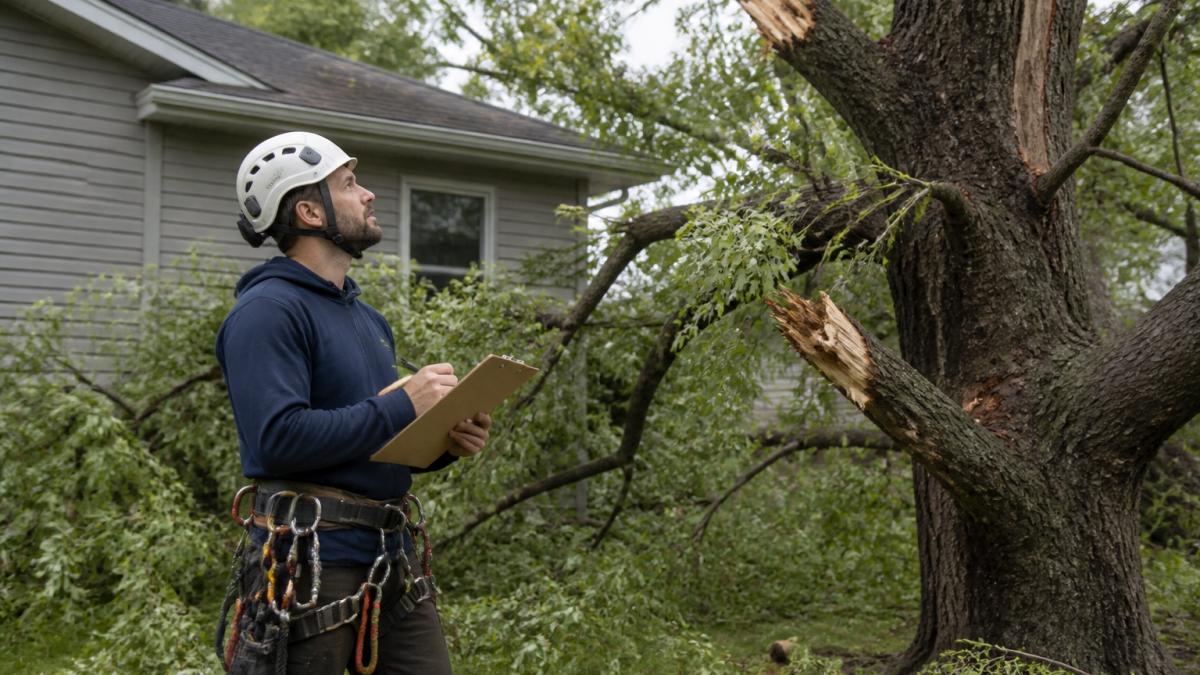
Start by walking your property with a clear head. Look for trees that are obviously damaged, snapped trunks, large missing sections, or roots lifting out of the ground. Mark these areas and keep family and pets away. If a tree is leaning but hasn't fallen, don't assume it's stable.
Property safety depends on removing or securing hazardous trees before they cause more damage. A tree that's 50% uprooted can fall in the next wind gust. A tree with a major split can drop a limb without warning.
Professional tree assessment takes about 30 minutes for most residential properties. The crew identifies which trees need immediate removal, which can be pruned to safety, and which are fine. They'll also spot hazards you might miss, internal decay, root damage, or structural weakness that isn't obvious.
Fallen Tree Cleanup: Step-by-Step Process
Once hazards are identified and immediate dangers are addressed, the actual fallen tree cleanup begins. This is a structured process, not random cutting and hauling.
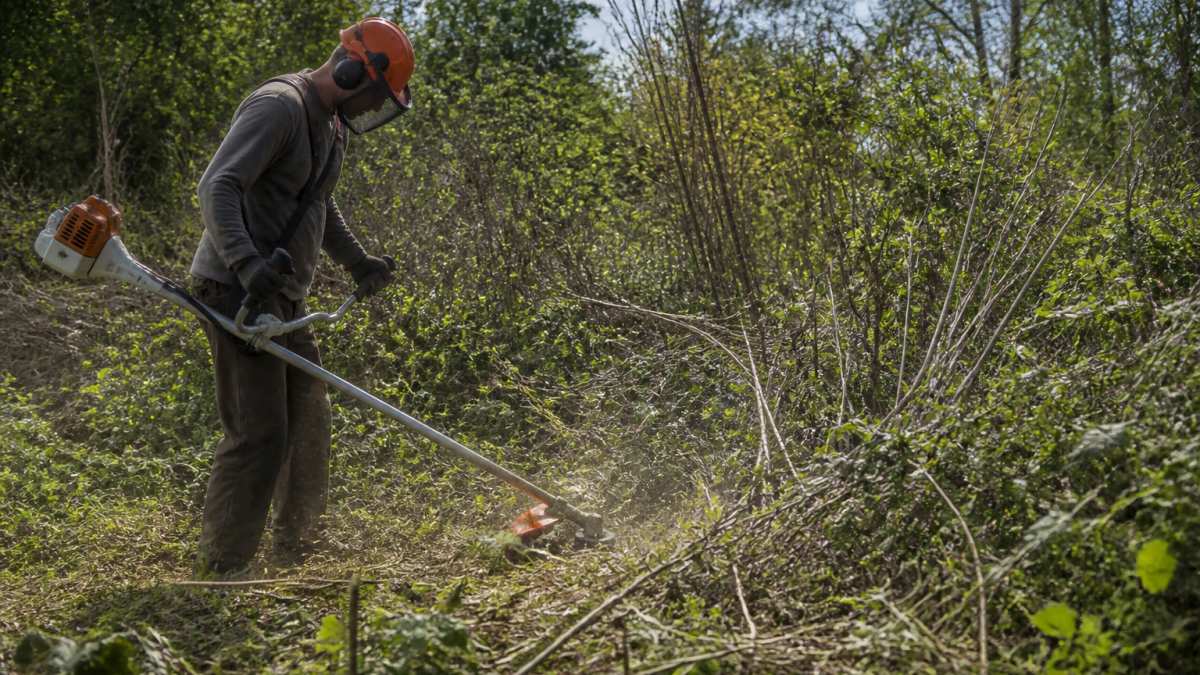
Step 1: Clear the access route. The crew needs safe passage to reach the fallen tree. This might mean moving smaller debris, cutting back brush, or securing the work area so equipment can move freely.
Step 2: Assess and stabilize the tree. Before cutting, the crew determines how the tree is resting. Is it supported evenly, or is one end hanging? Is it under tension from other trees or structures?
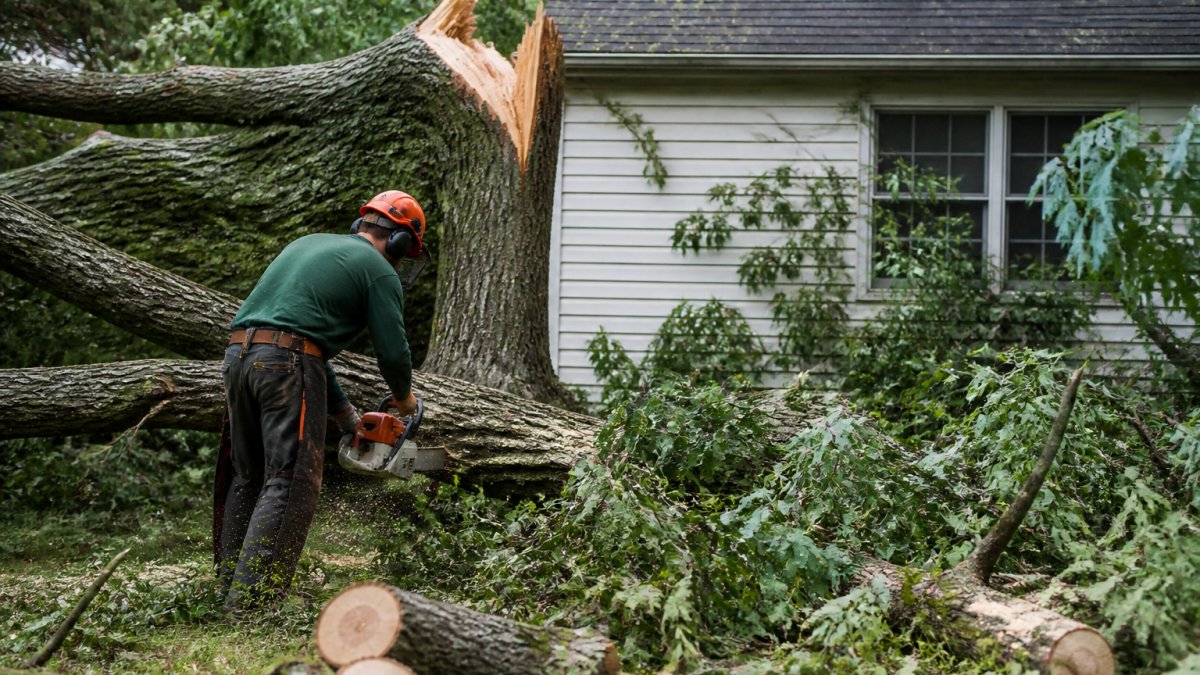
Step 3: Cut the tree into manageable sections. The crew works systematically from one end, cutting the trunk and large limbs into pieces that can be moved or chipped.
Step 4: Remove or chip debris. Large sections are either loaded onto trucks for removal or fed into a wood chipper. Chipping is faster and cheaper if you're okay with mulch on your property.
Step 5: Clear the site. Once the main tree is gone, crews rake up smaller branches, twigs, and leaves. They'll haul away what you don't want and leave organized piles of mulch or firewood if you requested it.
The whole process typically takes 4-8 hours for a single fallen tree, depending on its size and complexity. Larger trees or multiple trees can take a full day or more.
Understanding Emergency Tree Service Cost
Cost is one of the biggest questions homeowners ask, and it's also one of the hardest to answer without seeing the tree. Emergency tree service cost depends on multiple factors that vary dramatically from one job to the next.
Size matters most. A 30-foot tree costs significantly less to remove than a 60-foot tree. The larger tree requires bigger equipment, more crew time, and more disposal.
Location affects price too. A tree in the open yard is simpler than one tangled in power lines, hanging over a house, or wedged against a garage.
The tree's condition matters. A cleanly snapped tree is easier than one that's uprooted with a massive root ball. A tree that's already on the ground is simpler than one still standing but hazardous.
Equipment needs vary. Some jobs need only chainsaws and a truck. Others need a bucket truck, chipper, or crane. Crane work is expensive, sometimes several hundred dollars per hour, but necessary for trees near buildings or power lines.
Disposal or chipping changes the price. Chipping wood on-site is cheaper than hauling it away. Firewood sorting costs more than general debris removal.
Professional crews provide quotes after seeing the tree in person. They can't give accurate pricing over the phone because they'd be guessing. A site visit gives you a real number based on what they actually see.
Tree Removal Insurance Coverage and Claims
Many homeowners assume their homeowner's insurance covers tree removal insurance coverage automatically. It usually doesn't, or covers only part of it.
Standard homeowner's policies cover tree removal only if the tree fell and damaged your home or a covered structure (If a tree falls on your house, are you covered?). If a tree falls in your yard and causes no damage, removal is your responsibility. If it damages your roof, they cover the roof repair but often only a percentage of removal costs, sometimes 50%, sometimes nothing.
The key is the word "damage." If the tree fell but didn't hit anything, insurance won't pay. If it hit your house but you cut it up and removed it yourself, you might not qualify for the claim because the damage was already addressed. Storm tree removal insurance claims work like this: the tree falls, it damages your home, you report it immediately, and insurance sends an adjuster.
Document everything for your claim. Photos of the tree before removal, photos of damage to your home, receipts from the removal service, and written estimates all strengthen your case. Send your insurance company photos and a description within 24 hours of the damage.
Some removal companies work directly with insurance companies. Others bill you first, and you submit the receipt to insurance for reimbursement. Ask about this when you get your quote.
Storm Debris Removal and Hauling
After the tree is cut into sections, the debris still needs to go somewhere. Storm debris removal and debris hauling are two separate services that many crews bundle together.
Debris removal means taking all the cut wood, branches, and chips off your property. Hauling means transporting it to a landfill, composting facility, or recycling center. Some crews chip on-site and leave the mulch for you to use or remove later. Others haul everything away, leaving a clean yard.
Chipping on-site is faster and cheaper. The wood becomes mulch that you can use in landscaping, give away, or have removed later. It's a good option if you have space and don't mind a temporary pile.
Hauling is necessary if you want the site completely cleared immediately. This takes longer and costs more because crews have to load trucks and make disposal runs. A full truck of tree debris can weigh several tons.
Some debris can be salvaged. Larger sections might become firewood. Smaller branches can be chipped for mulch. Crews usually ask what you want to do with usable pieces before they cut everything into chips.
The timeline for debris removal depends on your choices. If chipping on-site, it's done the same day. If hauling, it might take 1-2 additional days depending on how much debris and how many disposal trips are needed.
How to Request Emergency Service
When you need emergency storm tree cleanup services, speed matters. The faster you get professional crews on-site, the faster your property is secure.
Call during business hours if you can. Explain what happened, where the damage is, and whether anyone is in immediate danger. The dispatcher will ask questions to understand urgency.
If it's after hours or you're calling during a major storm event, expect longer wait times. Multiple properties are usually affected, and crews prioritize based on immediate safety risk, trees blocking roads or threatening lives come first.
Have this information ready when you call: your address, a description of the damage (fallen tree, hanging limbs, uprooted tree), whether anyone is injured, whether power lines are involved, and a photo if you can take one safely.
For non-emergency situations, a tree damaged but still standing, or damage that occurred days ago, you can request a site visit and quote.
Professional crews offer 24/7 emergency response because storms happen at night, on weekends, and during holidays. When you call, you'll reach a live dispatcher who can assess your situation and dispatch a crew immediately if needed. Services are available across Jefferson, Dodge, Dane, and Waukesha counties.
Frequently Asked Questions
What should I do immediately if a tree falls on my house during a storm?
First, ensure everyone is safe and move away from the damaged area. If the tree is blocking an exit or creating an immediate hazard, call 911. Document the damage with photos for your insurance claim. Then contact your homeowners insurance company to report the loss. For professional removal, call an emergency tree service with 24/7 availability. Do not attempt to remove the tree yourself, professional crews have the equipment and training to safely handle storm-damaged trees near structures.
Does homeowners insurance cover emergency storm tree cleanup?
Most homeowners insurance policies cover tree removal if the tree caused damage to your house, garage, or other insured structures. However, coverage typically does not extend to trees that simply fell in your yard without causing property damage. Review your specific policy or contact your insurance agent to understand your coverage limits and deductible. Keep all documentation and photos of the damage, and get a written estimate from your tree service provider to submit with your claim.
How much does emergency storm tree cleanup cost?
Emergency tree service pricing depends on several factors: tree size, number of trees, proximity to structures, debris volume, equipment required (bucket truck, crane), and cleanup scope. Fallen tree removal typically costs more than routine trimming because of the hazard assessment and debris hauling involved. For an accurate estimate, contact a local emergency tree service for a site inspection. Providers can explain cost factors specific to your property.
Can I remove a storm-damaged tree myself?
Removing a storm-damaged tree yourself is not recommended. Storm damage creates unpredictable weight distribution, broken limbs may fall unexpectedly, and the tree may be leaning or unstable. Professional crews use specialized equipment, bucket trucks, cranes, rigging, and follow safety protocols to prevent injury and property damage. Trained arborists can assess hazards and plan safe removal methods. Attempting DIY removal risks serious injury, liability, and additional property damage.
Storm damage is stressful, but the process becomes manageable when you know what to do first. Prioritize safety, document damage for insurance, and contact a professional emergency tree service as soon as it's safe to do so. The faster you act, the faster your property is restored and your peace of mind returns. Kauffeld Tree Care is here when you need us, call anytime, day or night, for emergency storm cleanup and debris removal.