 How-to
7 Steps to Preventing Storm Damage to Trees
Last Updated: November 5, 2026
Quick Summary
Preventing storm damage to trees starts with routine pruning that removes dead, weak, and broken limbs before high winds test them. The goal is to reduce the tree's sail area and take weight off limb ends through selective pruning, not a hard cut-back.
- Watch for leaning trunks with soil heaving, weak branch unions, codominant stems, hollows, and vertical cracks.
- Cabling limits limb movement in wind, while bracing uses rods to hold a weak crotch together.
- Cabling and bracing cannot save a tree with major decay, so removal is the option there.
- Call a certified arborist for pruning above head height or near structures, power lines, or fences.
- Prune dead and crossing branches in late winter while the tree is dormant.
Table of Contents
- Start with Tree Pruning to Prevent Storm Damage
- Spot the Signs a Tree Is at Risk of Falling
- Tree Cabling and Bracing for Vulnerable Trees
- What Homeowners Can Do Versus When to Call an Arborist
- A Season-by-Season Prevention Checklist
- Build Storm Resilience Before the Next Storm
- Frequently Asked Questions
Start with Tree Pruning to Prevent Storm Damage
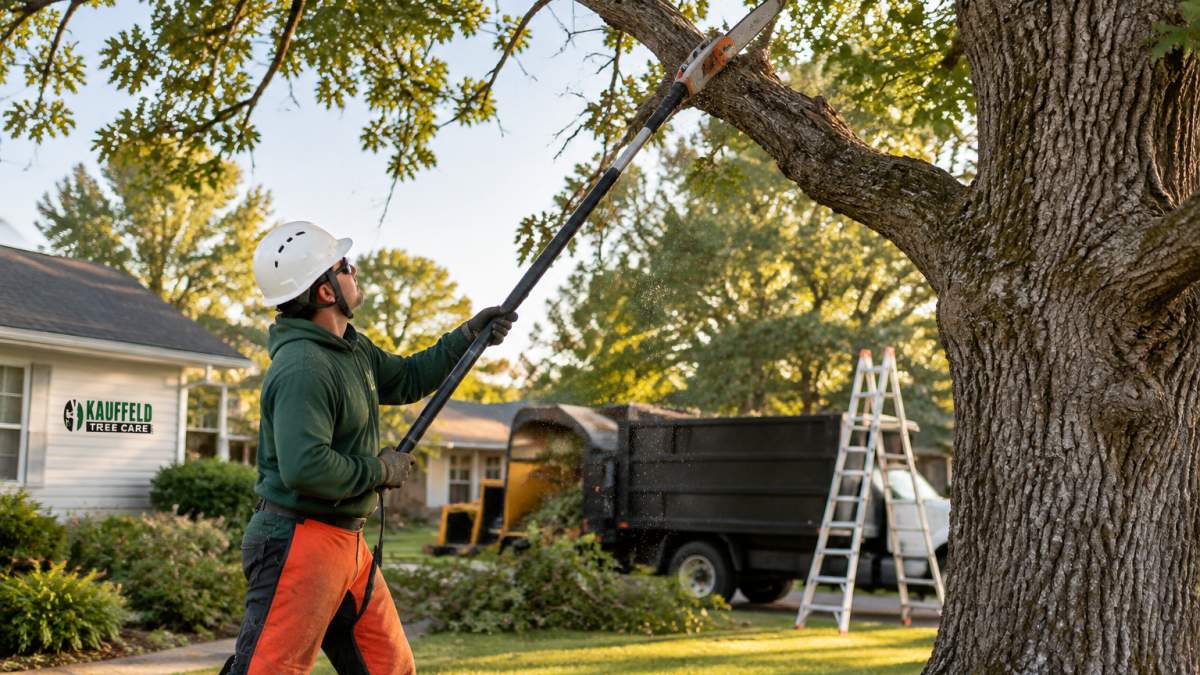
Much of the storm damage tree crews clean up every spring starts with pruning decisions that were never made. Preventing storm damage to trees starts with routine pruning that removes dead, weak, and broken limbs before high winds test them. The goal is to reduce the tree's sail area and take weight off limb ends through selective pruning, not a hard cut-back.
Spot the Signs a Tree Is at Risk of Falling
A tree is at risk of falling when its structure has a defect high winds can exploit. Watch for leaning trunks with soil heaving at the base, weak branch unions and V-shaped crotches, codominant stems with no clear leader, hollows and decayed wood, dead branches overhead, and vertical cracks or cankers. For a deeper walkthrough, see our guide on 7 warning signs a tree is dangerous and needs removal and our article on signs a tree is diseased. A leaning tree next to the house is not a job for a ladder and a chainsaw.
Tree Cabling and Bracing for Vulnerable Trees
Cabling and bracing support a tree with a structural weakness that is worth keeping. Cabling uses flexible steel cables high in the canopy to limit limb movement in high winds; bracing uses rods through a weak crotch or codominant trunk to hold it together. Neither method fixes a bad tree, both reduce risk.
| Situation | Best Option | Why |
|---|---|---|
| V-shaped crotch, no decay | Cabling | Limits limb movement in wind |
| Split codominant trunk | Bracing with rods | Holds the joint together |
| Large cavity or advanced decay | Removal | Hardware cannot fix rotten wood |
Cabling and bracing cannot save a tree with major decay. For the cleanup side of a bad storm, our emergency storm tree cleanup guide walks through the first steps. If removal is on the table, see what emergency storm tree removal costs, and our guide on finding local tree removal experts helps you vet a crew. Research from Florida International University's Wall of Wind study found that trees around a low-rise building reduced wind force on some building segments by as much as 50%. A weak tree still fails, healthy, well-placed trees help, and hazardous ones hurt.
What Homeowners Can Do Versus When to Call an Arborist
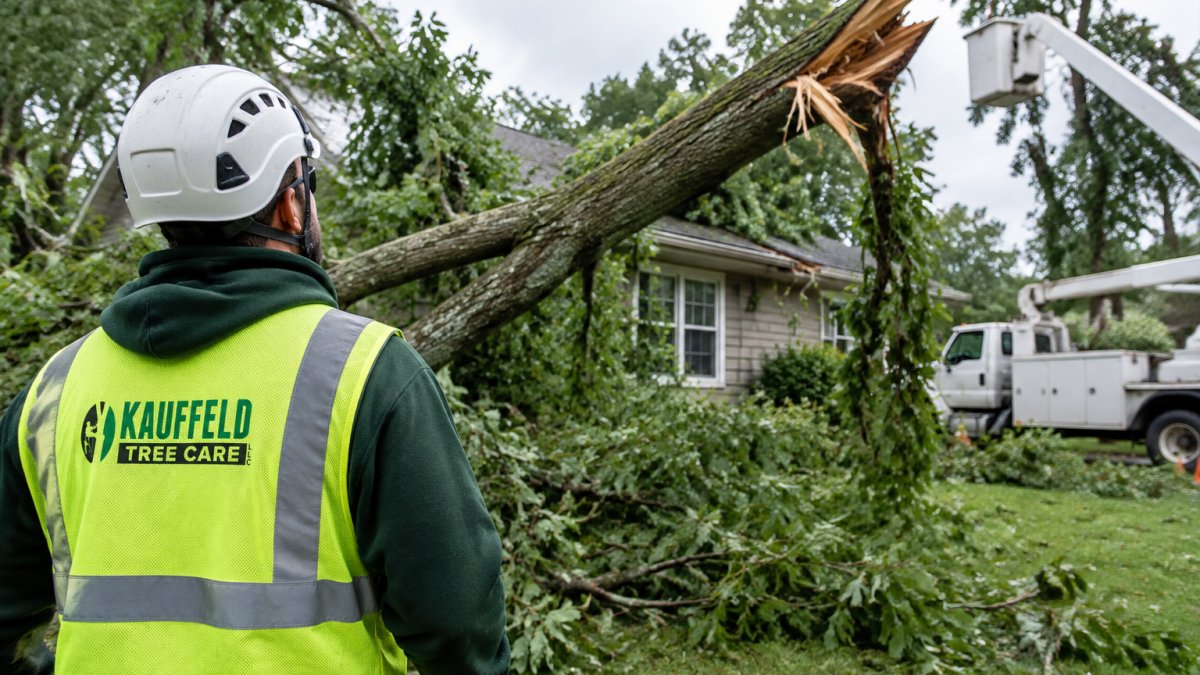
You can handle the small stuff safely, but anything near a roof, power line, or fence is a different story. Call a certified arborist for pruning above head height or near structures, a tree that is leaning, cracked, or hollow, cabling, bracing, climbing work, and storm-damaged trees still under tension, a wrong cut can release that energy fast.
A Season-by-Season Prevention Checklist
Preventing storm damage to trees is a year-round habit, not a once-a-storm scramble. Prune dead and crossing branches in late winter while dormant; check for new cracks or heaving soil after the spring freeze-thaw; watch for pests and cankers in summer; clear weak limbs and check drainage in early fall; and after any storm, inspect for broken or hanging branches before you mow underneath. The most overlooked item is the root zone, compacted soil and buried roots from construction are common causes of tree failure that no amount of pruning fixes.
Build Storm Resilience Before the Next Storm
No amount of pruning can stop every storm. Tree trimming cannot prevent storm damage on its own, though correct trimming does cut the risk of tree failure. At Kauffeld Tree Care, our certified arborist crew provides tree trimming and removal, plus crane and bucket truck service for hazardous or hard-to-reach trees. We offer 24-hour emergency service for storm cleanup. We are fully insured. Get started with Kauffeld Tree Care and put a real prevention plan in place before the next round of high winds rolls through.
Frequently Asked Questions
Can tree trimming prevent storm damage?
Trimming reduces risk but cannot make a tree storm-proof. Routine pruning removes dead branches and weak limbs that fail first in high winds, and structural pruning on young trees builds stronger branch unions over time. Trees can reduce wind force on nearby buildings, but they still need inspection and care. Think of pruning as lowering the odds, not eliminating them.
How do you know if a tree is at risk of falling in a storm?
Look for codominant stems with narrow V-shaped crotches, cavities or decayed wood at the base, cracks in the trunk, and dead branches in the canopy. A tree that leans suddenly or has exposed roots on the windward side is a serious warning. Check for branch cankers and hollows after heavy rain. If you see any of these, have a certified arborist do a hazard assessment before the next storm season.
What should you do before a storm to protect your trees?
Clear yard debris and check that root zones are not compacted by foot traffic or equipment. Keep a list of property targets like the house, garage, and power lines, and have Kauffeld Tree Care's 24-hour emergency number on hand in case a tree fails.