 How-to
How to Safely Remove Stumps: 7 Proven Methods
Table of Contents
- Choosing a Stump Removal Method That Fits Your Yard
- Stump Removal Safety Precautions Before You Cut or Dig
- Stump Removal Tools You Actually Need
- Manual Removal: How to Dig Around and Lever Out a Stump
- How to Remove a Large Tree Stump With Saws and Heavy Equipment
- Stump Grinding and Rotting in Place: Two Lower-Effort Options
- How Long Stump Removal Takes and What It Costs
- Frequently Asked Questions
Last Updated: October 19, 2026
Choosing a Stump Removal Method That Fits Your Yard
Removing a stump safely starts with matching the method to the stump, not to the tool you happen to own.
Stump removal is the process of taking out a tree stump and its root system so the ground can be replanted, rebuilt, or simply made safe.
Below, we break down seven proven methods, the safety steps that come first, and how to know when to call a professional.
Matching the Method to Stump Size and Species
Small stumps reward hand tools. Large stumps punish them. That is the whole decision in one line.
Use this quick guide:
- Small stump (under 12 inches across): dig and lever, or use a hand saw and mattock.
- Medium stump (12-24 inches): stump grinder rental or a chainsaw plus root cutting.
- Large stump (over 24 inches): heavy equipment, a professional grinder, or full extraction.
Species changes the root system. Shallow, spreading roots come out with levering. Deep taproots fight back.
Stump Removal Safety Precautions Before You Cut or Dig
Safety comes before the saw, the shovel, or the grinder. Most injuries in stump work fall into four buckets: chainsaw kickback, buried hazards, unstable footing, and fire. Each has a specific countermeasure, and the countermeasures work only if you set them up before the first cut.
Personal protective equipment that actually matters
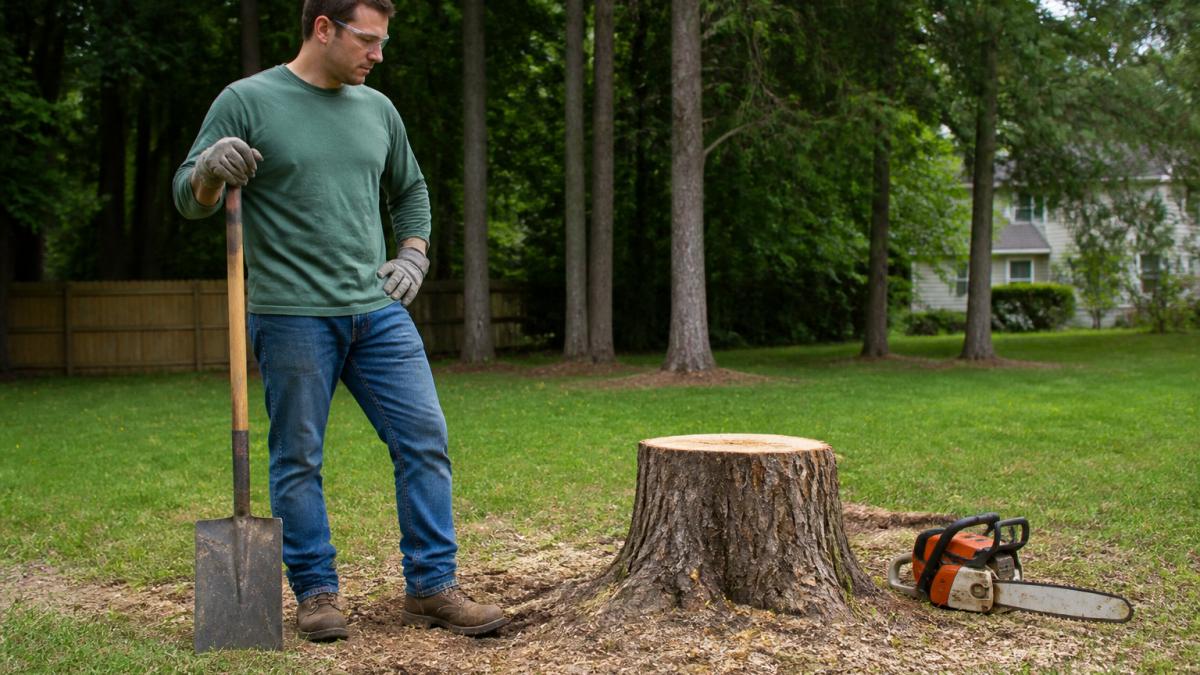
Stump work mixes overhead hazards, flying debris, and sharp edges, so dress for all three:
- Head and eyes: a hard hat if you are working under limbs, plus safety glasses or a full face shield. A face shield alone will not stop fine dust, so wear glasses underneath.
- Hearing: earmuffs or foam plugs rated for the equipment. A walk-behind grinder and a chainsaw both run loud enough to cause damage over a morning of work.
- Hands: cut-resistant work gloves. Leather palms grip a pry bar better than bare hands and blunt thorn and splinter injuries.
- Feet and legs: steel-toe boots with good tread, and chainsaw chaps whenever a saw is running. Chaps are designed to jam the chain, not just cushion it.
Set the work zone before you start
Clear the cut path of rocks, wire, fencing, and debris. Keep bystanders and pets back at least two tree lengths, and further if you are felling anything or running a grinder that throws chips.
Never cut with the bar tip. Tip contact is the classic cause of kickback, where the saw jumps up and back toward the operator faster than you can react.
Fire precautions for burning methods
Call 811 and map underground utilities first
Call 811 before you dig anywhere near a stump. This free service marks underground utilities so you do not hit a gas, electric, or water line. The 811 Call Before You Dig service connects you to your local one-call center.
Digging blind is the single most expensive mistake in stump removal. A severed line means repair bills, outages, and liability, and utility marking is not optional.
Grinder and heavy-equipment safety
A stump grinder is a spinning wheel of carbide teeth, and it throws debris hard. Wear the same eye and hearing protection as for a saw, keep the discharge chute pointed away from people and glass, and never reach into the cutting area while the wheel is turning. Walk-behind grinders need firm, level footing; on slopes, work across the face rather than up and down.
Stump Removal Tools You Actually Need
You need fewer tools than the internet suggests. Here is what actually earns its place:
- Shovel and mattock: for digging around the stump.
- Pickaxe: for breaking up compacted soil and roots.
- Hand saw or pruning saw: for cutting exposed roots.
- Chainsaw: for large stumps and root severing.
Skip the gimmicks. Chemical stump removers, salt, bleach, and vinegar are slow, unreliable, and can poison soil you plan to replant. The EPA guidance on safe pesticide use is clear that products must be used as labeled, and improvised treatments are not labeled for this.
Manual Removal: How to Dig Around and Lever Out a Stump
Manual removal works best on small stumps and shrub stumps. It is slow but cheap, and it gets the roots out.
Follow these steps:
- Clear the top. Cut the stump as low as you safely can with a saw.
- Dig a trench. Dig around the stump, exposing roots on all sides. Work outward about a foot beyond the stump edge.
- Cut exposed roots. Sever roots with a hand saw, axe, or loppers as you find them.
- Lever the stump. Work a pry bar under the stump and rock it. Cut roots that hold.
- Uproot and lift. Once loose, lift the stump out and fill the hole.
Expect this to take a few hours for a small stump and most of a day for a stubborn one. It is real work. The payoff is a clean hole with no roots left behind.
How to Remove a Large Tree Stump With Saws and Heavy Equipment
Large stumps need power. Hand tools stall out, and that is when people get hurt pushing too hard.
Your options for how to remove a large tree stump:
- Chainsaw plus root cutting: cut the stump low, then sever roots around the perimeter.
- Stump grinder rental: a walk-behind grinder chews the stump below grade.
- Excavator or backhoe: for full extraction, especially on development sites.
- Professional service: the safest route for stumps near structures, fences, or utilities.
Tracked equipment handles soft ground better than wheeled machines. A frost tooth on a grinder speeds up cold-weather work.
Cutting Roots and Severing the Stump With a Chainsaw
A chainsaw will cut a stump, but only with care. Dirt dulls a chain fast, so keep the bar out of the soil.
Cut the stump as low as you can without hitting dirt. Then sever roots by working around the perimeter. Keep the chain sharp, let the saw do the work, and never force a bind.
For stumps near a house or fence, we recommend a professional with a crane or bucket truck setup. It removes the risk of property damage and keeps the work insured.
Stump Grinding and Rotting in Place: Two Lower-Effort Options
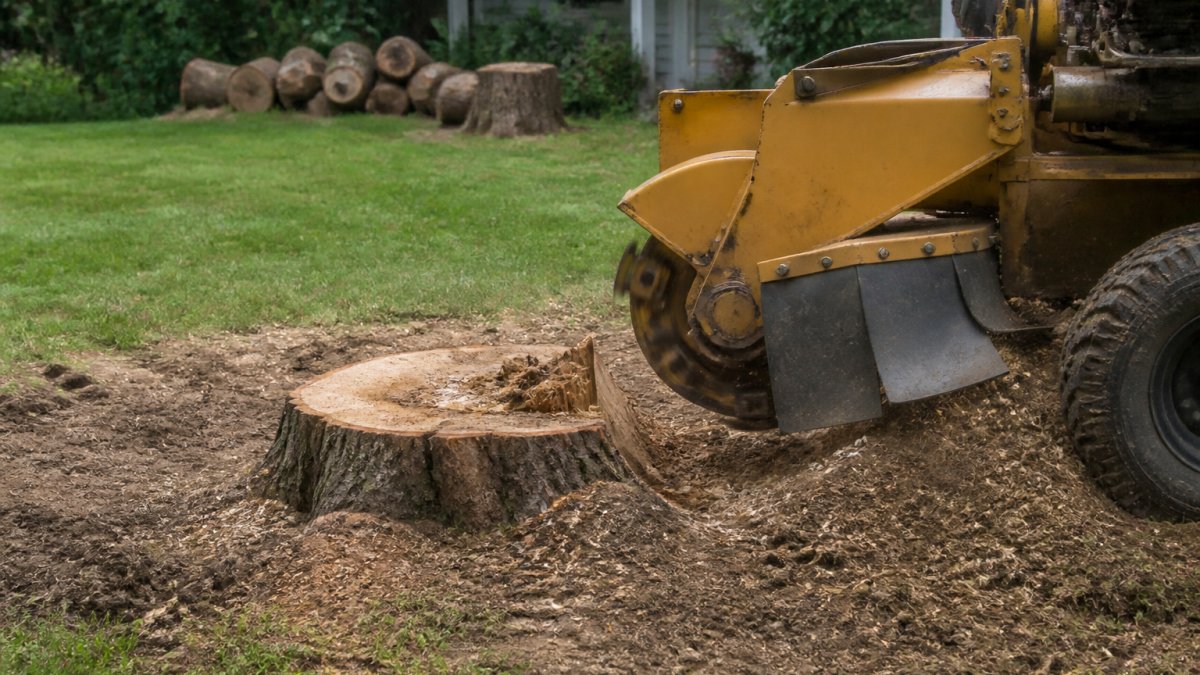
Stump grinding is the fastest low-effort route. A stump grinder reduces the stump to chips, typically 6-12 inches below grade, so you can cover it with soil and replant.
Rotting in place is the cheapest route. Cut the stump low, drill holes in the top, and keep it moist. Wood decays over years, not weeks.
| Method | Effort | Time | Best For |
|---|---|---|---|
| Manual dig and lever | High | Hours | Small and shrub stumps |
| Chainsaw and root cutting | Medium-high | Hours | Medium stumps |
| Stump grinding | Low | Under an hour | Most stumps, fast results |
| Rotting in place | Very low | Years | Out-of-the-way stumps |
| Heavy equipment | Low (yours) | Under an hour | Large stumps, land clearing |
Grinding leaves chips and a hole to fill. Rotting leaves a stump you still have to mow around. Neither is wrong; they serve different goals.
How Long Stump Removal Takes and What It Costs
Time and cost both track method and stump size, and the spread is wide enough that a realistic range beats a single guess. The figures below are typical planning ranges, not quotes; access, root spread, and local labor rates move them.
Time by method
- Manual dig and lever: a couple of hours for a small stump, most of a day for a stubborn medium one, and often more than a day for a large hardwood.
- Chainsaw and root cutting: a few hours for medium stumps, longer if roots are deep or the stump is close to obstacles.
- Stump grinding: usually under an hour per stump for a walk-behind grinder, longer for large stumps or tight access.
- Rotting in place: years, not weeks. Softwoods break down faster than hardwoods, and cool, dry conditions slow decay further.
Cost by method
DIY removal costs only tool rental and your time. A walk-behind stump grinder rental commonly runs in the low hundreds of dollars per day, and a chainsaw or mattock rental is a fraction of that.
Professional work is priced per stump based on size, access, and root spread, so pricing depends on the job.
We quote each site rather than guess, and we recommend getting a written estimate before any work starts so the scope, disposal, and cleanup are spelled out.
Aftercare and site restoration
Removal is not finished when the stump is gone. Grinding leaves a hole and a pile of chips; fill the hole with topsoil and tamp it in lifts so it does not settle into a dip later.
For homeowners who want the stump gone without the backache, our [stump grinding service] handles it in a single visit. We are a Certified Arborist team, fully insured, and available 24 hours for storm cleanup.
Frequently Asked Questions
What tools do I need to remove a tree stump safely?
A basic stump removal tools kit includes a sharp shovel, a pickaxe or mattock, a pruning saw or hand saw, and a lever bar for prying roots loose. For larger stumps, add a chainsaw and wedges. Any digging job also requires safety glasses, work gloves, and steel-toe boots, plus a call to 811 before you break ground. Rent a stump grinder only if you are comfortable operating heavy equipment; otherwise, a professional crew with a grinder handles the job in a fraction of the time.
How long does it take to remove a stump?
How long stump removal takes depends on size and method. A small shrub stump may come out in 20 to 30 minutes with a shovel and lever. A medium stump around 12 to 18 inches across typically takes 2 to 4 hours of digging and root cutting by hand. Large stumps over 24 inches can take a full day or more manually, while a stump grinder finishes most residential stumps in 1 to 3 hours. Rotting in place takes one to several years, so it is the slowest option.
Can I just leave a tree stump in the ground?
You can, but there are trade-offs. A decaying stump attracts termites, carpenter ants, and wood-boring beetles that may move into nearby structures. It also sprouts suckers from some species, creates a mowing hazard, and can hide rot that spreads to healthy trees. If the stump sits far from buildings and you do not mind the look, letting it rot in place is low-effort. Near a house, driveway, or garden bed, grinding or full removal is the safer call.
When should I hire a professional for stump removal?
Call a professional when the stump is larger than about 24 inches across, sits within a few feet of a house, fence, or utility line, or belongs to a species that suckers aggressively. Stumps on slopes, near septic systems, or tangled with buried irrigation also warrant expert help. A certified arborist with a stump grinder can remove most residential stumps in a few hours, handle the debris, and confirm nothing underground is at risk before cutting.
Removing a stump safely is part safety discipline and part matching the method to the job. If you are facing a large stump, a stump near utilities, or a yard full of debris after a storm, Kauffeld Tree Care can take it from there. Our team brings Certified Arborist expertise, full insurance, 24-hour emergency service, and the equipment to grind, clear, and restore your property. Get started with Kauffeld Tree Care and get your yard back to safe and orderly.