 How-to
How to Know If Tree Removal Is Covered by Insurance
Last Updated: November 12, 2026
Quick Summary
Tree removal insurance coverage depends on what the tree damaged and why it fell. A tree that falls onto your insured house, garage, or fence is usually covered, while preventive removal of a dead, diseased, or leaning tree is typically your own cost.
- Standard policies cover sudden damage from covered perils such as windstorm, hail, lightning, and fire.
- Check your declarations page, since some policies cap removal expenses per tree or per incident.
- Insurers generally treat preventive removal of dead, diseased, or leaning trees as routine maintenance.
- Neglected trees can lead an insurer to reduce or deny a claim for damage they cause.
- Photograph everything and keep receipts before any non-urgent work, and do not discard debris before the adjuster sees it.
Table of Contents
- When Homeowners Insurance Covers a Fallen Tree
- Preventative Tree Removal Insurance Coverage: What Is Excluded
- Tree Damage to a Neighbor's Property: Who Pays
- Tree Removal Insurance Claim Process: Steps Before You Call Kauffeld
- Frequently Asked Questions
When Homeowners Insurance Covers a Fallen Tree
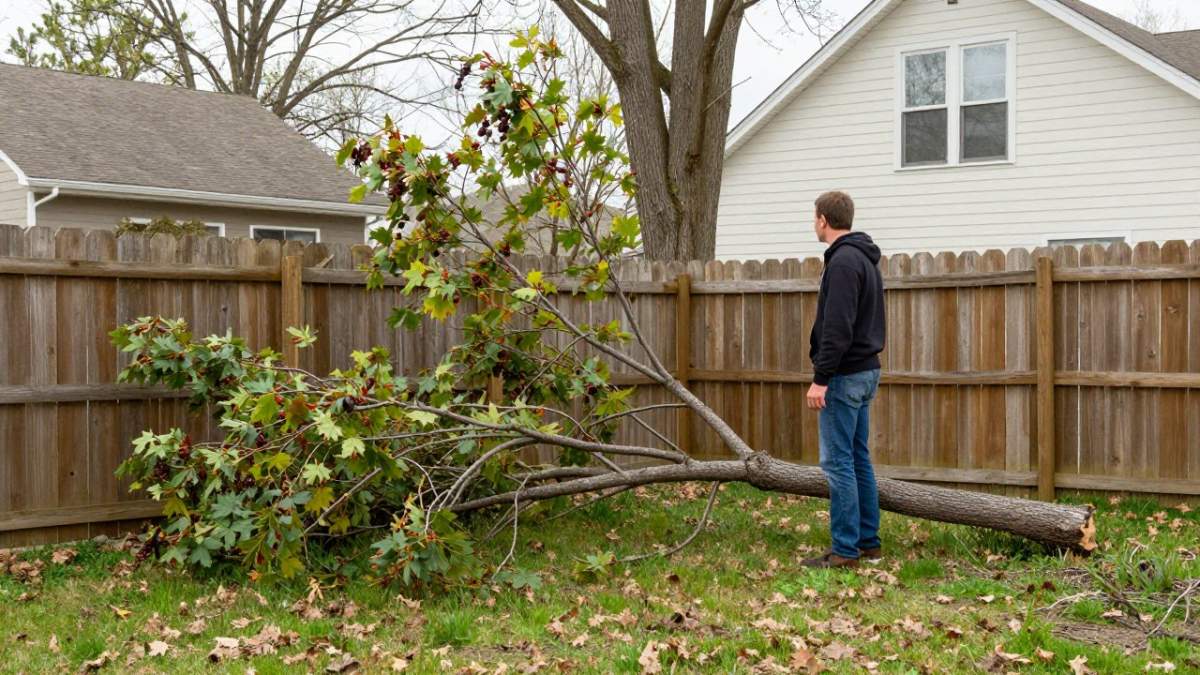
Whether insurance pays to remove a fallen tree depends on what it hit and why it fell. A tree that crashes into your insured house, garage, or fence is usually covered; one that simply lands in the yard often is not.
Most homeowners policies cover sudden damage from covered perils such as windstorm, hail, lightning, and fire. If a covered event knocks a tree onto a state insurance department consumer guides on homeowners coverage insured structure, the policy typically pays for the repair and often the removal of the tree from that structure.
The key questions are:
Coverage varies by policy limits, and some policies cap removal expenses per tree or per incident, so check your declarations page before you call a crew. Trees that fall without touching a covered structure are often not covered; removing branches scattered across the lawn is usually a cleanup cost you pay yourself.
Preventative Tree Removal Insurance Coverage: What Is Excluded
Insurers generally treat preventive tree removal as routine maintenance. Removing a leaning, diseased, or dead tree before it falls is typically the owner's cost, because a standard policy responds to sudden, accidental damage from a covered peril, not gradual deterioration.
Common exclusions include:
- Dead or diseased trees that have not yet caused damage
- Neglected trees where the owner failed to maintain them
- Routine trimming and stump grinding
- Trees that are leaning but have not fallen
- Removal ordered by a code enforcement or homeowners association notice, a maintenance obligation rather than a covered loss
A tree hit by a storm but not fully fallen may also be excluded, since the insurer can argue removal is preventive rather than a response to damage to covered property. Keep photos and records of its condition in case an adjuster asks.
Watch out: Waiting too long can cost you coverage. If a weak tree falls later and hits your home, an insurer may argue the damage came from neglect rather than a sudden event, reducing or denying the claim.
The practical test is whether a reasonable owner would have recognized the hazard. Visible rot, fungal growth at the base, large dead limbs over the roof, or a worsening lean supports a neglect argument; a healthy tree that drops a limb in a windstorm is usually treated as a covered peril loss. Warning signs that a tree is dangerous list the signs that show a tree needed removal before it fell.
That is why documentation matters before anything falls. A dated photo set, a written arborist assessment, and receipts for pruning all show the tree was monitored rather than ignored.
Insurers typically exclude these situations when it comes to removing trees before they cause damage.
| Exclusion | Why it is excluded |
|---|---|
| Dead or diseased trees | Not yet caused damage; treated as maintenance |
| Neglected trees | Owner failed to maintain them |
| Routine trimming and stump grinding | Routine maintenance |
| Trees that are leaning | Have not fallen |
| Removal ordered by code enforcement or HOA notice | Maintenance obligation, not a covered loss |
Tree Damage to a Neighbor's Property: Who Pays
When a tree from your yard falls onto a neighbor's house, the neighbor's own homeowners policy usually pays first. Your liability coverage may step in if the tree fell because of your negligence, such as ignoring obvious rot or a visibly dying trunk. If a neighbor's tree falls onto your property, your own policy typically covers damage to your home, and you may then seek reimbursement from the neighbor's liability insurer if their tree was clearly hazardous.
Keep these points in mind:
Tree Removal Insurance Claim Process: Steps Before You Call Kauffeld
A clear claim process helps you get paid faster. Take these steps before any crew starts non-emergency work.
- Secure safety first. Stay clear of downed power lines and unstable limbs. Emergency storm tree cleanup walks through the cleanup process and the steps to take right after a storm. Call 911 or the utility company if wires are involved or the tree blocks a road or occupied structure. Emergency mitigation to prevent further damage is expected, but keep it limited to protecting people and property.
- Photograph everything before anything moves. Capture the tree, point of impact, damage, and debris from several angles, plus wide shots showing the tree in relation to the house or fence. Date-stamped photos and short videos are the strongest record.
- Call your insurer early, but do not authorize non-urgent work yet. Report the claim, get a claim number, and ask what documentation they require and whether they want an adjuster inspection before removal. Insurers may ask to see the tree in place before it is cut up.
- Get written estimates. Confirm each company is licensed and insured before work begins, and keep the estimates for the adjuster.
- Keep every receipt. Save invoices for emergency removal, cleanup, temporary repairs such as tarps or board-up, and lodging if the home is uninhabitable. Those costs can be part of the claim.
Watch out: Do not haul the tree to the curb or burn the debris before the adjuster sees it. Once the evidence is gone, proving the cause and extent of damage becomes much harder, and some insurers will reduce the payout.
Before you decide whether to file, run the deductible math. The cost of removing a fallen tree depends on size, access, and whether a crane is needed, and homeowners deductibles vary by policy. Emergency storm tree removal cost explains what emergency removal typically costs so you can compare estimates. Check your declarations page for your deductible and ask for a written estimate. If the removal bill is smaller than your deductible, filing will not pay you anything and may still count as a claim on your record.
A few more specifics that keep a claim on track:
- Ask about the debris-removal cap. Many policies set a per-tree or per-incident limit on removal, separate from structure-repair coverage.
- Document the cause. Note the date and time of the storm, keep weather reports, and photograph the stump and root ball, which help show whether the tree was healthy or rotted.
- Track your timeline. Report promptly, respond to adjuster requests in writing, and log every call and email with names and dates.
- Review the declarations page. Limits, covered perils, and debris-removal rules vary by policy and state, so confirm the numbers that apply to you.
For help with a storm-damaged tree, Kauffeld Tree Care offers 24-hour emergency service and is fully insured. Contact our team to schedule an inspection and get your questions answered.
Frequently Asked Questions
Does insurance cover tree removal if the tree damages a fence or driveway?
Often yes, if the fence or driveway is part of your covered property and the tree fell because of a covered peril such as windstorm, hail, lightning, or fire. Your insurer will typically pay to repair the damaged structure, and removal of the tree from that structure may be included within your policy's debris removal or tree removal coverage, subject to per-tree and per-incident limits. Detached fences and driveways can be treated differently from the dwelling, so check your declarations page. Keep photos of the damage and the fallen tree before any cleanup begins.
What about a tree that falls from my neglected or dead tree?
Coverage becomes much less certain when the tree was dead, diseased, or neglected before it fell. Insurers commonly view age, decay, and lack of maintenance as preventable conditions, and many policies exclude damage tied to wear or lack of upkeep. If the tree falls during a storm and damages an insured structure, your insurer may still pay for the structural damage, but the tree itself may be denied depending on the cause. A written tree assessment from a certified arborist can help document the condition at the time of loss.
Should I pay for tree removal out of pocket or file a claim?
Compare your deductible to the expected removal cost before deciding. Many homeowners policies carry deductibles of $500 to $2,500 or more, so a modest cleanup may cost less out of pocket than a claim. A claim can still make sense when the tree damaged your roof, garage, or home, because those repairs can be much larger. Filing a claim can also affect future premiums, so ask your agent how a claim may change your rates. Kauffeld Tree Care can provide a written estimate so you can compare costs; contact the company directly for current pricing, since rates depend on tree size, access, and conditions.