 Listicle
7 Tree Removal Services for Commercial Properties
Last Updated: November 17, 2026
Quick Summary
Choose commercial tree removal services by comparing insurance and licensing, a Certified Arborist on staff, crane and bucket truck equipment, 24-hour emergency response, and cleanup and disposal terms. Request a written estimate that itemizes removal, stump grinding, debris hauling, permits, and traffic control, and confirm the certificate of insurance names your property entity as additional insured.
- Ask who pulls permits and documents the tree's condition before removal, and keep those records in the property file.
- Schedule the noisiest work for off-hours or weekends where lease and noise rules allow.
- A Certified Arborist may recommend pruning, cabling, or monitoring instead of removal for a sound tree.
- Kauffeld Tree Care is a Certified Arborist-led, fully insured provider with 24-hour emergency service.
- Emergency and after-hours calls carry premiums, so planned storm response is the cheapest option.
Table of Contents
- What to Compare in Tree Removal Services for Commercial Properties
- Kauffeld Tree Care: Certified Arborist and 24-Hour Emergency Response
- Precision Tree Care: High-Wind Response and Maintenance Contracts
- SAFETY Tree Service and Arbor Masters: Free Estimates and Dead-Tree Removal
- Urban Tree Company: Removal Paired With Site Preparation
- What Drives Commercial Tree Maintenance Cost and Removal Budgets
- Frequently Asked Questions
What to Compare in Tree Removal Services for Commercial Properties
Commercial tree removal is the process of safely taking down hazardous, dead, or unwanted trees on business properties, parking lots, and development sites, including the cleanup and disposal of debris. The U.S. tree trimming services industry has many providers, so you have plenty to choose from. That choice is the problem. At Kauffeld Tree Care, we work commercial grounds in Watertown and surrounding communities.
Below, we break down what actually separates a qualified commercial contractor from a crew with a truck, then walk through seven providers and what each does best. The comparison points that matter most:
- Insurance and licensing: current liability coverage and workers' comp, in writing
- Certified arborist on staff: someone who can assess tree risk, not just cut
- Equipment: bucket trucks and cranes for trees over structures or power lines
- Emergency response: 24-hour availability for storm damage cleanup for businesses
- Cleanup and disposal: debris removal, stump grinding, and site restoration
- Contract terms: one-time removal versus maintenance contracts and service plans
A neutral bid-evaluation checklist. Before you compare prices, compare scope. Request a written estimate that itemizes removal, stump grinding, debris hauling, permits, and traffic or pedestrian control. Confirm the certificate of insurance names your property entity as additional insured and that workers' comp is current.
Permits, regulations, and liability. Many municipalities regulate removal of protected or heritage trees and require permits or arborist reports before work begins, and right-of-way rules may govern trees near public streets and sidewalks. Responsibility usually sits with the property owner or manager, so ask the contractor in writing who pulls permits and who documents the tree's condition before removal.
Planning around tenants, customers, and operations. A removal that closes half a parking lot at noon on a weekday costs a retail tenant real revenue. Map access routes for the crane and chipper, reserve staging space, post tenant notices in advance, and schedule the noisiest work for off-hours or weekends where the lease and local noise rules allow.
When removal is not the answer. Not every risky tree needs to come down. A Certified Arborist may recommend pruning, cabling, or monitoring when the tree is sound but crowded, and preservation can be the cheaper and legally safer choice where a protected tree is involved. Use condition, risk, site constraints, and the arborist's assessment as the decision framework, and get that recommendation in writing before approving removal.
We recommend verifying insurance before you sign anything. A guide to hiring insured tree care companies walks through exactly which documents to request.
Kauffeld Tree Care: Certified Arborist and 24-Hour Emergency Response
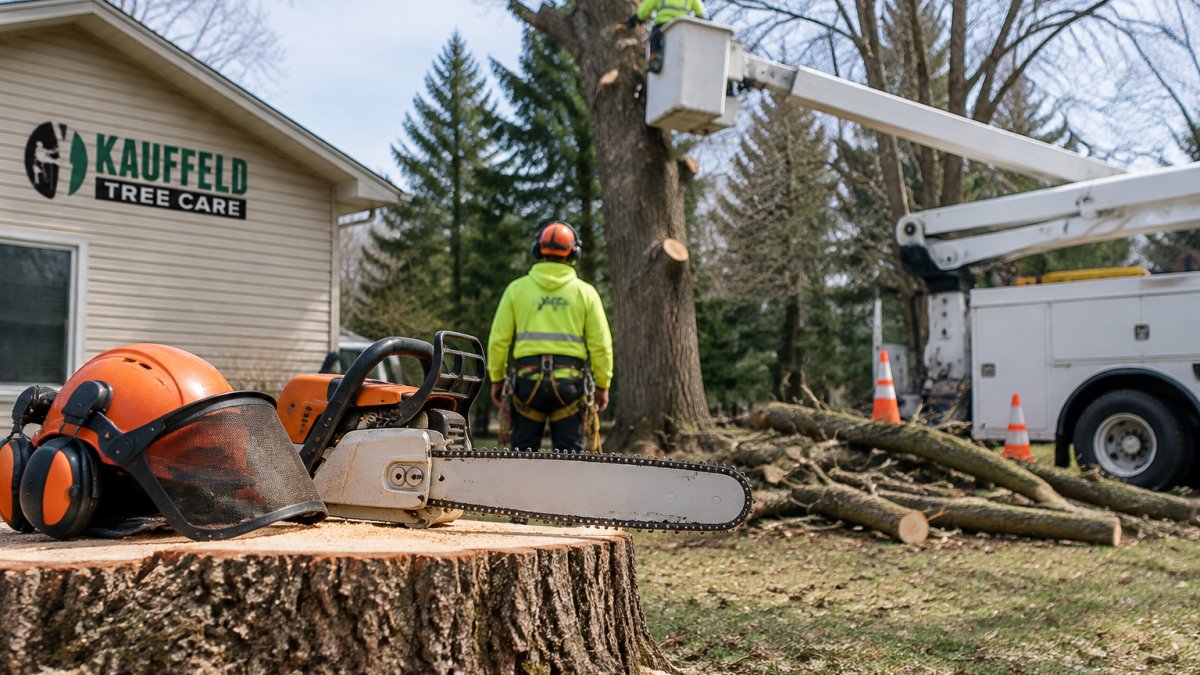
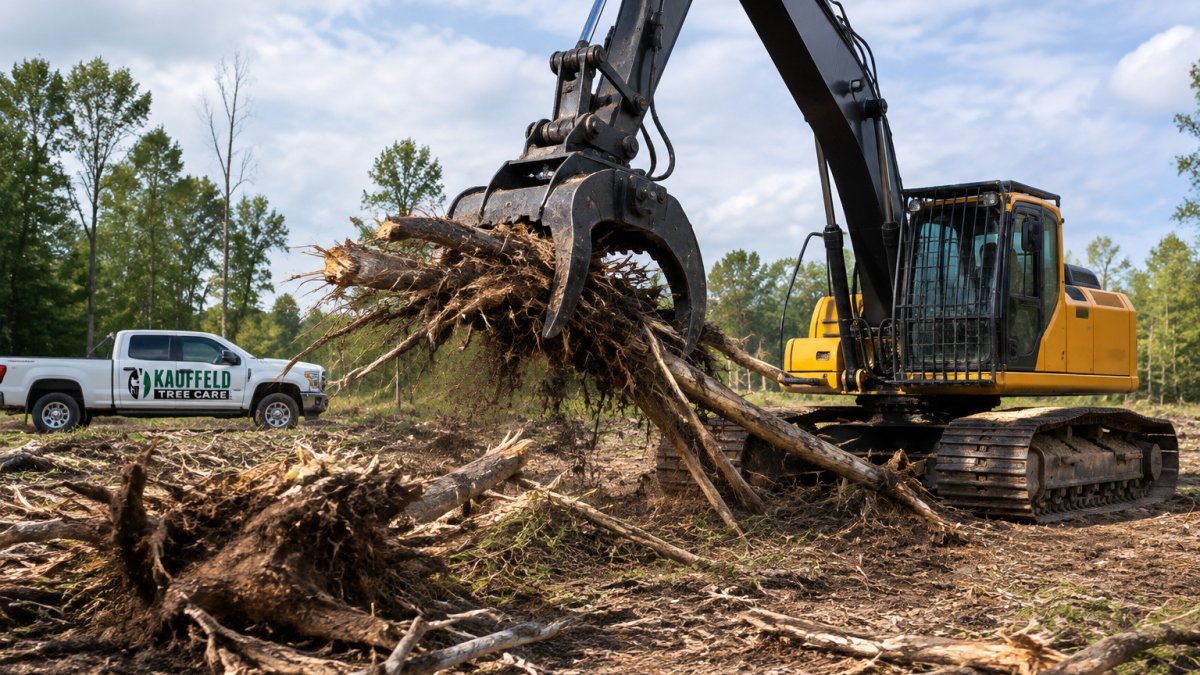
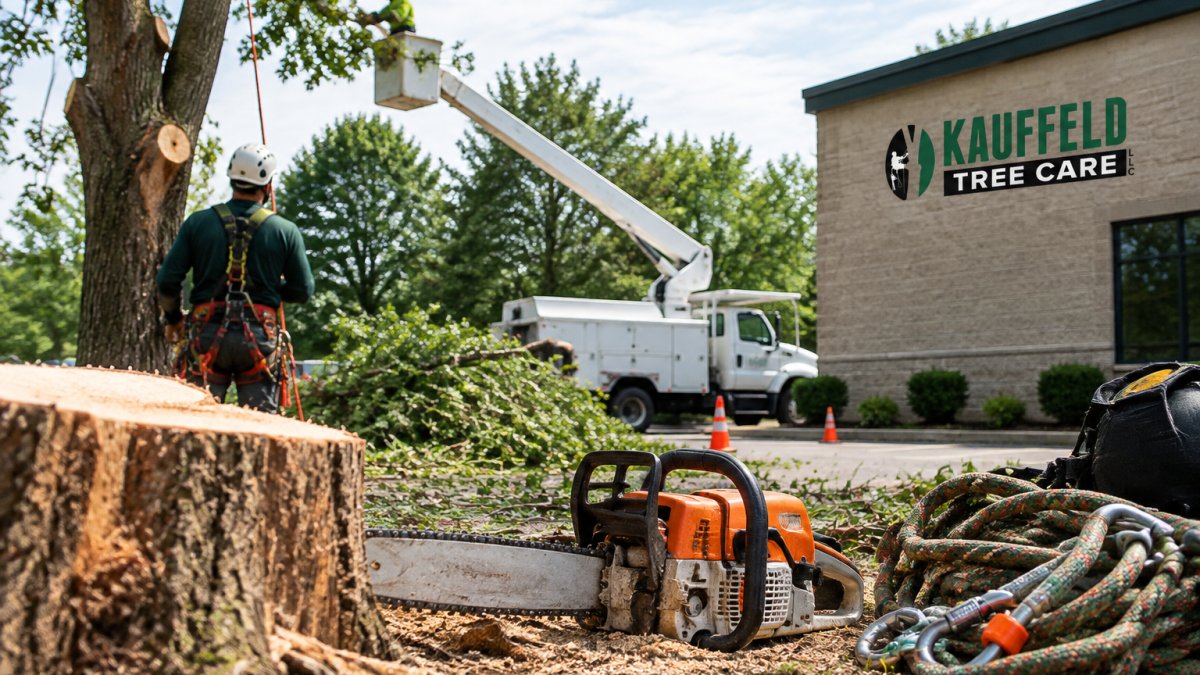
Kauffeld Tree Care is a Certified Arborist-led, fully insured provider with 24-hour emergency service. We handle tree trimming, removal, brush chipping, forestry mulching, stump grinding, land clearing, and storm damage cleanup for clients.
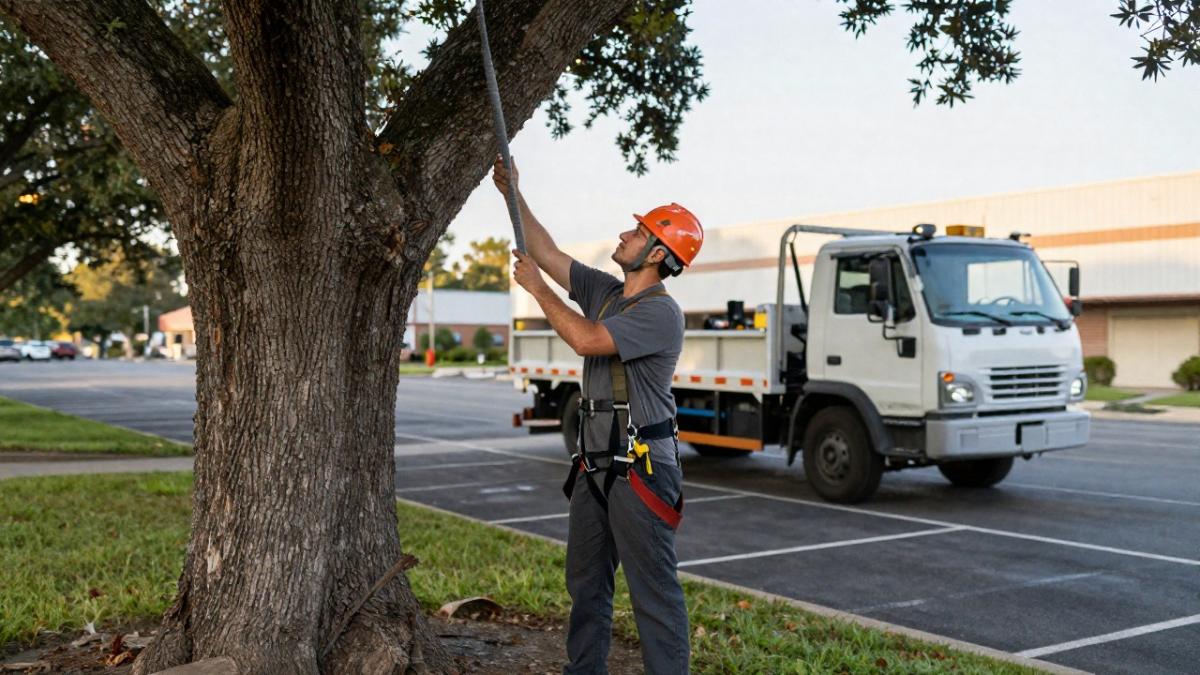
Crane-Assisted Removal for Hazardous and Hard-to-Reach Trees
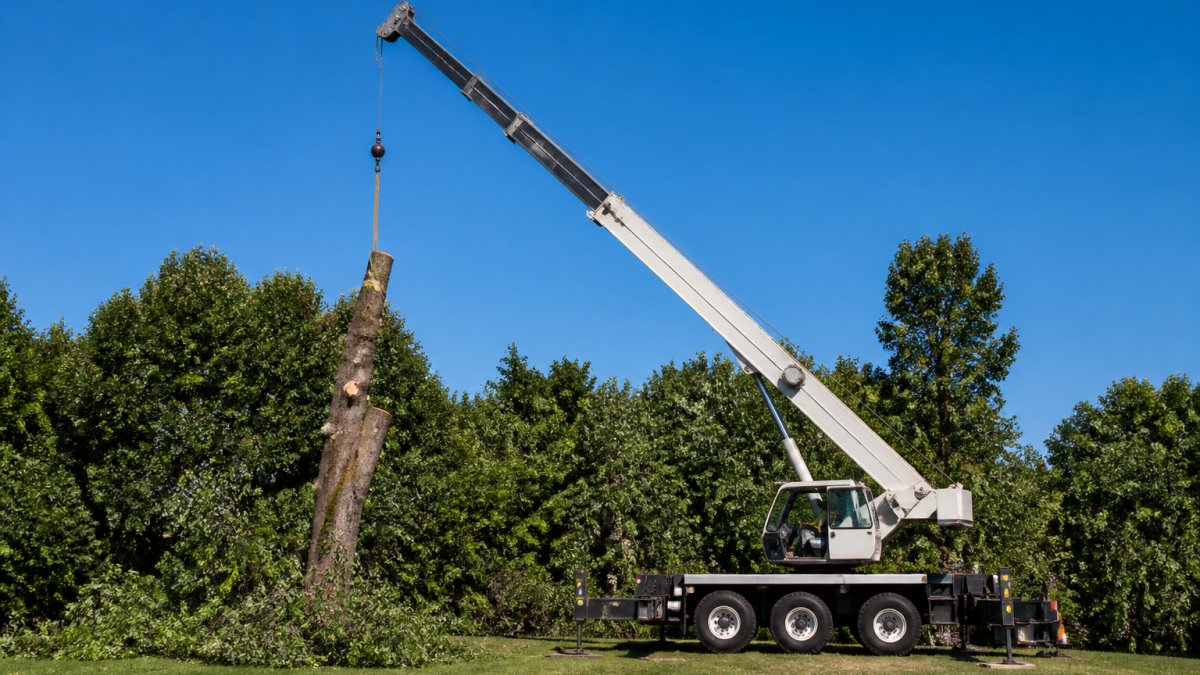
A leaning tree over a building or a dead tree beside power lines is not a climbing job. Crane-assisted removal lifts sections away from structures instead of dropping them near them. If you are weighing the equipment cost, our breakdown of crane rental for tree service explains when a crane pays for itself.
Best for: commercial properties needing hazardous removal, land clearing, or storm response. Skip if: you need a provider outside our service area.
Precision Tree Care: High-Wind Response and Maintenance Contracts
The limitation is geography. If your properties sit outside the Peninsula, this is not your vendor. Pricing depends on the scope of work, so budget conversations start with a call.
Best for: Peninsula commercial properties wanting removal plus ongoing care. Skip if: you operate outside that service area.
SAFETY Tree Service and Arbor Masters: Free Estimates and Dead-Tree Removal
Two providers here are worth pairing because they solve different problems.
Not sure whether a tree is a genuine hazard? Our list of warning signs a tree is dangerous covers what to look for before you call anyone.
Best for: scoping a project at no cost, or handling dead and diseased trees. Skip if: you need confirmed crane capacity or published rates up front.
Urban Tree Company: Removal Paired With Site Preparation
If you are planning post-removal work, our comparison of stump grinding versus complete root removal explains which option suits a build site.
Best for: development projects needing removal plus site prep. Skip if: you only need a single tree taken down.
What Drives Commercial Tree Maintenance Cost and Removal Budgets
Commercial tree maintenance cost depends on tree size and condition, proximity to structures and power lines, equipment required, access, stump grinding, debris hauling, and whether you need emergency response. What most service pages never explain is how those inputs turn into a number you can actually budget against, so here is the mechanism behind a commercial estimate.
How a commercial estimate is built. A qualified contractor prices four buckets: labor and rigging time, equipment (bucket truck, crane, chipper, stump grinder), disposal (hauling weight and landfill or mulch fees), and risk overhead (insurance, permits, traffic control, and after-hours premiums). Tree size and height set the labor and rigging hours; proximity to structures and lines sets whether a crane or climbing crew is required; access sets how much time is lost moving equipment around a parking lot or loading dock. Ask for the estimate broken into those buckets rather than a single lump sum, because that is the only way to compare two bids fairly.
Budgeting across a portfolio. Property managers with multiple sites should separate reactive spend (storm damage, hazard removal) from planned spend (cyclical pruning, dead-tree removal, stump grinding). A common pattern is to inspect every property on a fixed cycle, rank trees by risk, and move the highest-risk removals into the planned budget before they become emergency invoices. Emergency and after-hours calls carry premiums, so the cheapest storm response is the one you planned for.
Compliance and disposal costs. Local tree ordinances, protected-tree rules, and right-of-way requirements can add permit fees, arborist reports, or replanting obligations to a removal. Disposal is priced by volume and weight, so ask whether chipping, hauling, and stump grinding are included or billed separately. Our comparison of stump grinding versus complete root removal explains which option suits a build site versus a maintained landscape.
OSHA notes that many hazards in tree-care operations fall under its General Industry standards in 29 CFR § 1910, which is why insured, trained crews cost more and are worth it. For storm work specifically, our guide to emergency storm tree removal cost sets realistic expectations.
| Cost Factor | What It Does to the Bill | Budget Tip |
|---|---|---|
| Tree size and height | Larger trees need more rigging and time | Remove hazardous trees before they grow |
| Proximity to structures or lines | Crane work and permits raise cost | Get a site inspection early |
| Stump grinding | Adds a line item per stump | Bundle multiple stumps in one visit |
| Debris removal | Hauling and disposal add cost | Ask if chipping is included |
| Emergency timing | After-hours storm calls cost more | Set up a storm response plan in advance |
A bid that omits disposal, stump grinding, or permit handling may not be a complete price, so confirm which line items are included.
Storm season does not wait for a signed contract. If you manage commercial properties, the time to line up a qualified crew is before a tree comes down on a parking lot. Kauffeld Tree Care brings a Certified Arborist, full insurance, 24-hour emergency service, and crane-assisted removal for hazardous or hard-to-reach trees to every commercial job.
Frequently Asked Questions
How much does tree removal cost for a commercial property?
Commercial pricing depends on site access, permit requirements, debris hauling, and whether a crane is needed. For current pricing, request a site-specific quote from Kauffeld Tree Care after a property walk.
What services are included in commercial tree maintenance?
Commercial tree maintenance can include pruning, stump grinding, and storm response. Ask providers what their maintenance options include. Ask whether debris removal, permit handling, and emergency call-outs are included or billed separately.
How do I choose a certified arborist for my business property?
Verify the arborist holds current certification and that the company carries liability insurance and workers' compensation coverage. Ask for commercial references and confirm the crew has crane and bucket truck experience for tall or leaning trees. A written risk assessment and a clear scope of work separate a professional bid from a verbal estimate.
What are the liability risks of dead trees on commercial land?
Property owners can be held responsible when a dead or damaged tree falls and injures someone or damages neighboring property, especially if the hazard was visible and unaddressed. Safety regulations also set expectations for removal operations. Documented inspections and prompt removal reduce both safety exposure and legal risk.
What is the difference between residential and commercial tree removal?
Commercial jobs usually involve larger trees, multiple structures, parking areas, and tenant or customer traffic that must keep moving during the work. They often require permits, traffic control, and coordination with property management. Forestry mulching for commercial land clearing and crane-assisted removal are more common on commercial sites than on residential lots.