 Listicle
Are Crane Rental Benefits Worth It for Tree Service?
Last Updated: October 28, 2026
Quick Summary
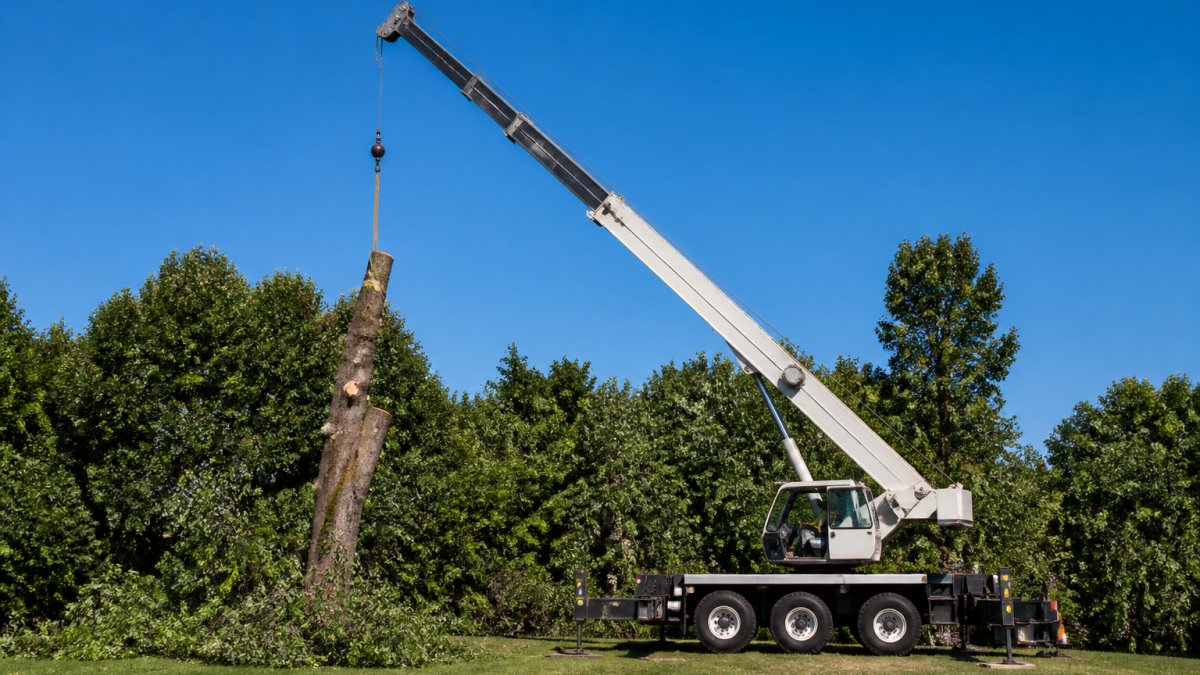
Crane rental benefits for tree service come down to safety and control on jobs ground crews cannot handle, such as leaning, dead, hollow, or hard-to-reach trees near structures and power lines. A crane lets crews lift sections out from above instead of dropping them, keeping workers out of the tree and limbs away from conductors.
- A common rental structure runs about $150 per hour with a four-hour minimum.
- OSHA prohibits hoisting a person on the crane load or hook, known as riding the hook.
- Confirm in writing who pulls the permit, notifies the utility, and carries lift insurance.
- Renting a bare crane for a small job is usually the worst version of this.
- A bucket truck or climbing crew often handles the same small tree for less.
Table of Contents
- Why Crane Rental Benefits Matter for Tree Service Work
- When to Use a Crane for Tree Removal
- Crane Tree Removal Safety: Workers, Property, and Overhead Lines
- What Tree Removal Crane Cost Actually Includes
- Storm-Damaged Tree Removal: Where Crane Rental Pays Off
- Site Access, Permits, and Insurance Responsibilities
- When a Crane Is Not Worth the Money
- Get a Crane-Assisted Removal Quote from Kauffeld Tree Care
- Frequently Asked Questions
Why Crane Rental Benefits Matter for Tree Service Work
The U.S. crane rental market is valued at $8,120.4 million in 2026 and projected to reach $10,273.3 million by 2031, according to MarketsandMarkets' US crane rental market forecast. That growth reflects something tree crews already know: some trees cannot be handled safely from the ground or from a climbing rope alone.
At Kauffeld Tree Care, we use cranes for hazardous or hard-to-reach tree removals.
Below, we break down when a crane earns its cost, what a quote actually covers, and the jobs where renting one is a waste of money.
When to Use a Crane for Tree Removal
A crane makes sense when a tree is too large, too damaged, or too close to something valuable for ground-based felling. The deciding factors are lean, decay, and what sits underneath.
Trees That Justify a Crane
- Leaning trees over structures. A tree with significant lean toward a house has to be taken apart from above, not dropped. For more on this, see our guide to safely removing leaning trees.
- Dead or hollow trees. Decay removes the hinge wood a climber relies on. OSHA's inspection guidance for tree care operations treats these as high-hazard work, and a crane keeps crews out of the tree entirely.
- Large trees in tight yards. No drop zone means every section has to be lifted out.
- Trees near utility lines. Controlled lowering keeps limbs away from conductors.
Crane Tree Removal Safety: Workers, Property, and Overhead Lines
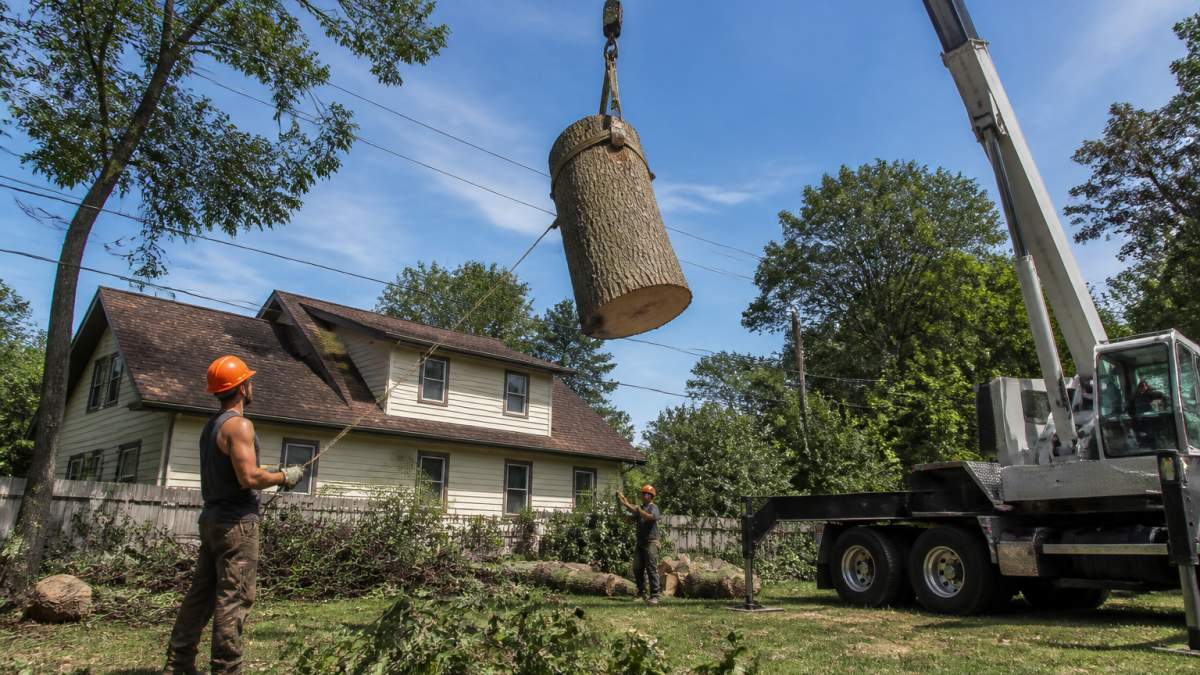
One rule is absolute. OSHA guidance prohibits hoisting a person on the crane load or hook, a practice called riding the hook, under 29 CFR § 1910.180(h)(3)(v). Crews ride in bucket trucks or work from the ground.
What Tree Removal Crane Cost Actually Includes
A common rental structure runs about $150 per hour with a four-hour minimum, according to ArboStar's comparison of renting versus buying a crane. Larger equipment costs more per hour.
| Quote Component | What It Covers | Why It Varies |
|---|---|---|
| Crane size | Lifting capacity and reach | Tree height and weight per section |
| Minimum hours | Four-hour booking floor | Most jobs finish inside it |
| Mobilization | Transport to and from the site | Distance and permit loads |
| Operator | Certified crane operator | Included in some rentals, separate in others |
| Rigging crew | Ground crew and slings | Number of picks and section size |
Rental Versus Hiring a Service That Supplies the Crane
For most homeowners, the bundled option is simpler and safer. You are not coordinating a crane company and a tree crew on the same morning.
Storm-Damaged Tree Removal: Where Crane Rental Pays Off
That speed matters after a storm, when crews are booked out and every extra hour on site adds cost. If you are weighing the expense, our breakdown of emergency storm tree removal cost explains what drives the number. Once the crane work is done, our emergency storm cleanup guide covers debris removal and the next steps.
Site Access, Permits, and Insurance Responsibilities
Insurance is the item most people miss. Tree Care Industry Magazine's analysis of crane rental notes that rental agreements can carry broad insurance clauses and significant coverage requirements. Ask for a certificate of insurance that shows general liability and workers' compensation, and confirm that the policy covers crane-assisted tree work specifically. Our guide to hiring insured tree care companies walks through verifying a company's coverage before you hire.
When a Crane Is Not Worth the Money
Renting a bare crane for a small job is usually the worst version of this. The four-hour minimum and mobilization fee can exceed the value of the work. A bucket truck or a climbing crew often handles the same tree for less.
Get a Crane-Assisted Removal Quote from Kauffeld Tree Care
Kauffeld Tree Care handles crane tree removal for hazardous and hard-to-reach trees. We provide 24-hour emergency service for storm damage, plus brush chipping and stump grinding.
Get started with Kauffeld Tree Care. You can also read our guide to finding local tree removal experts to help you compare and vet local companies before requesting your quote.
Frequently Asked Questions
How much to take down a tree with a crane?
There is no single figure. Your actual number depends on the job, so contact Kauffeld Tree Care for a quote.
Is a crane rental cheaper than hiring a tree service that brings its own crane?
Rarely for a homeowner. Renting means you contract the crane company separately, and rental agreements can carry broad insurance clauses and coverage requirements. A tree service that supplies the crane carries the operator, rigging crew, and liability as one scope of work. Crane rental benefits accrue mainly to tree-care businesses that already have trained crews and only need the equipment for a day.
How does a crane make tree removal safer?
A crane lets the crew cut sections and lower them under control instead of felling whole trees or dropping pieces. That reduces time spent climbing, keeps workers off unstable stems, and limits ground impact near houses, landscaping, and utility lines. OSHA guidance under 29 CFR 1910.180(h)(3)(v) prohibits hoisting a person on the crane load or hook, so crews stay on the ground or in an aerial lift while the crane handles wood.
Does homeowners insurance cover crane-assisted storm tree removal?
It depends on the policy and the cause. Many policies cover removal of a tree that damages a covered structure, and some cover removal when a tree blocks a driveway or access. Removal of a tree that simply falls in the open yard is often excluded. Photograph the damage, keep receipts, and ask your adjuster before work starts. A fully insured tree service can also confirm its own coverage protects your property.
If a tree on your property is leaning, dead, or sitting on a structure, the cost of waiting is higher than the cost of a quote. Contact Kauffeld Tree Care for a crane-assisted removal assessment and a clear breakdown of what the job involves.