 How-to
Tree Trimming for Property Safety: A Homeowner's Guide
Last Updated: October 23, 2026
Quick Summary
Tree trimming for property safety means removing dead, damaged, or overgrown limbs before they fail and cause damage. Keep limbs at least 6 to 10 feet clear of your roof and siding, and never trim anything within 10 feet of an energized power line. Small low limbs under 2 inches are DIY; everything over a roof, near a line, or structurally defective belongs to a professional.
- Clear a drop zone roughly twice the height of the tree in every direction before any cut.
- Never remove more than about 25% of a tree's live crown in one season.
- Late winter is the best time for structural pruning because defects are visible.
- Assume every downed line is energized and call the utility before touching anything.
- Never use a chainsaw on a storm-damaged tree that is leaning, split, or touching a line.
Table of Contents
- Why Tree Trimming Is Your First Line of Property Safety
- Tree Trimming Safety Tips Before You Touch a Branch
- Spotting Dangerous Tree Branches Before They Fall
- Signs a Tree Is Diseased or Structurally Unstable
- Tree Pruning Near House and Power Lines: The Clearance Rules
- DIY or Professional? A Decision Guide for Property Owners
- Seasonal and Post-Storm Inspection Checklist
- Conclusion
- Frequently Asked Questions
Why Tree Trimming Is Your First Line of Property Safety
Tree trimming for property safety is the practice of removing dead, damaged, or overgrown limbs before they fail and cause damage. At Kauffeld Tree Care, we treat it as preventive maintenance, not cosmetic yard work.
That is the part most guides skip. A homeowner with a pole saw and a free Saturday is taking on the same physics a crew faces, minus the harness, the training, and the spotter.
Below, we'll show you exactly how to judge your own trees, where the real danger sits, and when to call in a professional.
Tree Trimming Safety Tips Before You Touch a Branch
Start with the hazards, not the saw. Federal guidance from OSHA's inspection guidance for tree care operations names falls from elevation and struck-by incidents as the leading dangers in tree trimming and removal. Both kill people who skip the basics.
Personal protective equipment (PPE) is the minimum entry fee. You need:
- Protective eyewear rated for impact
- A hard hat with a chin strap
- Heavy work gloves with a grip surface
- Cut-resistant leg protection if you run a chainsaw
- Non-slip boots with ankle support
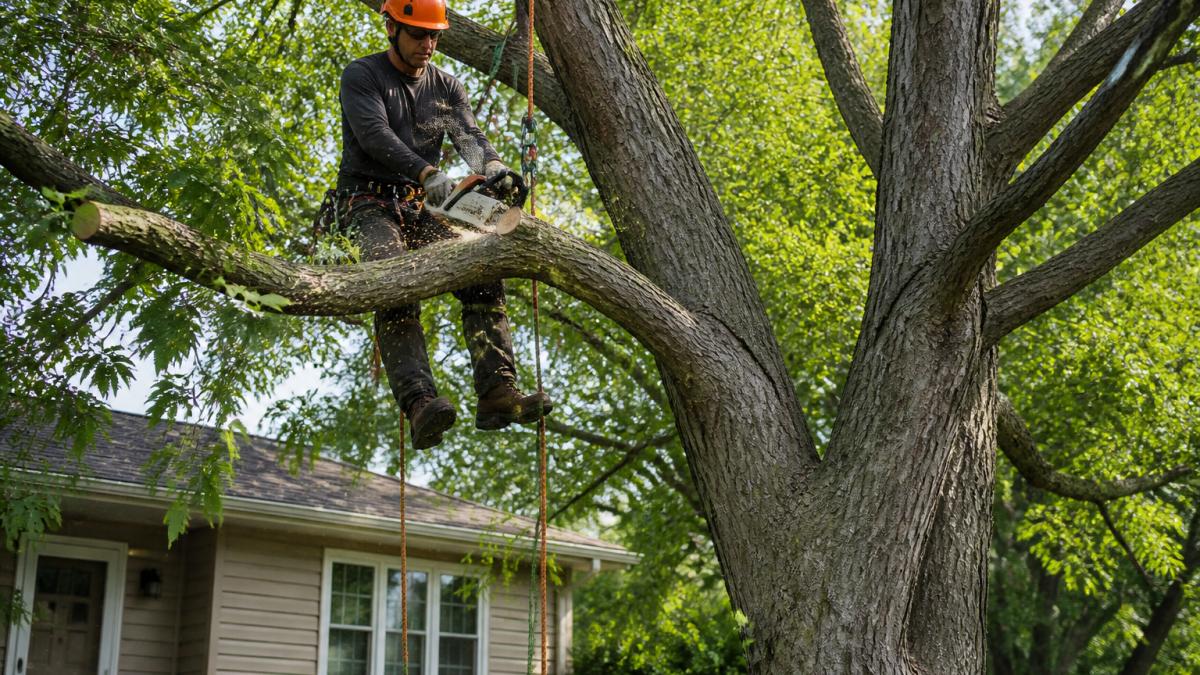
The work zone comes next. Before any cut, clear a drop zone roughly twice the height of the tree in every direction. Rope it off. Keep bystanders, kids, and pets outside it. Falling debris does not care who is watching.
Ladder safety deserves its own rule. Never cut from a ladder while holding a running saw. If the branch needs a ladder to reach, it needs a professional.
Spotting Dangerous Tree Branches Before They Fall
The most dangerous branches announce themselves weeks before they drop. The problem is that most homeowners look up once, see green leaves, and move on.
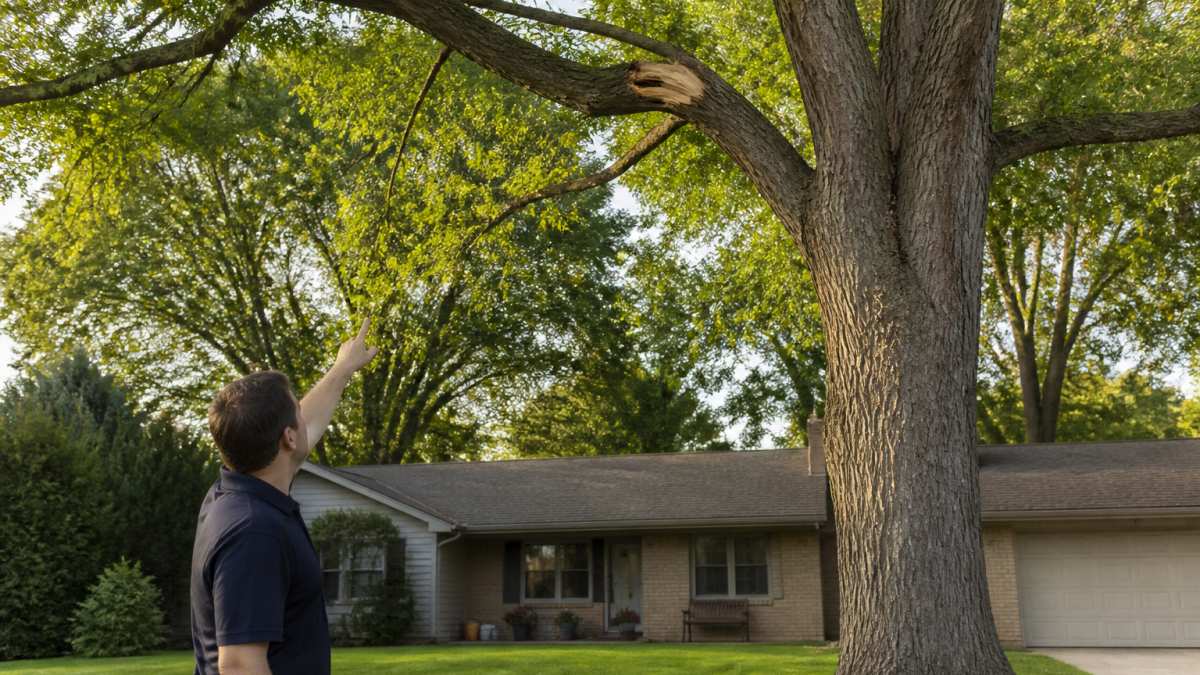
Work from the ground out, and from the bottom up. Never stand under the canopy to inspect it.
Step 2, Trunk. Check for vertical seams, sunken or swollen areas, bark peeling in long strips, and shelf fungi.
Step 3, Branch attachments. Look at the collar where each limb meets the trunk.
Step 5, Lean and targets. Note any lean that appeared suddenly or has worsened since your last walk. Then look down: what is under the tree?
How to rank what you find:
- Urgent, crack at the collar, fresh lean, hollow at the base, hanger over a target, or anything within 10 feet of an energized line. Keep people and vehicles clear and call a professional or the utility today.
- Watch, deadwood in the crown, minor included bark, old conks with no target beneath. Photograph, date it, and re-check in 30 days.
- Routine, crossing limbs, minor rubbing, small dead twigs. Add to your normal pruning cycle.
One more mechanism worth knowing: a tree can look healthy and still fail at the root plate after grading, soil compaction, or a wet season. That is why the root-flare step comes first. If the base is compromised, no amount of crown pruning makes the tree safe.
Signs a Tree Is Diseased or Structurally Unstable
A diseased tree usually shows you the problem from the ground up. Look for structural defects first: cavities, hollows, seams in the bark, and conks (shelf-like fungal bodies) on the trunk. These point to rot inside the wood.
Then check the crown:
- Thin, sparse foliage compared with nearby trees of the same species
- Dead wood in the upper canopy
- Sudden leaf drop in the growing season
- Discolored or wilting leaves on one side only
Tree stability is the harder question. A tree can look healthy and still fail at the root plate, especially after soil disturbance, grading, or a wet season.
Our rule of thumb: if a tree leans toward your house, driveway, or a power line, get it assessed. Do not wait for a storm to make the decision for you.
Tree Pruning Near House and Power Lines: The Clearance Rules
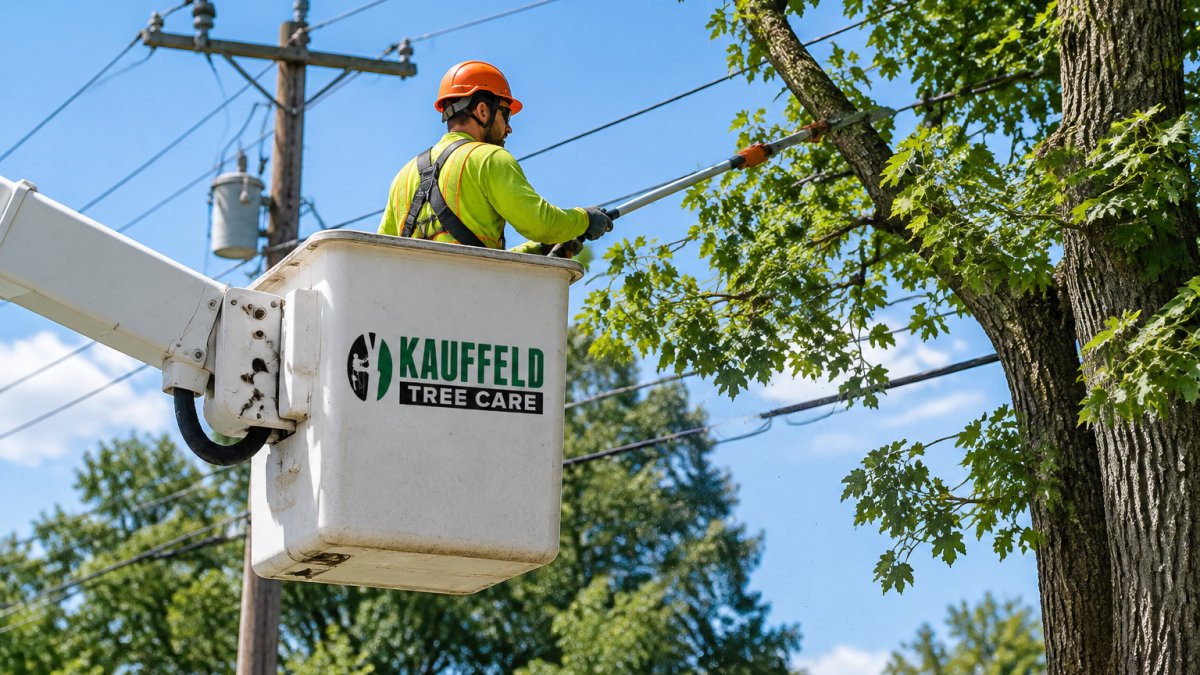
Power lines are the one hazard you never handle yourself. Ever. Energized lines can arc through tools, ladders, and wet branches. Utility clearance work belongs to the utility or a qualified line-clearance professional, full stop.
For tree pruning near house structures, the safe distance is the part most people get wrong.
Clearance matters for three reasons:
- Falling branches damage shingles, gutters, and windows
- Rubbing limbs wear through roofing and siding over time
- Moisture trapped against the house invites rot and pests
Safe pruning technique has limits, too. Never remove more than about 25% of a tree's live crown in one season. Make cuts just outside the branch collar, not flush with the trunk. Leave the collar intact, and the tree seals the wound itself.
DIY or Professional? A Decision Guide for Property Owners
Here is the honest answer most guides avoid: DIY is fine for small, low, reachable work. Everything else belongs to a pro.
Use this decision guide:
| Situation | DIY or Pro | Why |
|---|---|---|
| Limbs under 2 inches, below head height | DIY | Low risk, hand tools only |
| Branches over your roof or driveway | Pro | Falling debris and property damage risk |
| Anything within 10 feet of a power line | Utility or pro | Electrocution risk |
| Tree leaning toward a structure | Pro | Crane or rigging may be needed |
| Storm-split or hung-up tree | Pro | Stored energy, unpredictable failure |
| Stump removal | Pro | Grinding equipment required |
| Diseased or hollow tree | Pro | Structural assessment needed |
The qualified professional question is really a liability question. Ask for proof of insurance and a certified arborist on staff before anyone climbs.
At Kauffeld Tree Care, our crews use bucket trucks and cranes for hazardous or hard-to-reach trees. We are certified arborists and fully insured, so if something goes wrong, you are covered.
Seasonal and Post-Storm Inspection Checklist
Inspect on a schedule, not just after a storm. Late winter is the best time for tree pruning because growth is dormant and the canopy is bare, which makes defects easy to see. Check again in late summer for drought stress and deadwood. And run a dedicated pass after any high wind, ice, or heavy rain event.
Seasonal timing that actually matters:
- Late winter (dormant season), best window for structural pruning; defects are visible and wounds seal before spring growth.
- Late spring, check for storm-split tips and hangers left from winter; confirm new growth is even on both sides of the crown.
- Late summer, look for drought stress, early leaf drop, and deadwood that appeared during the hot months.
- After leaf drop, easiest time to spot deadwood and weak attachments against a bare canopy.
After any significant storm, run this checklist in order:
- Stay back and scan from a safe distance, never walk under the canopy to inspect it
- Look for downed lines first. Assume every downed line is energized. Do not touch it, do not drive over it, and keep children and pets away
- Call the utility to report downed lines and stay on the line until they confirm the area is safe
- Look for hangers and split limbs still caught in the tree
- Note leaning trees that were straight before the storm
- Photograph damage with dates for insurance
- Clear small debris only after the tree is confirmed stable
- Book a professional assessment for anything hung up or split
Emergency response for damaged trees and downed lines. The sequence matters more than the tools:
- Isolate the area. Rope off or mark a perimeter at least twice the height of the damaged tree. Keep everyone, including yourself, outside it.
- Call the utility first for any line on the ground, in a tree, or touching a fence, vehicle, or roof. Do not attempt to move the line with a tool, a board, or a vehicle.
- Call 911 if the line is on a vehicle with someone inside, if there is fire or smoke, or if anyone is injured. Tell the dispatcher it is an electrical emergency.
- Do not cut a limb that is touching or near a line, even if the line looks dead. Only the utility or a qualified line-clearance professional can confirm it is de-energized.
- Document the damage with dated photos before cleanup begins, then contact your insurer.
Storm damage cleanup is where homeowners get hurt most often. A hung-up limb holds stored energy. Cut the wrong end and it swings. A split trunk can barber-chair, the butt kicks back and the top drops, which is why storm-damaged trees belong to professionals with rigging and a spotter.
Conclusion
The hardest part of tree trimming is admitting which jobs are not yours to do. Small limbs, low branches, and routine cleanup are fair game.
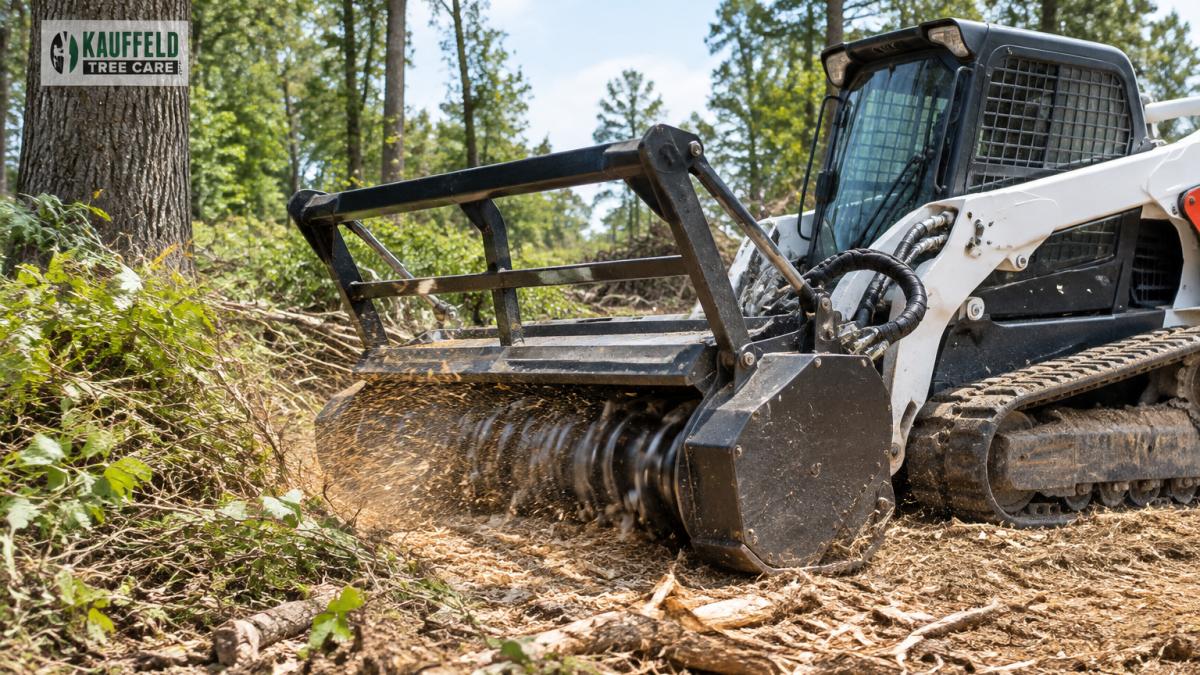
That is where we come in. Kauffeld Tree Care offers certified arborist assessments, crane-assisted removal for hazardous trees, and 24-hour emergency storm response. We also handle brush chipping, stump grinding, and land clearing when a property needs more than a trim.
Get started with Kauffeld Tree Care and put a professional set of eyes on your trees before the next storm makes the decision for you.
Frequently Asked Questions
How does tree trimming improve property safety?
Trimming removes dead, damaged, and weak limbs before they fall on roofs, vehicles, or people. It also improves clearance from power lines and structures. OSHA's inspection guidance for tree care identifies falls from elevation and struck-by hazards as core risks, and both shrink when hazardous limbs are removed early. Regular trimming also lets you catch structural defects while they are still fixable, rather than after a storm brings the tree down.
Is it safe to trim tree branches myself?
Small limbs you can reach from the ground with a pole saw are usually fine for a careful homeowner. Anything requiring a ladder, a chainsaw overhead, or work near power lines is not. Falls from elevation and struck-by incidents are the hazards OSHA flags in tree work, and both are common in DIY attempts. If a branch is large, dead, or anywhere near energized lines, hire a qualified professional.
What are the signs a tree is diseased?
Look for thinning canopy, discolored leaves out of season, mushrooms or conks on the trunk, soft or crumbling wood, bark cracks, and dead branches on one side. A leaning trunk with exposed roots is another warning. When several signs appear together, get an assessment before the tree becomes a hazard.
How far should tree branches be from a roof?
Keep branches at least 3 to 6 feet clear of the roof surface so they don't scrape shingles, drop debris into gutters, or give wildlife a bridge onto the house. Clearance also matters for utility lines, where only the utility or a qualified professional should work. Correct tree pruning near house structures reduces storm damage and keeps limbs from rubbing during high wind, which is when most failures happen.