 Comparison
What Residential Brush Chipping Service Cost Really Covers
Last Updated: November 4, 2026
Quick Summary
Residential brush chipping service cost is priced by the hour, by the pile, or by the job, and the quote depends on the pricing method the company uses and what your property looks like. Chipping-only work assumes brush is already cut and stacked within reach of the machine, while full-service clearing covers cutting standing vegetation and carries a much wider range.
- Chipping is cheaper than clearing, and clearing is cheaper than hauling, so you pay for time, equipment capacity, and dump fees.
- Per-acre rates assume continuous ground and tell you little about a staged residential pile, where pile volume and branch diameter drive cost.
- Hourly pricing is the most common method for residential brush chipping and covers the crew, chipper, fuel, setup, and breakdown.
- Thumbtack's 2026 data puts national brush removal averages at roughly $657 to $2,309, depending on land size, density, and access.
- Leaving chips on site is usually the cheapest option because it eliminates a dump trip, while hauling adds labor and disposal cost.
Table of Contents
- How Residential Brush Chipping Service Cost Is Actually Priced
- Brush Clearing Cost Per Acre on Larger Properties
- Brush Clearing Cost Per Hour and When It Applies
- Using a Brush Removal Cost Calculator Without Getting Misled
- Wood Chipping Cost: Crew Rates Versus Renting a Chipper
- What a Chipping Quote Should Itemize Before You Sign
- Requesting a Brush Chipping Quote for Your Property
- Frequently Asked Questions
How Residential Brush Chipping Service Cost Is Actually Priced
Most homeowners expect a single number when they ask about residential brush chipping service cost, and most contractors can't give one over the phone.
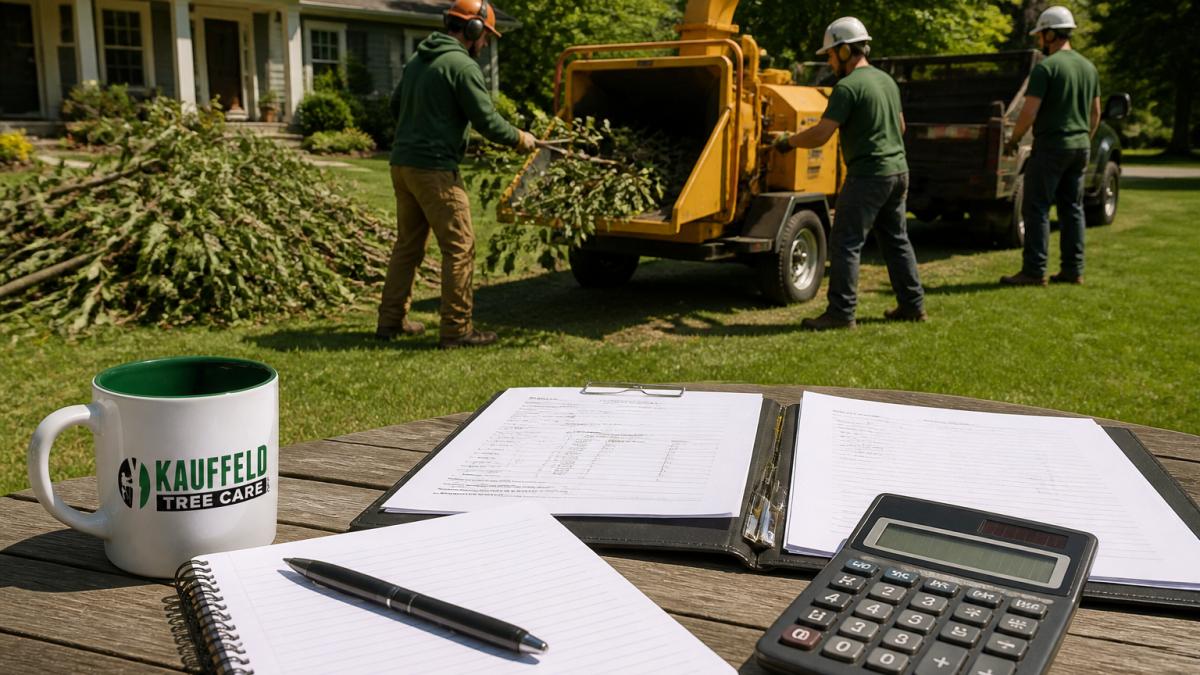
Below, we break down how pricing actually works, where the ranges come from, and what to ask before you sign.
Here's the short version: chipping is cheaper than clearing, and clearing is cheaper than hauling. What you're really paying for is time, equipment capacity, and dump fees.
Chipping-Only Work Versus Full-Service Clearing
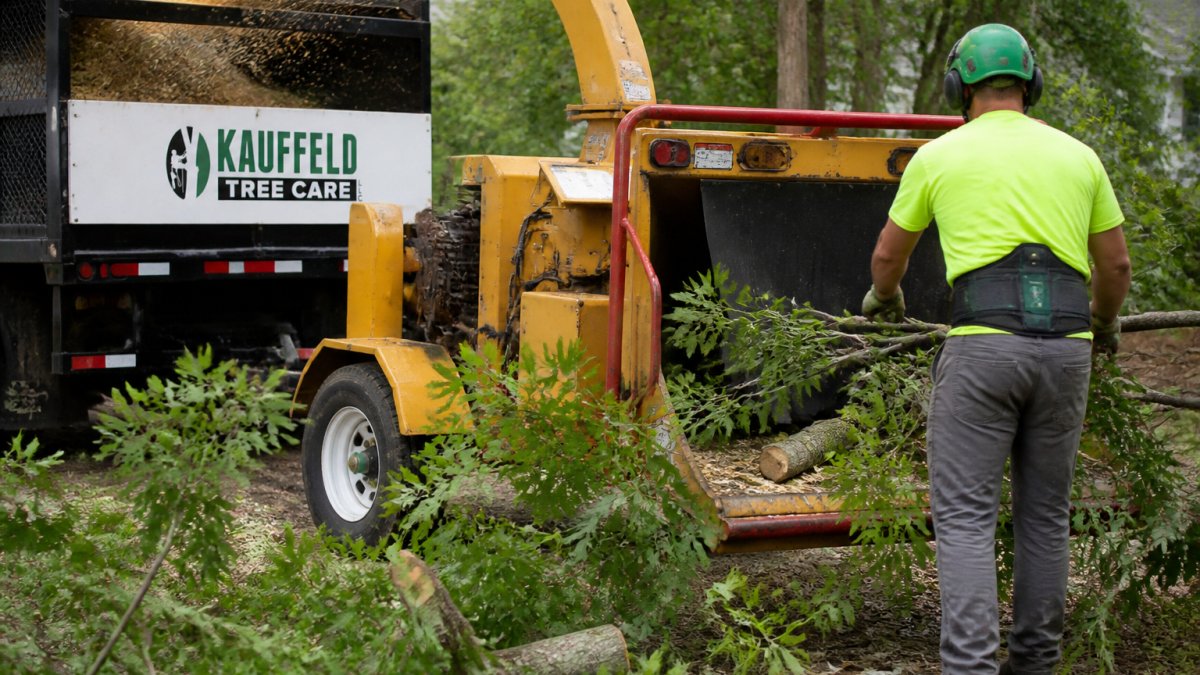
Brush chipping is the process of feeding cut branches, limbs, and brush into a mechanical chipper that reduces them to wood chips.
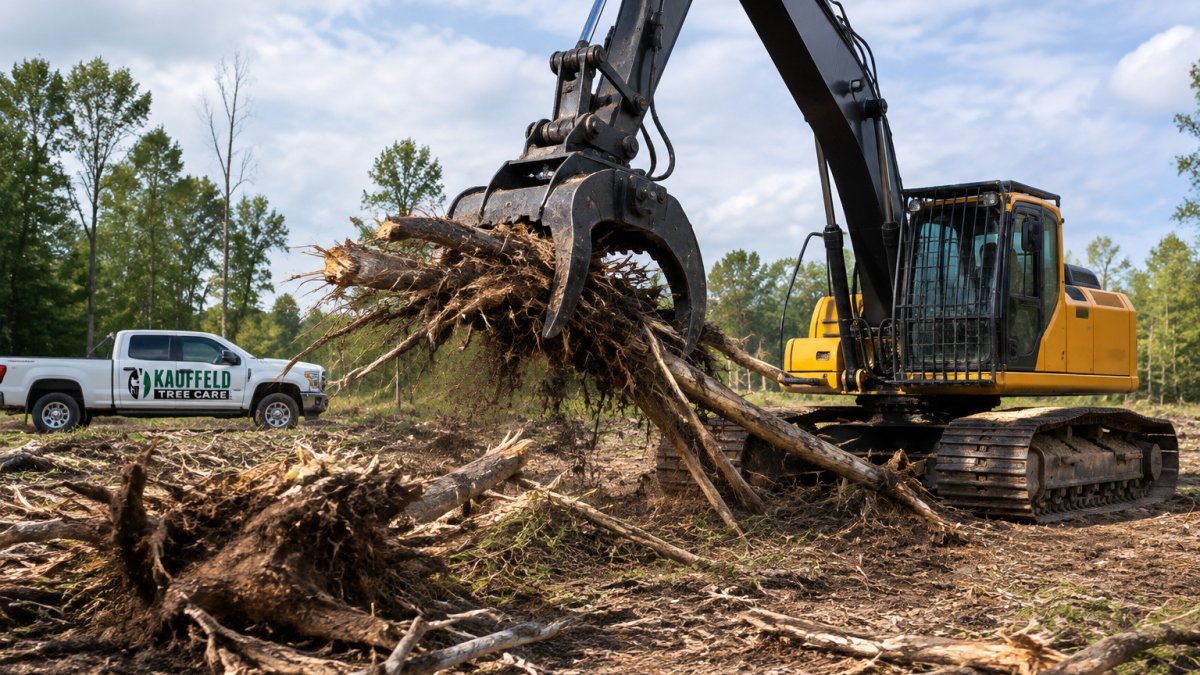
Full-service clearing is a different job. According to OwnRops' 2026 brush clearing pricing guide, brush clearing runs from roughly $500 to $10,000+ per acre depending on vegetation density and method.
If your brush is already piled and accessible, you're buying chipping. If it's still standing, you're buying clearing. Mixing the two up is the most common reason a quote surprises a homeowner.
For a deeper look at the full-clearing alternative, our guide to forestry mulching for land clearing explains how that method compares.
Brush Clearing Cost Per Acre on Larger Properties
Per-acre pricing applies when the job is large enough that hourly billing stops making sense. A quarter-acre lot with scattered limbs is an hourly job. A two-acre overgrown parcel is a per-acre job. The per-acre method exists because it shifts the risk of unknown density onto the contractor, who prices the average rather than the clock.
Pricing per acre depends on how thick the vegetation is, how steep the ground is, and how far the crew has to move material. Dense stands of small trees and heavy undergrowth take far longer than open grass with a few fallen limbs.
| Property Situation | Typical Pricing Method | What Drives the Number |
|---|---|---|
| Small yard, piled brush | Hourly or flat rate | Pile volume, access |
| Half acre, light brush | Hourly with a cap | Time on site |
| One to five acres, mixed | Per-acre rate | Density, terrain |
| Five acres plus, heavy growth | Per-acre plus equipment | Method, hauling distance |
Why Per-Acre Numbers Do Not Transfer to a Residential Pile
A per-acre rate assumes the crew is working continuous ground. A residential chipping job is the opposite: a finite pile of cut material in one spot, often behind a fence or beside a house. The per-acre band a contractor quotes for open land tells you almost nothing about what your staged pile will cost, because the cost driver is not acreage, it is how long the chipper runs and how many times the crew has to stop.
Three variables move a residential chipping price more than lot size:
- Pile volume. A contractor estimates volume in cubic yards, not acres. A pile roughly the size of a compact car is a different job from a pile the length of a driveway, even on the same lot.
- Largest branch diameter. Most residential chippers accept limbs up to a rated diameter, commonly in the 6- to 12-inch range for tow-behind and compact commercial machines. Material over the rated capacity has to be cut down, set aside, or handled by a larger machine, and that changes the price.
- Chipper capacity and access. A machine that fits through a 36-inch gate works slower than a full-size chipper parked at the curb. If the crew must carry brush farther than the machine can reach, labor time rises even though the pile is small.
Residential Examples With Itemized Assumptions
If you're weighing whether to tackle an overgrown parcel yourself, our step-by-step guide on how to clear overgrown brush walks through the work involved before you decide.
Brush Clearing Cost Per Hour and When It Applies
Hourly pricing is the most common method for residential brush chipping, and it's the one homeowners understand least. The rate covers the crew, the chipper, fuel, and the time to set up and break down.
Ask any crew you are considering how it bills, including whether it uses a minimum charge, before you book.
What actually eats hours on a residential job:
- Setup and mobilization. Getting the chipper into the yard and positioned safely.
- Dragging brush. If limbs are scattered across the property, someone has to carry them to the machine.
- Feeding the chipper. Large limbs and forked branches slow the feed rate considerably.
- Cleanup. Raking the work area and blowing off hard surfaces.
The hourly rate itself matters less than how many hours the job realistically takes. A low rate with slow work costs more than a higher rate with an efficient crew.
Using a Brush Removal Cost Calculator Without Getting Misled
Online calculators give you a ballpark, not a quote. They typically ask for property size, brush density, and access, then return a broad range. That range is useful for budgeting and useless for comparing contractors.
According to Thumbtack's 2026 brush removal cost data, national averages for brush removal services run from roughly $657 to $2,309, with cost depending on land size, brush density, and access. Notice how wide that spread is.
Use a calculator to answer one question: am I in the right budget range? Then get real quotes.
Wood Chipping Cost: Crew Rates Versus Renting a Chipper
Renting a chipper looks cheaper until you price the whole job. Rental rates for chippers commonly run by the day, and the machine you can tow behind a pickup handles far less than a commercial chipper. Equipment retailer Woodland Mills' wood chipping cost breakdown notes that rental costs vary widely by machine size, and that buying a chipper starts in the thousands.
Here's what the rental math leaves out:
- Your labor. Every hour you spend feeding the machine is an hour you're not doing anything else.
- The learning curve. Chippers jam. Clearing a jam safely takes practice.
- Safety. Feeding a chipper is one of the more dangerous tasks in yard work.
- Disposal. Renting a chipper doesn't solve what happens to the chips or the un-chippable pieces.
Renting makes sense for a small pile of clean limbs and a homeowner who wants the chips for landscaping.
What a Chipping Quote Should Itemize Before You Sign
A good quote tells you what's included, what's extra, and what could change the price. The reason this matters is that two bids for the same pile can differ by hundreds of dollars simply because one includes cutting, hauling, and cleanup and the other does not. Comparing the bottom line without comparing scope is how homeowners overpay for the cheaper-looking bid.
The Line Items That Change the Price
- Cutting versus chipping only. Chipping-only assumes brush is already cut and stacked within reach of the machine. If the crew has to cut limbs to length or drag material out of a wooded area, that is added labor and should appear as its own line.
- Minimum charge and billing increment. Most crews bill in whole-hour increments with a minimum that covers mobilization and the first stretch of work. A 45-minute job can still bill as a full minimum, so the minimum matters more than the hourly rate for small piles.
- Chips left on site versus hauled away. Leaving chips is usually the cheapest option because it eliminates a dump trip. Hauling chips adds labor, truck capacity, and disposal cost. Spreading chips in beds or along a fence line is a middle option that some crews price separately.
- Dump fees and disposal. If debris leaves the property, ask whether the dump fee is included or passed through, and whether it is charged per load or per ton. Un-chippable material, root balls, treated lumber, rocks, wire, often carries a separate disposal charge.
- Mobilization. Some companies charge a flat mobilization fee to bring the chipper and truck to the property. Ask whether it is waived if the job runs long.
- Cleanup and raking. Raking the work area and blowing off driveways and walks is sometimes included and sometimes billed as extra labor. Get it in writing.
- Insurance and licensing. Ask any contractor for a certificate of insurance showing general liability and, where required, workers' compensation, and verify the coverage is current before work begins.
- What happens if the crew hits unexpected material. Buried rocks, wire, and treated lumber can damage a chipper and stop the job. A reputable company flags this before starting and states how it will handle the delay.
How to Compare Two Bids Like-for-Like
Put both quotes side by side and check four things: does each include cutting, does each include hauling and dump fees, does each include cleanup, and does each state the same billing increment. If one bid is lower because it excludes hauling, add the cost of a separate haul-away to make the comparison fair. A bid that is higher but bundles cutting, chipping, hauling, and cleanup is often the better value once the missing line items are priced in.
Watch out: a quote that lists only a total and a date gives you nothing to compare, and it leaves the contractor free to add charges for hauling, cleanup, or extra labor after the work starts.
Before signing, it's worth knowing how to verify a contractor's coverage. Our guide on hiring insured tree care companies covers what to ask for and what the paperwork should show.
Requesting a Brush Chipping Quote for Your Property
The fastest way to get an accurate number is to describe the job clearly and let a crew look at it. Photos help. So does a rough count of piles.
When you call, have these ready: how many piles, roughly how big each one is, the largest limb diameter, how close the chipper can park, and whether you want the chips. That's most of what determines the price.
For help finding a reputable local crew, our guide on finding local tree removal experts covers what to look for.
Frequently Asked Questions
How much does residential brush chipping cost?
Brush chipping cost depends on pile volume, branch diameter, site access, and whether chips are hauled away. Get a written quote based on your actual pile.
Does brush chipping include hauling the chips away?
Not always, and this is where quotes diverge. Many crews leave the wood chips on site at no extra charge, which suits homeowners who want free mulch for beds or paths. Hauling chips away adds dump trips and disposal cost. Ask explicitly whether disposal is included before comparing two brush chipping quotes.
Is it cheaper to rent a chipper or hire a brush chipping service?
Renting can work for small, accessible piles. Chipper rental and purchase costs vary by machine size. Add fuel, towing, and your own labor hours, and the gap narrows fast on large or awkward piles. Hiring a crew makes more sense when brush is dense, on a slope, or mixed with limbs too thick for a rental machine.
What factors affect brush chipping cost the most?
Pile volume and branch diameter drive the price more than anything else, because they determine how many passes the chipper makes and how long the crew stays. Site access is next: brush dragged 200 feet to a driveway costs more than brush stacked beside it. Terrain, density, whether chips stay or get hauled, and any minimum charge or mobilization fee round out the list. Describe all of these when you request an estimate.
How should I compare brush chipping estimates?
Compare scope, not just the bottom line. Check whether each quote includes cutting and stacking, chipping, chip disposal, and cleanup, and whether it carries a minimum charge or mobilization fee. A low quote that excludes hauling can cost more than a higher all-in quote. Confirm the contractor is insured and ask how they price oversized limbs that will not fit the chipper. Request itemized quotes so the differences are visible.
Brush piles don't shrink on their own, and a chipper is not a machine most homeowners should be running next to a fence line. Kauffeld Tree Care handles brush chipping, land clearing, and storm debris cleanup with a Certified Arborist on staff and full insurance behind every job. We'll walk your property, tell you what the work actually involves, and quote it as a clear line item. Get started with Kauffeld Tree Care and turn that pile into chips or a clean yard.