 How-to
How to Estimate Tree Removal Cost Before You Call
Last Updated: October 25, 2026
Quick Summary
Tree removal cost is the total price a professional charges to cut down and clean up a tree, and it depends on size, access, condition, and risk rather than a flat rate. The national average tree removal cost runs about $750, according to Angi's 2026 tree removal cost data, and most homeowners pay between $200 and $2,000.
- Estimate by multiplying base removal cost by access and condition multipliers, then adding line items.
- Trunk diameter, not height, is the better base for estimating removal cost.
- Quotes range from $150 for trunks under 6 inches to $4,500 or more over 48 inches.
- Ask every company to quote the same scope so bids compare apples to apples.
- A dramatically low quote is a signal to verify insurance and written scope.
Table of Contents
- Why Tree Removal Cost Estimates Vary So Widely
- Start With a Tree Removal Cost Calculator or Quick Formula
- Tree Removal Cost by Size: Height and Trunk Diameter
- Tree Removal Estimate Factors That Move the Price
- Access, Location, and Site Conditions
- Tree Condition, Urgency, and Hazardous Trees
- Your Tree Removal Quote Checklist
- Request a Written Estimate From Kauffeld Tree Care
- Frequently Asked Questions
Why Tree Removal Cost Estimates Vary So Widely
The national average tree removal cost runs about $750, according to Angi's 2026 tree removal cost data, and most homeowners pay between $200 and $2,000. That spread is enormous. It is also the first thing to understand before you call anyone.
Here is the core tension. Most pricing pages hand you one number and move on. The real work is learning how to estimate tree removal cost yourself, so a quote makes sense when it lands.
Start With a Tree Removal Cost Calculator or Quick Formula
A tree removal cost calculator gives you a rough starting range, not a final price. Use it to set a budget, then let a written quote settle the details. The problem with most calculators is that they hide their assumptions. Below is a transparent method you can reproduce on paper, with every input and assumption stated, so you can see exactly how a price range is produced.
A Reproducible Estimating Method
Most practitioners build an estimate from four inputs: a base removal cost by trunk diameter, then multipliers for access, condition and risk, and cleanup scope. The formula looks like this:
Estimate = Base removal cost × Access multiplier × Condition multiplier + Add-on line items
Here is how to fill in each input.
Step 1, Base removal cost by trunk diameter. Measure the trunk at chest height (about 4.5 feet off the ground). Diameter, not height, is the better base because it tracks how much wood and weight has to come down. A common pattern is that base removal cost rises steeply with diameter: small trunks under 6 inches sit at the low end of the market range, while trunks over 48 inches sit at the top and often require a crane. Use a published range for your diameter band as the starting number.
Step 2, Access multiplier. Open yard with a clear drop zone: 1.0×. Fence, shed, or landscaping in the drop zone: about 1.1× to 1.25×.
Step 3, Condition multiplier. Healthy, straight tree: 1.0×. Dead, leaning, storm-damaged, or near a structure or power line: about 1.15× to 1.4×.
Step 4, Add-on line items. Stump grinding, debris hauling, log splitting, permits, and site cleanup are usually priced separately. Add them after the multipliers so you can see which items are optional.
A Worked Sample Estimate
Assume a 24-inch trunk in a fenced backyard with a dead, leaning tree, and the homeowner wants the stump ground and the wood hauled.
- Base removal cost for a 24-inch trunk: use the middle of your local diameter range (for illustration, say $900).
- Access multiplier for a fenced drop zone: 1.15× → $1,035.
- Condition multiplier for a dead, leaning tree: 1.25× → about $1,294.
- Add stump grinding and hauling as separate line items from your local quotes.
The point is not the exact dollar figure, it is that every number traces to a stated input. When a real quote lands, you can compare it line by line against your own estimate and see where the difference comes from.
Online calculators lean on height and trunk diameter. That gets you close. It cannot see the fence, the power line, or the soft ground, which is why the multipliers above exist. Treat any calculator output as a budget tool, and request a written quote for current pricing on your property.
Tree Removal Cost by Size: Height and Trunk Diameter
Size drives tree removal cost by size more than any other factor. Height tells you how tall the tree is. Trunk diameter tells you how much wood has to come down and how heavy it is.
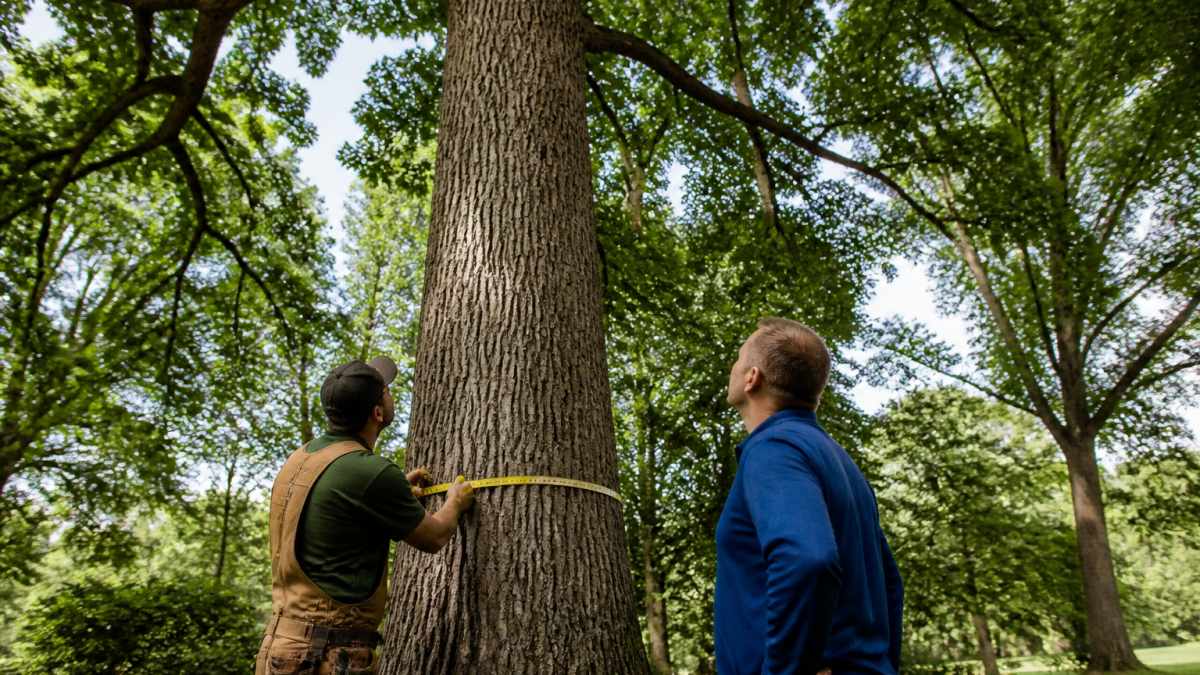
A diameter-based pricing page reports quotes from $150 for trunks under 6 inches wide to $4,500 or more for trunks wider than 48 inches, per CostToRemoveATree.com's diameter pricing. Homewyse put the national average at $623 to $761 per tree in September 2026, per Homewyse's cost calculator.
| Tree Size | Trunk Diameter | What Drives the Price |
|---|---|---|
| Small | Under 6 inches | Quick cut, light cleanup |
| Medium | 6 to 24 inches | More wood, more hauling |
| Large | 24 to 48 inches | Heavy limbs, rigging needed |
| Very large | Over 48 inches | Crane or bucket truck likely |
Small trees are cheap because they fall fast and fit in a chipper. Large trees cost more because every piece is heavy and risky.
Tree Removal Estimate Factors That Move the Price
Several tree removal estimate factors push a quote up or down, and they matter more than the headline average. Stump removal is the one homeowners forget. If you are weighing your options, our guide to stump grinding versus complete root removal explains what each one actually clears.
Other factors that move the number:
- Debris removal and hauling: chipping and trucking away the wood
- Labor: crew size and hours on site
- Equipment: a crane or bucket truck adds cost but improves safety
- Cleanup: raking, sweeping, and restoring the yard
A common mistake is comparing two quotes without checking whether stump grinding and hauling are included. One bid can look cheaper simply because it leaves the wood on your lawn.
Access, Location, and Site Conditions
Access and tree location change the price because they change how hard it is to reach the tree and where debris can fall. A tree in an open backyard is a different job from one wedged between a house and a garage.
Site conditions that raise removal difficulty:
- Fences, sheds, or landscaping in the drop zone
- Power lines nearby
- Soft, wet ground that equipment sinks into
- Steep slopes
- Tight driveways with no room for a truck
When access is tight, a crew may need to climb and lower limbs piece by piece instead of felling the tree whole. That takes longer, and time is money.
Tree Condition, Urgency, and Hazardous Trees
A hazardous tree costs more to remove because the risk is higher. A dead tree, a leaning trunk, or storm damage means the crew cannot predict how the wood will behave. That uncertainty adds labor and equipment.
According to OSHA's guidance on tree-care operations, employers should check tree health and assess the site for fall and struck-by hazards before work begins. That assessment is part of what you pay for.
Emergency removal costs more than scheduled work. If a tree is threatening your home, see our breakdown of emergency storm tree removal cost so you know what to expect. Our guide to signs a tree is diseased walks through the warning signs.
Your Tree Removal Quote Checklist
A tree removal quote checklist helps you compare bids fairly and confirm the company is legitimate. Most lists stop at "are they insured?" This one goes further: it tells you what proof to ask for, what a written scope should contain, and which items are commonly optional so a low bid does not fool you.
Verify Insurance and Worker Protection
- General liability coverage: Ask for a certificate of insurance naming the coverage limits, and confirm it is current. This is what protects your property if a limb hits the house.
- Workers' compensation coverage: Ask for proof. If a worker is injured on your property and the company lacks coverage, the exposure can land on you.
- Verification step: Call the insurer listed on the certificate to confirm the policy is active, certificates can be outdated or altered.
Verify Qualifications and Scope
- Certified arborist involved: Ask whether a certified arborist assesses the tree and writes the scope, not just sells the job.
- Written, dated, itemized quote: Removal, stump grinding, hauling, cleanup, and permits should each appear as separate lines so you can see what is included.
- Optional vs. required items: Confirm which line items are optional (stump grinding, log splitting, wood hauling) and which are required for a safe job.
- Permits: Ask who pulls any required permit and whether the fee is in the quote.
- Cleanup standard: Confirm raking, sweeping, and debris removal are in scope, and where the wood goes.
- Emergency premium: If the work is urgent, ask whether nights, weekends, or fast mobilization carry a surcharge.
Compare Bids on the Same Scope
The most common mistake is comparing two quotes without checking whether stump grinding and hauling are included. One bid can look cheaper simply because it leaves the wood on your lawn. Ask every company to quote the same scope, removal only, then removal plus stump and hauling, so the comparison is apples to apples.
A 1987 article in Arboriculture & Urban Forestry on estimating tree-care jobs noted that a $150 low bid versus a $175 high bid can represent the entire profit margin, per the International Society of Arboriculture. In short: cheap bids often cut corners somewhere, usually in insurance, crew size, or cleanup.
Our guide to hiring insured tree care companies covers what to verify in more detail.
Request a Written Estimate From Kauffeld Tree Care
A written estimate is the only number that counts for your specific tree. Everything above gets you a range. A site visit turns it into a real quote.
When you are ready to hire, our guide to finding local tree removal experts shows how to vet companies. Then call us for a written estimate.
We are a certified arborist team, fully insured, with 24-hour emergency service.
Frequently Asked Questions
What factors affect the cost of tree removal?
The biggest drivers are tree height and trunk diameter, which set the labor and equipment needed. Access matters just as much: a tree in an open yard is simpler to drop than one leaning over a roof or fence. Condition adds risk, since dead, storm-damaged, or hazardous trees need more careful rigging. Add-ons like stump grinding, debris hauling, and permits change the total too. Get these items itemized in writing so you can compare bids on equal terms.
Does tree removal cost include stump grinding and debris cleanup?
Often it does not, so confirm before signing. Many quotes cover cutting the tree down and hauling the wood and brush, while stump grinding is priced separately per stump. Ask whether the bid includes cleanup of the work area, wood hauling, and grinding to a stated depth below grade. If you want the stump gone, get that line item in writing rather than assuming it is bundled into the base tree removal cost.
How can I get an accurate tree removal estimate?
Ask for an on-site walkthrough rather than a phone guess. A qualified estimator should look at height, trunk diameter, lean, species, nearby structures, and where equipment can park. Request a written quote that separates labor, equipment, disposal, and add-ons, and note any assumptions about access. Comparing two or three itemized bids gives you a realistic range. Confirm the company carries insurance and can show credentials before work begins.
Will insurance pay for tree removal?
It depends on why the tree is coming down and whose property it hits. Many homeowners policies cover removal when a tree damages a covered structure, but routine maintenance or a tree that simply stands on your lot is usually your expense. Document the situation with photos and call your insurer before work starts. Ask the contractor for a written scope and proof of insurance so the claim process goes smoothly.
Estimating tree removal cost is really about knowing which factors matter and which are noise. Get the size, access, and condition right, and a quote stops being a mystery. Kauffeld Tree Care brings a certified arborist, full insurance, and 24-hour emergency service to every job, with crane and bucket truck options for the tough ones. Get started with Kauffeld Tree Care and turn your estimate into a safe, clean removal.